
Bitcoin’s price hovers just below $110,000, and on-chain analysis expert, Ki Young Ju, has shared a new evaluation after a period of doubt. Ju acknowledges his previous prediction was off, causing a setback for on-chain data reliability. However, current circumstances indicate that such skepticism may no longer hold water.
Reviving On-Chain Analysis
Though historical data doesn’t always repeat itself, Ki Young Ju believes that under current conditions, which involve factors like ETFs and corporate Bitcoin  $77,112 treasury initiatives, analyzing on-chain data can yield accurate insights once more. In his latest remarks, Ju mentioned he has stopped forecasting Bitcoin prices but remains committed to data analysis.
Ju first revealed a chart showing the average cost base for Bitcoin wallets, pegged at $55,900. His insights suggest that the market capitalization is steadily increasing, this week adding $8 billion, indicating strong on-chain inflows. However, the price hasn’t surged due to weak demand but because of selling pressure.
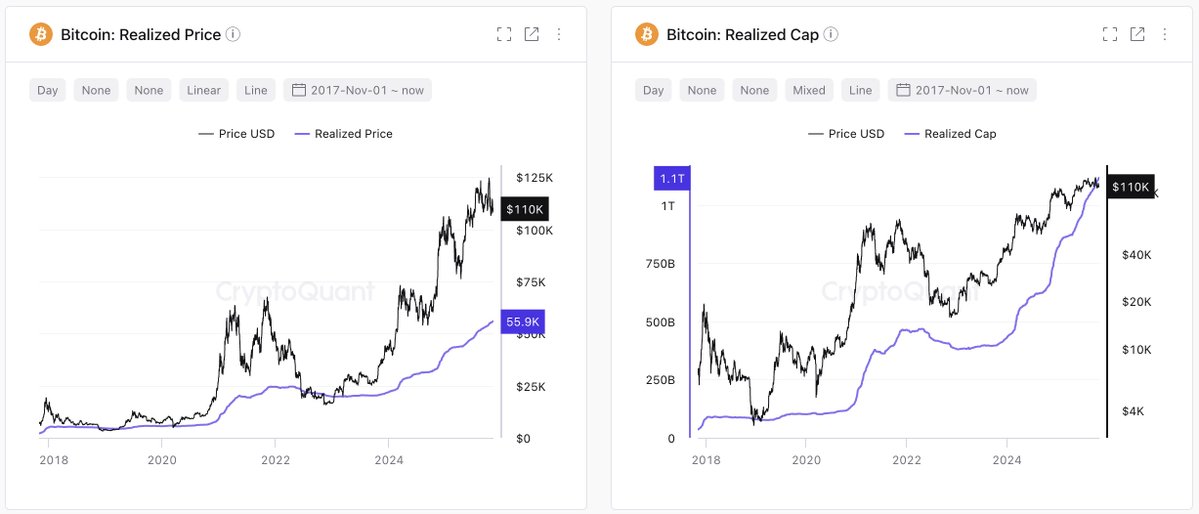
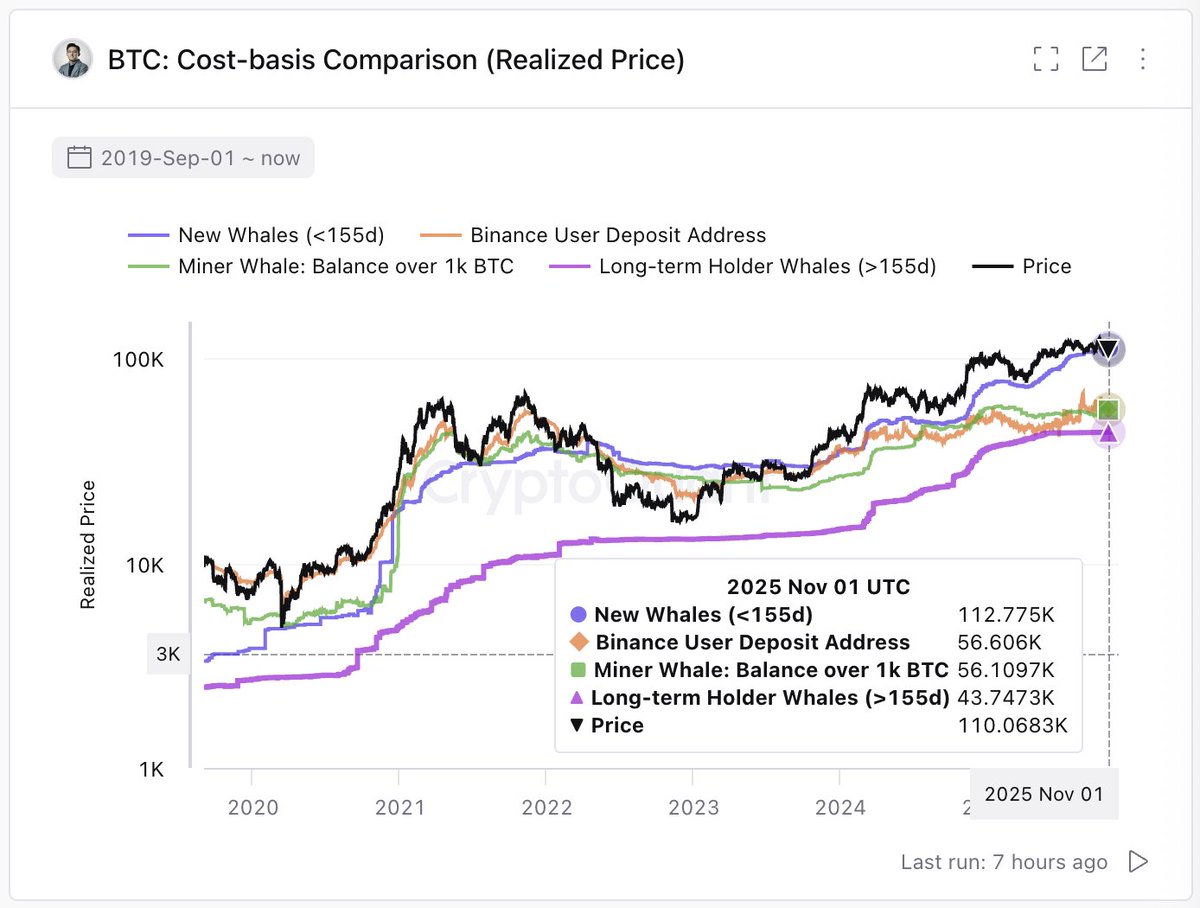
The second focal point is the origin of these inflows, primarily from ETFs, followed by treasury companies. With the current price at $110,000, long-term investors find themselves highly profitable, while ETF investors are approaching a cost threshold at $112,000.
Is the Bull Run Over?
According to Ju, the unrealized profits of whales are not excessive, suggesting that market exuberance is still distant. His other prediction, however, highlights that extremely high profit rates may no longer characterize rapidly expanding markets.
Significantly, there is a sharp decline in BTC inflows from spot-focused exchanges to futures platforms. Ju interprets this downturn as resulting from whales opening fewer long positions with BTC collateral, suppressing the price increase momentum.
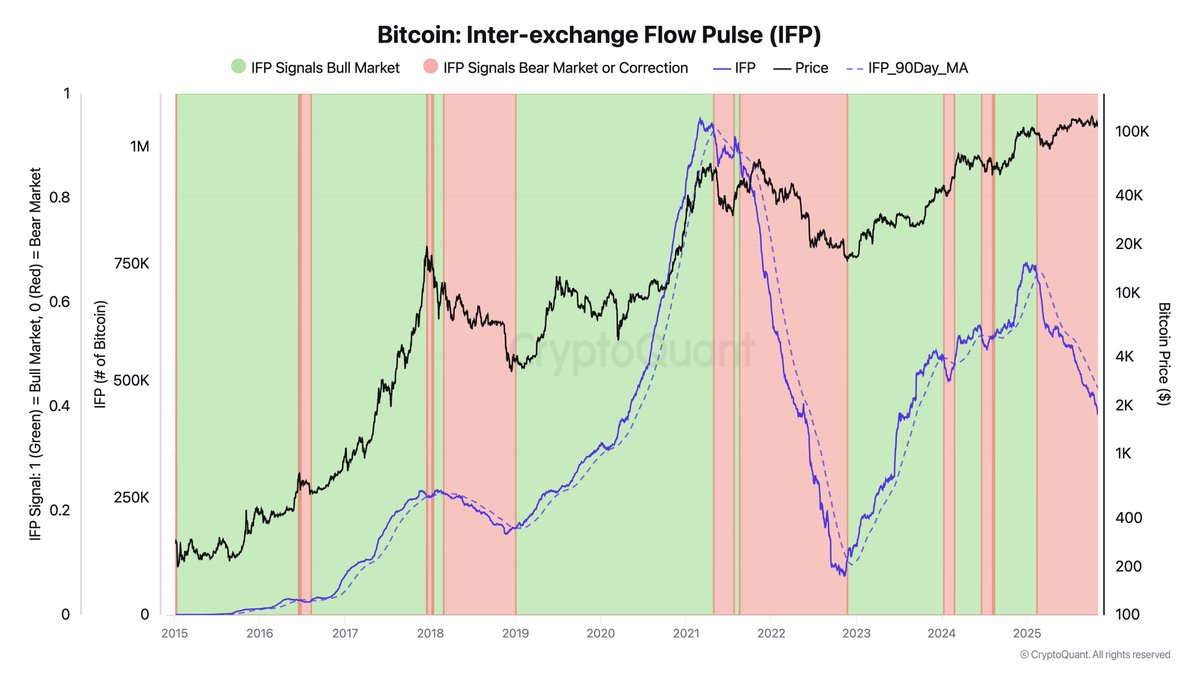
Despite recent declines, leverage in futures remains high, confirmed by the ratio of open positions to USDT balances. Bitcoin’s hash rate continues reaching new highs, with public miners expanding rather than contracting, suggesting a clear long-term upward signal.
Demand primarily stems from ETFs and major companies like MicroStrategy. Recent weaknesses in these sectors have hindered market recovery, indicating that increased ETF inflows are necessary for a renewed upward trajectory.