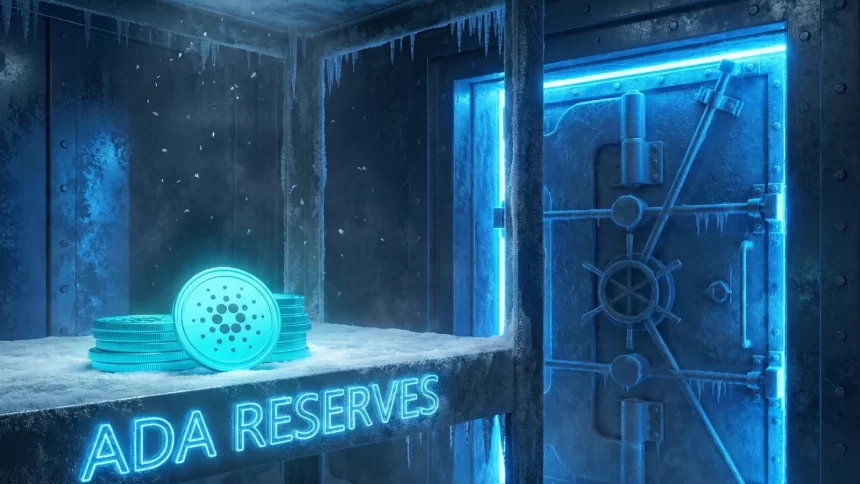

Cardano‘s price continued to slide even as the blockchain took a critical step toward the Dijkstra hard fork, with its latest node upgrade released as a pre-release version. ADA dropped 2.74% over the past 24 hours and now trades at $0.1878, reflecting sustained selling pressure across broader crypto markets.
Dijkstra upgrade advances, but price falters
Developer group Cardanians announced the arrival of Cardano Node 11.2 as a pre-release, a move designed to help implement the highly anticipated Dijkstra hard fork. The update introduces a new configuration system, enhances API functionality, and adds support for further protocol features.
Node 11.3, which will integrate Leios, is already in development according to project contributors. These upgrades are aimed at strengthening Cardano’s infrastructure, yet they have not directly translated into stronger demand for ADA’s token in the short term.
Despite regular progress on the network, technical and derivatives data point to hesitant market sentiment. Many traders remain cautious, questioning whether blockchain improvements can overcome prevailing bearish factors and spur a recovery in ADA’s price.
Cardanians highlighted that Cardano Node 11.2 as a pre-release brings the Dijkstra hard fork closer by introducing key system and API enhancements, while Node 11.3 with Leios integration is moving forward in development.
Technical barriers restrict upside moves
Cardano’s daily chart displays a firmly bearish structure, with the token changing hands below its 20-day EMA ($0.2088), 50-day EMA ($0.2177), 100-day EMA ($0.2159), and 200-day EMA ($0.2353). The $0.2096 mark acts as the first major resistance level ADA must reclaim before any recovery attempt.
If buyers fail to regain momentum, $0.1870 is the next support to monitor, reflecting the low of the latest daily candle. A sustained break below this level could signal a further decline and weaken ADA’s technical outlook.
Trading volume is currently 50.45 million ADA, highlighting active participation but showing no reversal in sentiment. To challenge the overhead moving averages, stronger buying pressure is needed.
Derivatives data underline subdued confidence
CoinGlass data indicate that Cardano’s open interest has contracted to around $395 million, down approximately 40% from the October high of $660 million. This decline signals lower leveraged participation by traders and aligns with falling prices.
Market participants have reduced their derivatives exposure amid ADA’s recent losses, with both bullish and bearish positions affected during frequent liquidation events from May through November. Volatility remains elevated, as leveraged traders face risk on both sides of the market.
The CoinGlass liquidation chart shows repeated liquidation spikes have impacted both long and short positions, illustrating heightened volatility since May.
A further surge in long liquidations during another price drop could intensify selling, while quieter activity may mean less forced position-closing across exchanges.
Recovery hinges on technical rebound
For a potential turnaround, ADA would first need to reclaim $0.2096 and surpass its short-term moving averages. Achieving a move above $0.2177 would offer stronger evidence of a shift in buyer momentum, though the 100-day and 200-day EMAs provide further barriers.
Continued downside pressure places $0.1870 under watch as a critical level. A close below this threshold may trigger new lows and deepen the prevailing negative trend.
While Cardano’s development roadmap offers long-term promise, short-term price action does not yet reflect renewed optimism. The gap between network upgrades and immediate market response remains a challenge for investors tracking ADA’s recovery potential.
Amid this volatility, real-time tracking becomes critical. Tools like CryptoAppsy, which combine live ADA price charts with customizable price alerts, allow traders to monitor both short-term movements and technical signals as Cardano tests key support and resistance levels.