The United States Federal Deposit Insurance Corporation (FDIC) chairman Martin Gruenberg will resign following a harsh investigation revealing issues within the banking regulatory body. On May 20, Martin Gruenberg announced his readiness to leave the FDIC chairmanship, a position he has held since August 2005. Let’s examine this significant development together.
What is Happening at the FDIC?
In an email to staff regarding the development, Martin Gruenberg shared the following statements:
“In light of recent events, I am ready to step down once my successor is confirmed. Until then, I will continue to fulfill my responsibilities as FDIC Chairman, including the transformation of FDIC’s workplace culture.”
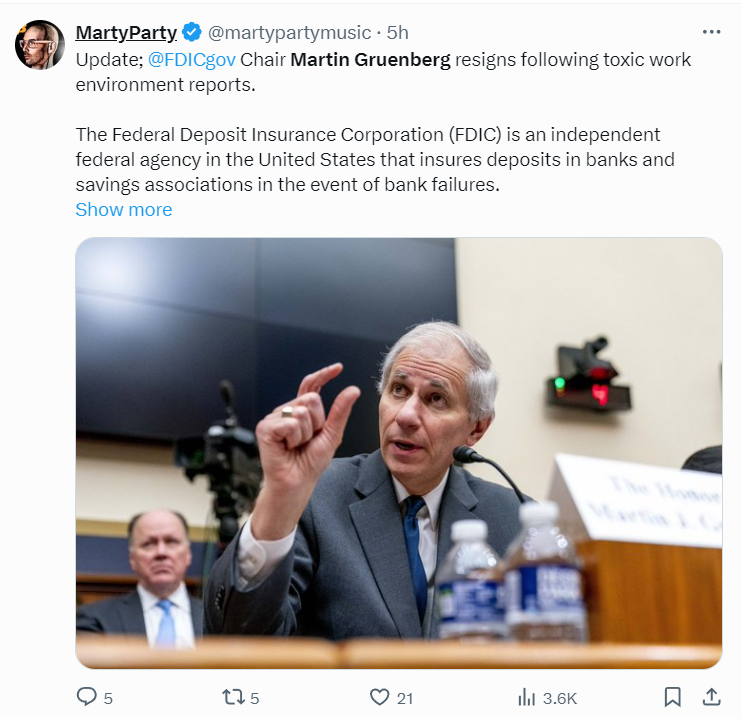
The FDIC stands out as an independent US government agency providing insurance to depositors in American commercial and savings banks. The announcement followed a third-party investigation released on May 7 regarding the troubled processes at FDIC and allegations of interpersonal misconduct, as well as the management’s response to the abuse.

On May 15, Gruenberg testified before Congress about mistreatment of subordinates. According to Reuters, both Republicans and Democrats expressed their anger, horror, and disbelief at the depth of the issues within the FDIC. Lawmakers called for his resignation, and Senate Banking Chairman Sherrod Brown was among those urging President Biden to replace Gruenberg.
Details of the Process
The White House announced plans to nominate a new candidate for the FDIC chairmanship. However, Senator Elizabeth Warren expressed confidence in Gruenberg’s ability to make changes within the organization. The move was celebrated by the crypto community, with Castle Island Ventures partner Nic Carter calling it the best day so far. Meanwhile, crypto asset sector lawyer John Deaton commented:
“It’s shameful to see Elizabeth Warren circling the wagons to keep one of her infamous puppets in place. I look forward to the debates.”
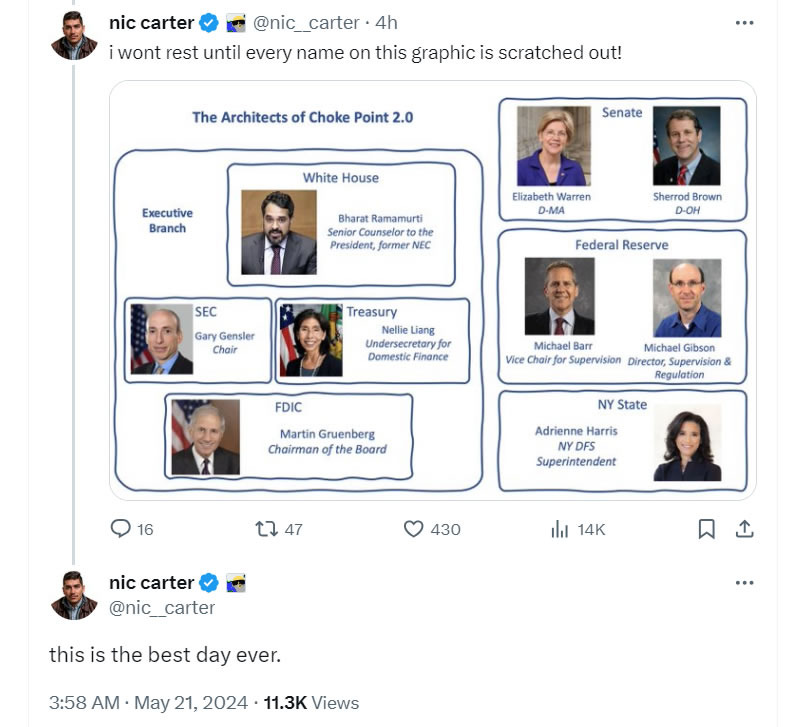
Gruenberg is believed to have played a role in facilitating Operation Choke Point 2.0, a term coined by Nic Carter in 2023 referring to the FDIC’s coordinated effort to dissuade banks from holding crypto deposits or providing banking services to crypto firms. In an October 2022 speech, Gruenberg compared crypto assets to risky financial innovations like high-interest mortgages and collateralized debt obligations that led to the 2008 financial crisis.