
As Bitcoin’s price soared beyond $97,000, a statement by Neel Kashkari, a member of the Federal Reserve, drew significant attention. With Donald Trump’s presidency observed to have shifted various institutional perspectives towards cryptocurrencies, including some easing measures by the Fed, Kashkari’s comments seemed to be an outlier, possibly interpreted as a resistance to the prevailing trend. His critical stance is intriguing amidst an evolving discourse where digital currencies are garnering broader acknowledgment.
The Fed’s Position on Cryptocurrencies
While preparing this article, Fed member Kashkari was in the midst of delivering crucial remarks, coinciding with a highly anticipated speech scheduled later in the day by President Trump. Following closely, an essential address by NY Fed President Williams was expected, known for his influence on past interest rate reductions. Kashkari’s speech had just concluded, imparting profound insights into his views.
Kashkari dismissed cryptocurrencies as ultimately ineffective for consumers. He cited Fed Chairman Powell’s systematic explanation of current economic conditions, highlighting a labor market displaying signs of weakness. Despite this, inflation was still high yet trending positively, and overall, the economy appeared quite resilient, moving slower than expected. Kashkari depicted the economic landscape as multifaceted, pondering the actual rigor of monetary policies and noting that the impact of tariffs was less damaging than initially feared.
Kashkari’s Economic Outlook
Addressing tariffs, Kashkari suggested they were not as detrimental as many anticipated, though their long-term effects remained uncertain. He reiterated the Fed’s commitment to a 2% inflation target, emphasizing determination to achieve this rate. Kashkari also clarified that the Fed’s current balance sheet expansion should not be mistaken for quantitative easing. His economic outlook remained optimistic, contending that there was no necessity for further monetary expansion under prevailing conditions.
Kashkari further mentioned that the application of artificial intelligence in businesses was still in an experimental phase, with no significant impact on employment yet. His views provide a nuanced perspective on the intersection of technology and the economy, implying a cautious approach amid ongoing developments.
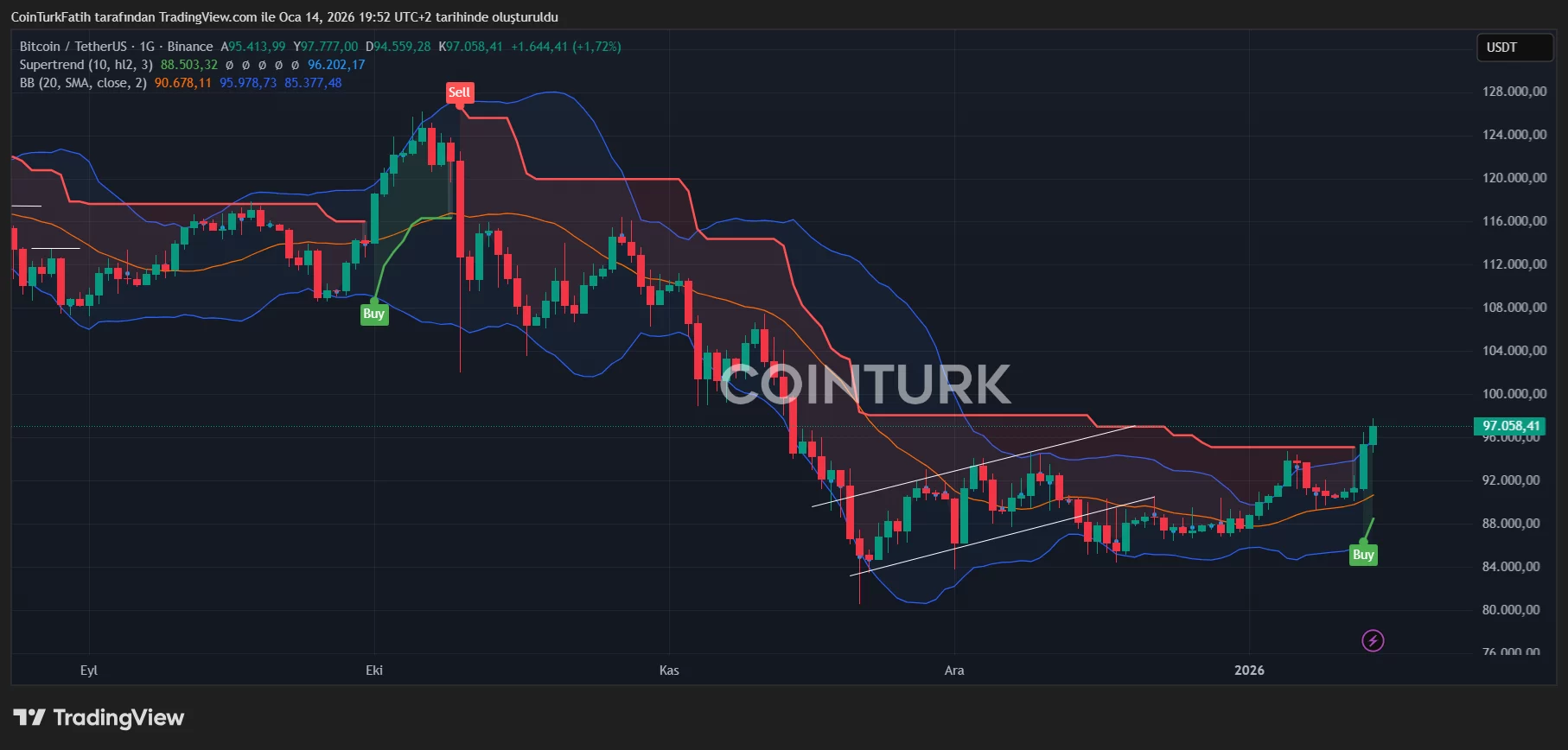
Meanwhile, despite the skeptical remarks from Kashkari, Bitcoin continued its bullish momentum, remaining steadily above the $97,000 mark. This apparent disregard for critical perspectives underscores the complexity of the digital currency market, marked by volatility and a divergence from traditional financial assessments.