Bitcoin started the day above $71,000, with altcoins also seeing an influx of buyers as cryptocurrency markets responded to evolving international dynamics. The recent prospect of an agreement between Iran and Western powers has sent ripples through the sector, while US equities grapple with market uncertainty. Even though the overall mood remains cautiously optimistic, industry consensus suggests that cryptocurrencies still lack the driving narrative that could unlock their next major rally. Against this backdrop, analysts from QCP Capital have shared their latest perspectives.
QCP’s Take on Geopolitical Uncertainty
Former President Trump attempted to force a breakthrough in the Strait of Hormuz through a direct ultimatum, but his efforts failed to yield the desired outcomes. While the UK has confirmed behind-the-scenes talks between the US and Iran, Iranian authorities are steadfast in denying any such discussions. According to QCP Capital, the current period appears to be the final stage before possible infrastructure-targeted assaults, underscoring the critical nature of these geopolitical developments.
Trump, citing the promise of “productive negotiations,” recently announced a suspension of planned strikes—leaving cryptocurrency investors to monitor what comes next. QCP Capital analysts pointed out that Trump is now working within far tighter constraints, both politically and financially.
“As Trump tries to navigate an increasingly complex geopolitical minefield, his room for maneuver has narrowed significantly. With US equities near major support levels and inflation fueling expectations of additional rate hikes, Trump cannot afford moves that would rattle markets. The fact that he delivered his announcement just before US markets opened on Monday highlights that economic stability remains a core priority.”
The analysts also noted that cryptocurrencies, particularly Bitcoin, have demonstrated surprising resilience throughout this period, maintaining market stability amidst geopolitical turbulence.
“Throughout a period of intense volatility, cryptocurrencies have continued to show remarkable resistance. Although Bitcoin briefly dipped below $70,000 over the weekend, it remained generally more stable compared to previous risk-off scenarios—especially during low-liquidity weekend hours, which historically triggered sharper drops. This resilience may be indicative of lower leverage systemwide or perhaps signals the earliest phases of a regime shift, where Bitcoin is no longer trading in lockstep with conventional risk assets.”
US Debt, Market Jitters, and Crypto’s Role
The US national debt surpassed $39 trillion last week, and Trump has requested an extra $200 billion to finance operations in Iran. Meanwhile, CME Group’s FedWatch tool, which gauges market expectations of Federal Reserve policy, reflects mounting anxiety over economic direction. QCP Capital analysts believe the prevailing uncertainty could position Bitcoin as a strategic “escape hatch” for global capital.
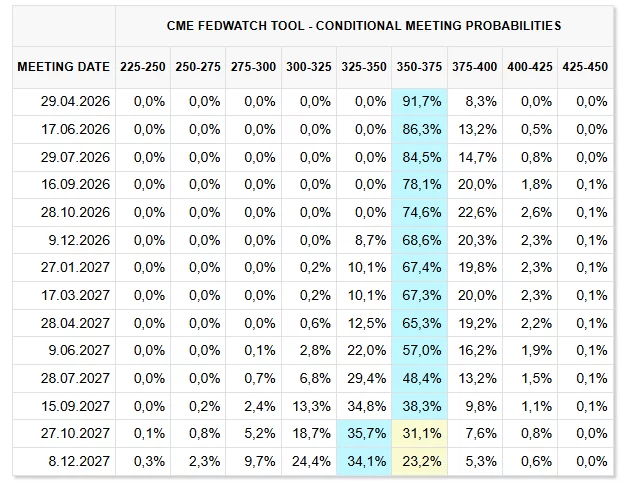
“Signs of stagflation are beginning to emerge, confronting central banks with a classical policy dilemma: raise interest rates at the risk of triggering recession, or let inflation run unchecked. In such an environment, Bitcoin could increasingly serve as a neutral pressure release valve for global finance.
Iran has already proposed settling passage through the Strait of Hormuz in yuan instead of US dollars. In this scenario, Bitcoin could act not only as a neutral alternative but also as a permissionless payment layer. While we’re not at that stage yet—the US dollar remains strong, and bond markets are functional—if hostilities persist, the first hints of a new narrative may start to materialize.”
As the US presidential election approaches, Trump may choose to prolong the Iran standoff—whether to seek greater leverage or as a result of repeated setbacks. This means further denials from involved parties are likely in the immediate term. Yet with all sides suffering from the drawn-out negotiations, even a confirmation of talks could help financial markets, including cryptocurrencies, to regain footing.
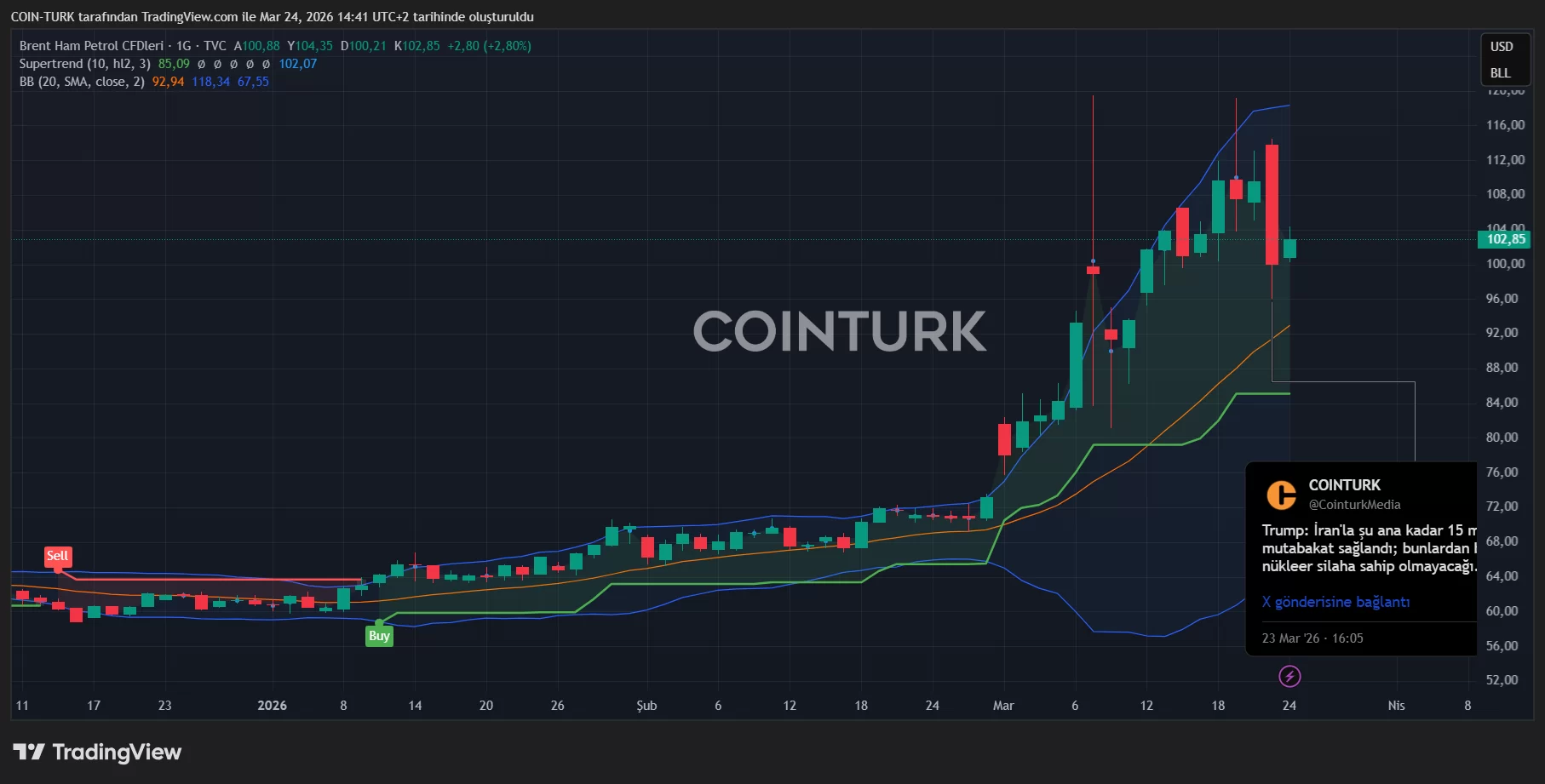
While Bitcoin has so far managed to defend the $70,000 threshold, even traders who had set targets as low as $50,000–$56,000 have begun to question the likelihood of a deeper correction. The direction of oil prices—and the way markets are pricing in the chance of a breakthrough agreement—continues to play a key role in setting the narrative for both traditional and digital asset investors.