Google has announced that it has been working on a responsible transition to post-quantum cryptography since 2016 and now believes the time has come for concrete action. In a blog post dated March 31, the company warned that the encryption standard underpinning cryptocurrencies—particularly Bitcoin—could be at risk from advancements in quantum computing. The article sparked intense debate within the cryptocurrency community, raising questions about the underlying threats and immediate implications of Google’s latest findings.
What is quantum computing?
To understand the scope of the issue, it’s important to grasp what quantum computing entails. Conventional computers operate using binary logic—bits that represent either a 0 or a 1. In contrast, quantum computers leverage a principle called superposition, allowing quantum bits (qubits) to exist as both 0 and 1 simultaneously. Traditionally, breaking Bitcoin’s encryption algorithm with classical computers would take longer than the age of the universe. Scientists once calculated that cracking this would require around 20 million physical qubits. However, due to rapid advancements in technology, the resource requirement has been dramatically reduced.

What once seemed impossible is edging closer to reality. Thanks to new error correction methods, Google now estimates that fewer than 500,000 qubits could be enough to break crucial cryptographic schemes like those securing Bitcoin. As algorithms and hardware continue to evolve, this threshold is anticipated to fall even further. It’s not unlike the shift from laboriously producing inventory reports via fax to generating them easily with modern printers—what was once a tedious workaround has become streamlined and accessible. Google’s warnings suggest that we are on the verge of a similar technological transformation that will lower the barriers for more entities—from major tech firms and nation-states to eventually even small organizations and individuals—to wield this power.
Google issues a warning
On March 31, Google underscored the urgency of transitioning to new cryptographic standards that can withstand quantum attacks, emphasizing that the company does not wish to see a scenario where quantum breakthroughs suddenly unlock sensitive digital assets with grave consequences.
“We demonstrate that future quantum computers could break elliptic curve cryptography—used to protect cryptocurrencies and other systems—using fewer qubits and gates than previously anticipated. We want to raise awareness and offer the crypto community guidance for enhancing stability and security before such an event occurs,” Google stated.
Google called on cryptocurrency projects and other stakeholders to adopt post-quantum cryptography (PQC), which is designed to resist attacks from quantum computers. The company explained its responsible disclosure approach and industry collaborations.
“We’ve collaborated with the U.S. government to responsibly share this research, developing a new method that proves these vulnerabilities through zero-knowledge proofs—allowing the issues to be validated without offering a roadmap to malicious actors. We encourage other research teams to adopt similar responsible practices. Together with organizations like Coinbase, the Stanford Blockchain Research Institute, and the Ethereum Foundation, we look forward to pushing industry progress in line with our 2029 roadmap,” the statement added.
According to Google, while no cryptocurrency cryptography has been broken yet—and the company has no intention of releasing dormant Bitcoin holdings into circulation—technological progress is rapidly narrowing the requirements for an attack, with the number of qubits needed to break key cryptographic problems already dropping by nearly a factor of 20 in recent years. Google has set 2029 as a target date for migration and is inviting the entire industry to start preparing now.
“Governments and organizations like Google have long been making preparations to address this security issue. As continued scientific advances bring cryptographically relevant quantum computers (CRQCs) closer to reality, the transition to PQC becomes necessary. Our technical report shares updated projections for the quantum resources—qubits and gates—needed to break the 256-bit Elliptic Curve Discrete Logarithm Problem (ECDLP-256), which underpins elliptic curve cryptography. These estimates detail the logical qubit and Toffoli gate counts required, providing a clear picture of the timeline and urgency,” Google emphasized.
Apocalypse scenario or manageable transition?
Simply put, quantum computing is making significant progress toward potentially breaking SHA-256, the cryptographic foundation of digital signatures, secure military communications, and online transactions. If state-of-the-art quantum computers—currently only realistically accessible to major research institutions or governments such as the United States—could break SHA-256, they could, in theory, access any digital assets or sensitive data before cryptocurrencies would even be targeted. For example, critical government secrets and national banking infrastructures would likely be prioritized ahead of cryptocurrency wallets like Satoshi Nakamoto’s. In short, cryptocurrency holders are not the immediate or sole targets should such technology become viable.
Google’s efforts are not aimed at “cracking Bitcoin’s code” for its own sake, nor is it actively working to undermine cryptocurrency infrastructures. Instead, its warning signals that the time has come for proactive risk mitigation given quantum advancements.
Decoding SHA-256: The backbone of digital security
SHA-256 (Secure Hash Algorithm 256-bit) is a one-way algorithm that turns any input into a unique 64-character string. It underpins countless applications—from verifying website certificates and securing passwords to digitally signing official documents and identifying software viruses. Whenever you visit an HTTPS-enabled website, your browser uses SHA-256 to ensure the authenticity of the site’s certificate.
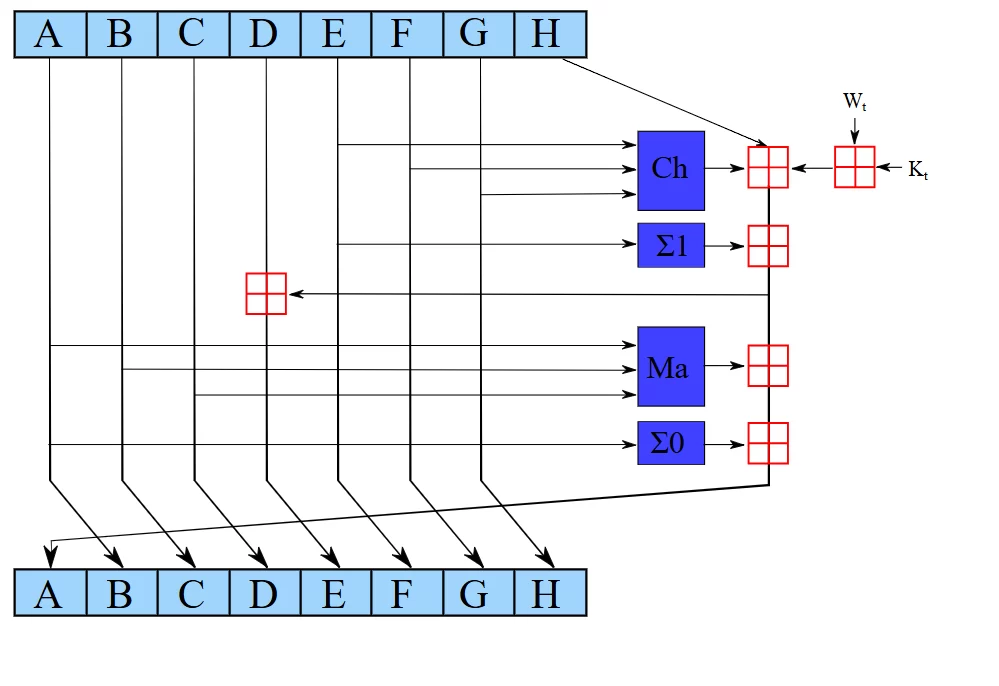
User passwords, when stored by reputable websites, are typically hashed using SHA-256 methods (often with added “salt”) to ensure they are never recorded in plain text. Digital signing of official documents, anti-virus identification, and detection of duplicate files in cloud services like Dropbox and Google Drive also rely on SHA-256. Its integrity checks safeguard downloads from tampering and help defend against man-in-the-middle attacks.
Even as computers boot, motherboards use SHA-256 signatures to verify operating system integrity. The algorithm ensures that firmware updates for smart devices are authentic, provides forensic assurance in legal cases, and underpins DNS records and email authenticity. In essence, a world where quantum computers could shatter SHA-256 without modern safeguards would face risks far greater than just compromised cryptocurrencies—the foundation of internet security as a whole would be in jeopardy.
Will Bitcoin and Ethereum survive the quantum era?
The Ethereum development team has already taken proactive steps against quantum risks, including relevant safeguards in their roadmap. It is expected that Ethereum will have robust quantum resistance prior to 2029. Bitcoin, by contrast, faces a more nuanced challenge. The principle of immutability is sometimes interpreted too rigidly, making consensus around security upgrades complex. As was evident with Taproot or Ordinals, any major update can provoke intense internal debate.
Nevertheless, the Bitcoin community, committed to long-term viability, is unlikely to resist changes necessary for survival. Technologies such as SHA-512 or even more advanced algorithms could be adopted, and making cryptographic systems quantum-resistant is more straightforward than developing quantum computers themselves. In summary, while vigilance and forward planning are now essential, there is no reason for panic: both BTC and ETH are well positioned to adapt to the quantum challenge, provided the industry acts promptly.