The US Securities and Exchange Commission (SEC) has announced a significant relaxation in its regulatory stance towards decentralized finance (DeFi) protocols. Previously, under the Biden administration, all DeFi projects were required to register with the SEC, with strict Know Your Customer (KYC) obligations even for users transacting through their websites. But today, the SEC delivered a new and more flexible directive for the industry.
Major shift for DeFi regulation
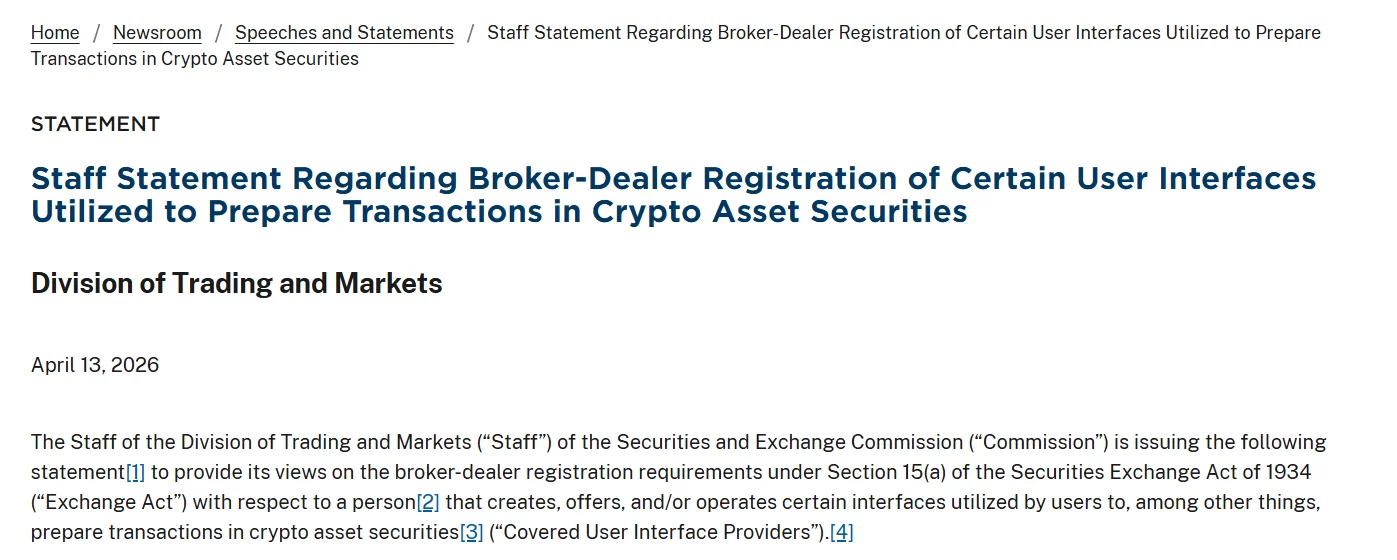
According to the latest statement from the SEC’s Division of Trading and Markets, DeFi protocols can now operate certain web interfaces, wallet extensions, and mobile apps that facilitate crypto trading without the need to register as broker-dealers. This regulatory softening marks a pivotal moment for the sector, which has long grappled with uncertainty and compliance burdens.
SEC guidance: Key criteria and limitations
The new guidance makes clear that, provided DeFi protocols do not direct orders, offer investment advice, or hold user assets—and instead use only fixed, neutral fee structures—they are now exempt from mandatory SEC registration. The rules predominantly apply to self-custodial wallet interfaces, with the new conditions set to remain valid for a period of five years, unless the SEC introduces a superseding decision.
“As the Staff understands it, Covered User Interfaces convert user-defined crypto asset security transaction parameters (such as buy/sell, volume, asset and price or range) into blockchain-readable instructions for signing and transmission via the user’s self-hosted wallet, enabling users to interact with blockchain protocols or smart contracts. Comprehensive User Interfaces may also provide market data such as price discovery, gas fees, and execution options, typically charging a fixed percentage per transaction. Providers can offer educational resources to help users configure transaction parameters,” the SEC announcement explained.
Industry insiders have welcomed this clarity, noting that the focus on non-custodial, automated interfaces aligns with DeFi’s ethos of user control and privacy. The requirement for KYC and broker-dealer registration had been considered a major obstacle to innovation and adoption in the space.
This development means that DeFi teams can now offer educational materials, display live market data and estimated transaction costs, and charge a standard transaction fee—so long as they remain neutral and do not act as intermediaries or advisors. This is seen as enabling further growth without triggering heavy regulatory obligations.
Legal scholars point out that the SEC’s limited scope—targeting only interfaces that do not route orders or store user assets—provides a clear operational framework for the next half-decade. However, the regulator reserves the right to revise these guidelines in the future if market conditions or compliance issues warrant a re-evaluation.
For users, this means access to decentralized protocols remains straightforward and privacy-centric, without the need for invasive identification processes. The DeFi sector, which is based on open blockchain interaction and peer-to-peer transactions, stands to benefit immensely from these changes.
Market observers note that while some platforms may still require KYC due to other compliance concerns, the SEC’s shift sets an important precedent for how decentralized financial technologies can operate transparently and responsibly in the US.
If upheld, the guidance will grant DeFi teams a five-year window to further innovate and attract users, enhancing the US position as a hub for blockchain development. However, vigilance is advised as the SEC has not ruled out the possibility of altering the framework if necessary.
This move is expected to spur additional growth in DeFi, as companies and developers can now focus on product development and user experience without the immediate fear of regulatory penalties for merely offering automated trading or information interfaces.
In summary, SEC’s new stance reflects a shift towards balancing investor protection with technological innovation—potentially setting the tone for future digital asset regulation in the world’s largest economy.