As we near the end of April 2026, persistent pressure continues to weigh on the cryptocurrency markets. Investors, who have yet to experience a true bull run, have found themselves limited to the modest rise in BTC triggered by Trump’s election. After staying awake through a sleepless 2025 marked by tariff concerns, traders are now fixated on the ongoing standoff and strategic maneuvering between Iran and the United States.
Shifting signals in Ethereum and altcoins
The atmosphere resembles a high-stakes tennis match, with the ball ricocheting unpredictably from one court to another. While Iran releases market-shaking statements, Trump responds with his own, sending charts sharply in the opposite direction. The resulting volatility has left both prices bouncing like ping-pong balls and investors stuck in a nightmarish, seemingly endless holding pattern with no clear awakening in sight.
Although Trump’s inauguration initially brought some positives for cryptocurrencies, the disappearance of “normalcy”—a new era where chaos becomes ordinary and uncertainty the rule, echoing pandemic days—upended expectations. In the last 50 days alone, Trump has issued statements ranging from threatening Iran’s destruction to pledging its improvement on multiple occasions. For example, though a second round of Iran-US negotiations was scheduled for this weekend, Trump unilaterally extended the ceasefire and urged Iran to hurry, further prolonging the process. The status of the weekend’s talks remains uncertain; a meeting could be announced (or cancelled) at an hour’s notice. In summary, no one—including the principal actors—can predict what will happen next.
Official statements and ongoing talks
At the time of writing, the White House Press Secretary issued the following updates regarding negotiations:
“Witkoff and Kushner will depart for Pakistan on Saturday morning to attend the Iran talks. The Iranian delegation has requested a face-to-face meeting.”
Turning to Ethereum, ETF flows indicate that institutional investors are positioning for a potential rise. Yesterday saw a $222 million BTC ETF inflow—following $335 million the previous day—while, in contrast, ETH ETFs registered a $75 million net outflow.
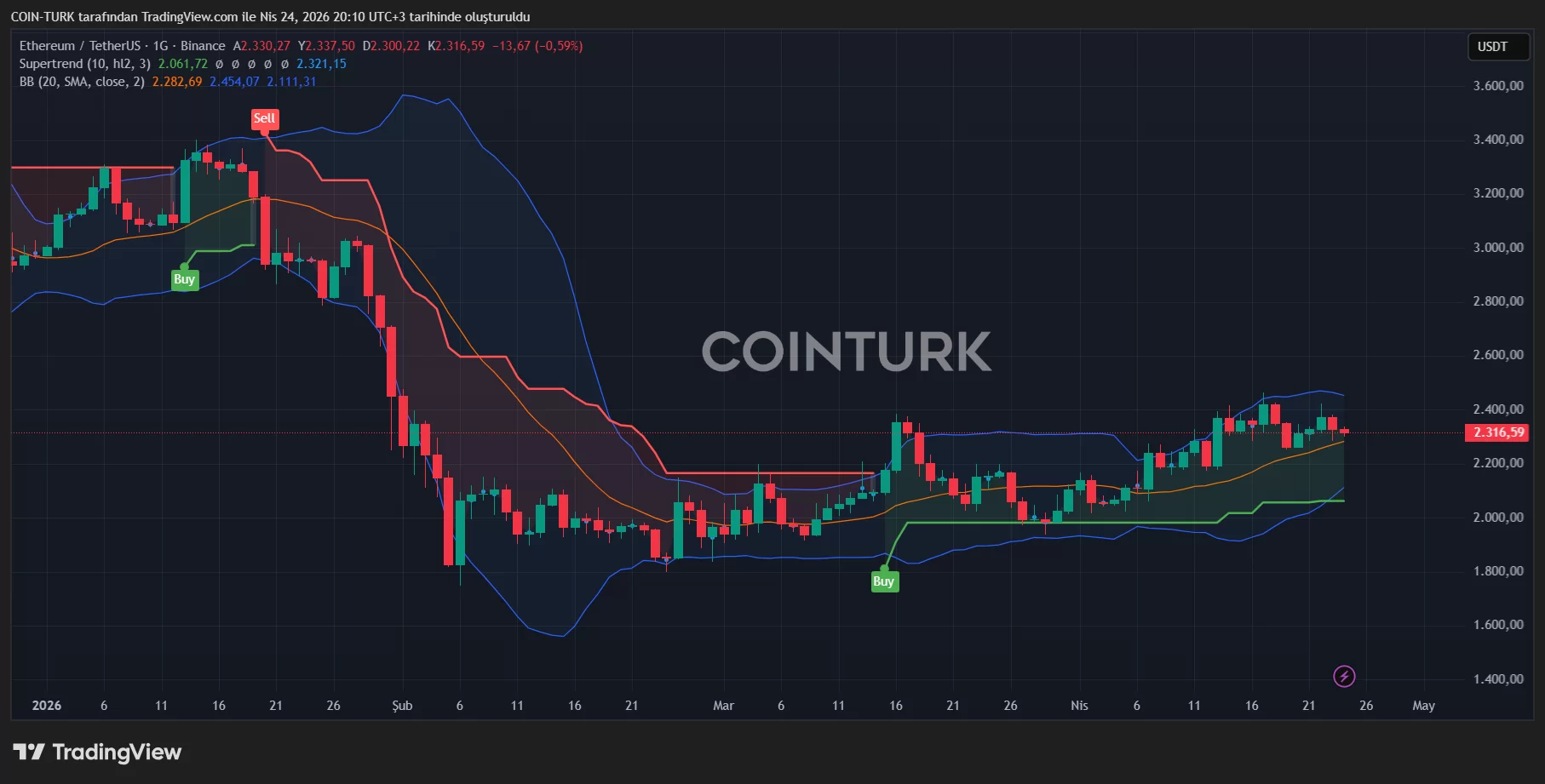
ETH failed to establish firm support above $2,370, retreating towards the first key support at $2,253. While Leavitt expressed optimism that everyone is standing by, ready to fly to Pakistan if necessary, the eventual outcome of the Iran-US process remains an open question. In such a climate of uncertainty, ETH may face further downward pressure, and other altcoins could follow suit.
Analysts point out that several key developments are needed for the anticipated short-term rally in altcoins to materialize:
- The US and Iran would need to sign a long-term agreement.
- Israel would need to cease attacks against Iran or Lebanon.
- Monthly inflation would need to drop sharply, and oil prices revert to pre-conflict levels, offsetting 50 days of elevated inflation in the coming days.
- Iran would have to return its uranium to the US, embrace regime change, and cooperate with the US in charging shared fees on vessels passing through the Strait of Hormuz—effectively resolving the crisis for good.
- Warsh would announce steep interest rate cuts while rolling back quantitative easing.
- Trump’s chances of winning the mid-term elections would increase further.
In other words, these are the conditions necessary for a genuine and sustained crypto market rally.
ETH analyst projections and technical picture
DaanCrypto shared the following chart today, highlighting how Ether has been repeatedly rejected at both the bull market support band and the weekly 200-day moving average. For ETH to break free from the persistent downward trend that began last year, long-term closes above these resistance levels will be key.
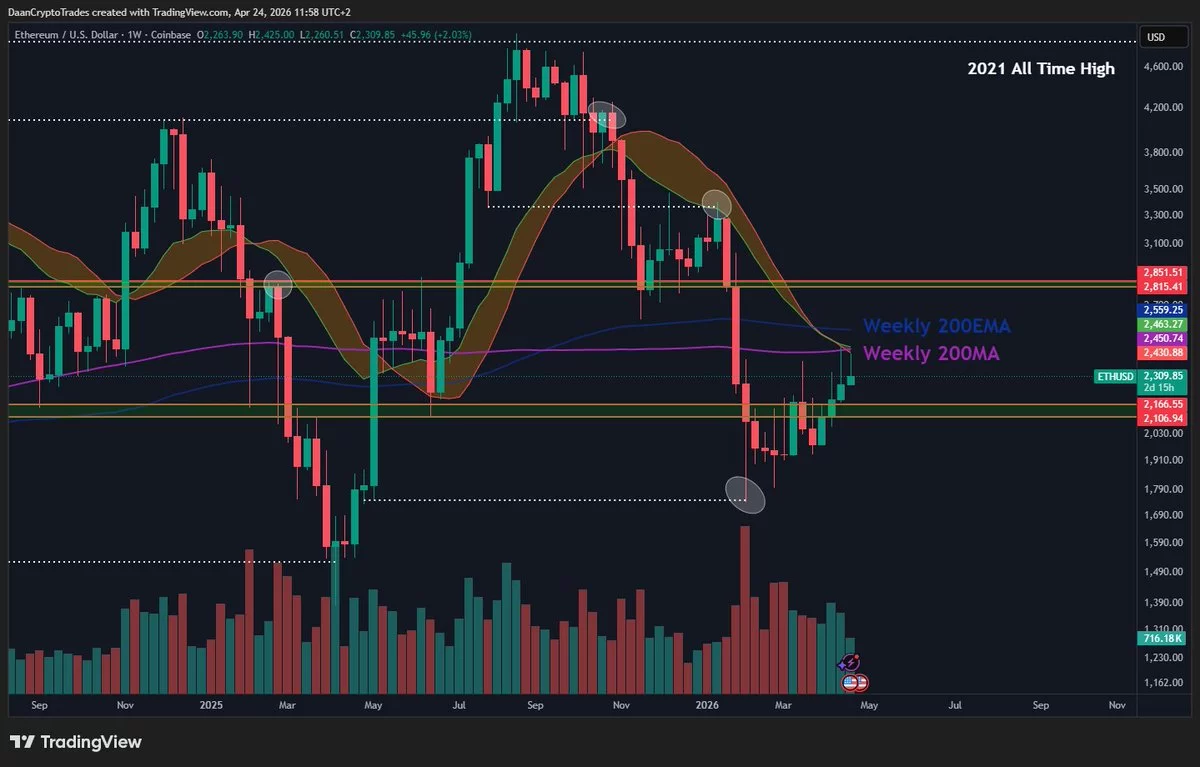
DaanCrypto notes, “For bulls to regain control, ETH needs to hold above $2400–$2500 for a sustained period. Until then, it is wiser to be patient and err on the side of caution.”