Bitcoin (BTC), which had been in a downward trend for several hours, temporarily halted its decline as White House spokesperson Leavitt issued key statements. The ongoing crisis surrounding Iran remains unresolved as it enters its second month. Notably, Iran has openly expressed its satisfaction with the current situation, emphasizing how oil price volatility has revealed the extent of its geopolitical influence and issuing veiled threats toward the United States.
White House statements bring Iran into spotlight
In press briefings that began just minutes ago and continue as we speak, the White House directly addressed developments involving Iran. Leavitt announced that former President Donald Trump is expected to release a statement about Iran’s latest proposal, though he stopped short of providing a definitive date. Trump had already begun sharing posts on social media just six minutes earlier, fueling speculation that a formal announcement could soon appear on his Truth Social account.
Leavitt confirmed that Trump met with his team today to discuss Iran’s offer, adding: “I cannot say that the United States has taken Iran’s proposal into consideration. You will be hearing more from Trump on Iran very soon.”
Iran touts growing influence amid sanctions
Speaking just hours prior, Iran’s First Vice President sought to underscore the country’s newfound leverage in the global energy market despite ongoing sanctions. He stressed how these constraints have shifted Iran from vulnerability to becoming a point of reference for nations seeking secure energy supplies.
“We have moved from a position of vulnerability under sanctions to becoming a reference point that can meet the world’s energy needs. Countries that once refused to supply fuel for our airplanes are now negotiating with us to secure their energy resources.”
Iran also issued remarks through its Ministry of Foreign Affairs, where the focus was on President Vladimir Putin and the broader international context. The ministry highlighted the negative impact of U.S. conduct on diplomatic progress in the region.
“The Iranian Foreign Minister told Russian President Putin that the United States’ destructive habits, unreasonable demands, and frequently shifting positions have been major obstacles to meaningful diplomatic advances.”
Oil market remains tense as prices surge
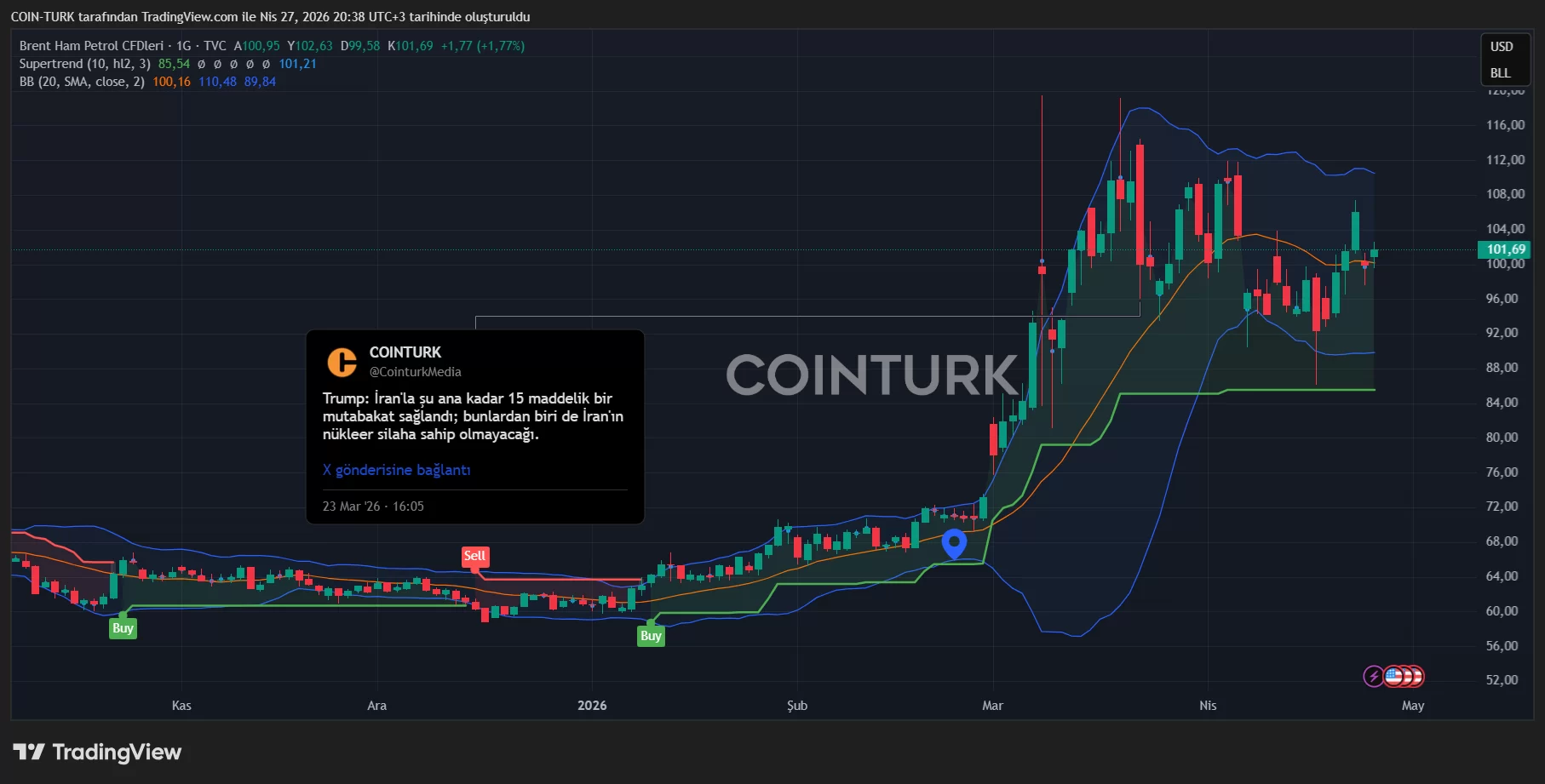
Throughout the crisis, analysts have been closely monitoring oil charts to gauge the trajectory of tensions. Despite a partial retreat from peak anxiety levels, the price of UKOIL climbing above $101 underscores that no substantial progress has been made in defusing the strained atmosphere.
The market’s sensitivity to diplomatic signals remains acute. Observers point out that prices are holding well above key resistance thresholds, illustrating the underlying uncertainty and reflecting the broader impact of the standoff on commodity values.
While the most acute escalation may have subsided, market data suggests traders are pricing in the risk of further disruptions. The combination of Iran’s assertive messaging and the White House’s guarded response adds to the ongoing nervousness that has gripped global markets.
Industry watchers are particularly alert to upcoming statements from both U.S. leadership and Iranian officials, anticipating that any significant change in rhetoric could spark renewed price volatility. The oil market’s reaction serves as a real-time barometer of geopolitical tensions between Washington and Tehran.
With no major progress reported on the diplomatic front, stakeholders are bracing for continued uncertainty. Any breakthrough or major twist in negotiations could quickly reshape both market sentiment and policy calculations in the energy sector.