At the end of 2025 and the beginning of this year, Bitcoin experienced steady declines. Each uptick quickly turned into a short-selling opportunity, and under current market conditions, the risk profile appears heightened. Bitcoin has returned to its local peak, and short-term investors who have reaped rewards from short-selling for months are now once again switching to selling mode. Now the question arises: could this time be different?
Sharp drop in wallets
Bitcoin is currently seeing its fastest exodus of investors in the last two years. Analytics provider Santiment attributes this primarily to individual investors’ desire to secure profits. In just five days, the number of Bitcoin wallets has fallen by nearly 250,000. The last similar mass exit took place in the summer of 2024. If geopolitical tension with Iran escalates or macroeconomic trends start to squeeze crypto markets due to inflation, the present indicators could soon prove to be a powerful sell signal. On the other hand, if the situation mirrors summer 2024, the groundwork for another bull run might be forming.
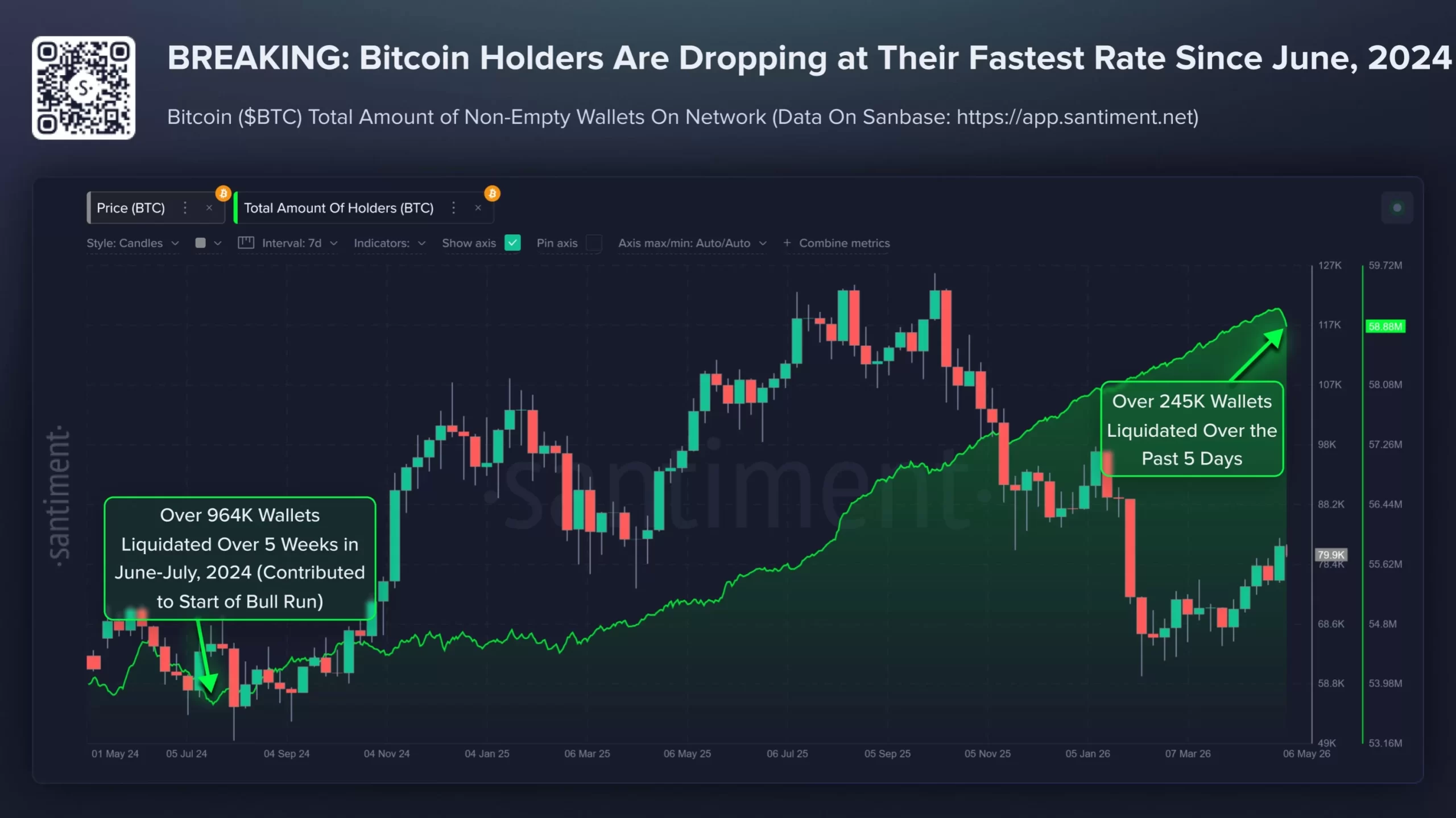
Santiment’s analysts note, “Capitulation is a key feature at the start of any bull run. The number of wallets may decline during price drops, due to fear of further losses, or during price surges, from doubt that prices will climb higher.
As holders leave, supply ends up concentrated with those who have the highest conviction. These participants have already decided not to sell at current prices, shrinking the supply available on the market. As the amount of active circulating coins falls and more are locked in strong hands, even small upticks in new demand can have outsize impacts on price. This reflects fundamental supply-demand dynamics, but at the level of holders rather than order book activity.
Comparing the current situation to June–July 2024 is instructive. Back then, more than 964,000 wallets exited in just five weeks. Far from signaling a lasting downturn, this helped pave the way for the next bull rally. If history repeats itself, the wallets departing now may be transferring their positions to exactly those long-term holders who fuel the next price rise.”
Factors driving sales
The possibility of a deal with Iran has already been largely priced in, and even if an agreement is officially announced, a “sell the news” reaction could follow. Conversely, if talks break down, markets—which have been betting on positive outcomes—may quickly reverse. With the short-term trend appearing to favor downward movement, increased profit-taking is hardly a surprise.
Market analysts expect Bitcoin to soon challenge either the $83,000 or $78,500 levels. Should daily closes persist below $80,400, this would confirm that BTC is likely to drift towards its support levels, signaling caution for investors.
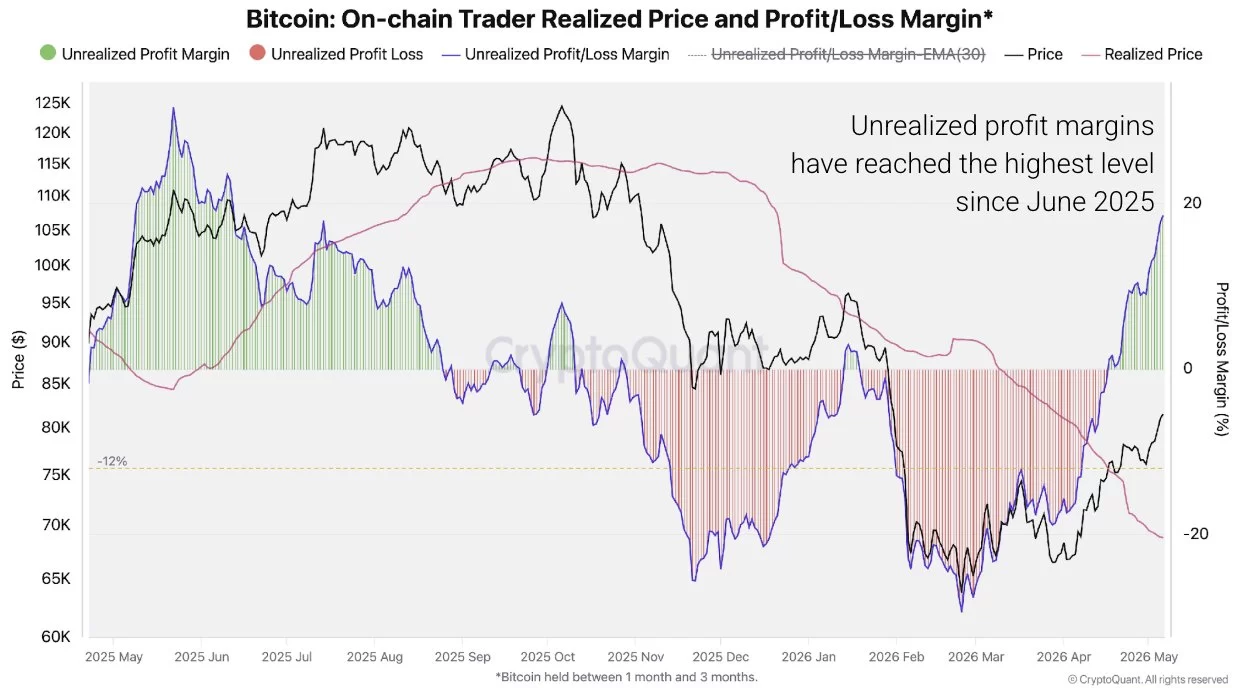
According to one analyst, “BTC’s unrealized profit has climbed to levels not seen since June 2025. This is an area where we could see some profit-taking.”
The open profit potential suggests that some investors are likely to lock in gains in response to the recent surge. Technical indicators are now under close watch as traders try to gauge the next significant move in the market.
Market participants are especially alert to the risks posed by macroeconomic events and geopolitical developments, which can provoke sudden volatility.
In the backdrop of these developments, investors are advised to exercise additional caution, recognizing that sentiment can change rapidly if new data emerges or if global risks intensify.
This environment calls for a careful balancing of optimism about possible future gains and caution over near-term downside risks, as the market weighs past patterns against an evolving landscape.