After falling below $78,800, Bitcoin (BTC) rebounded by about $1,000 at the time this report was prepared. While the broader cryptocurrency market remains under slight downward pressure, today’s release of the Producer Price Index (PPI) data reminded investors that inflation can no longer be ignored. What are analysts saying about the state of the market?
Monetary policy headwinds
Kevin Warsh has been confirmed as Federal Reserve Chair by the Senate, but as one of twelve voting members, his ability to influence the majority is limited—especially amid current economic conditions. Traditionally, Federal Reserve chairs have aligned with the majority. Since taking office, Trump has often criticized Powell, and with the latest data, he appears likely to extend his reproach to Warsh as well. The Fed’s dual mandate focuses on price stability and employment. While unemployment remains reasonable, supported by effective migration policies, inflation has surged sharply and does not seem poised for a quick turnaround.
Bitcoin outperforms traditional assets
Santiment Intelligence, in its latest report, took a more optimistic view by comparing BTC to other major assets. Over the last three months, BTC has posted a 20% gain, outpacing the S&P 500, which rose by 8%, and gold, which increased by 6%. The report attributes BTC’s outperforming run to it possibly reaching its cycle low earlier this year. Analysts at Santiment maintain a positive outlook for 2026 and beyond.
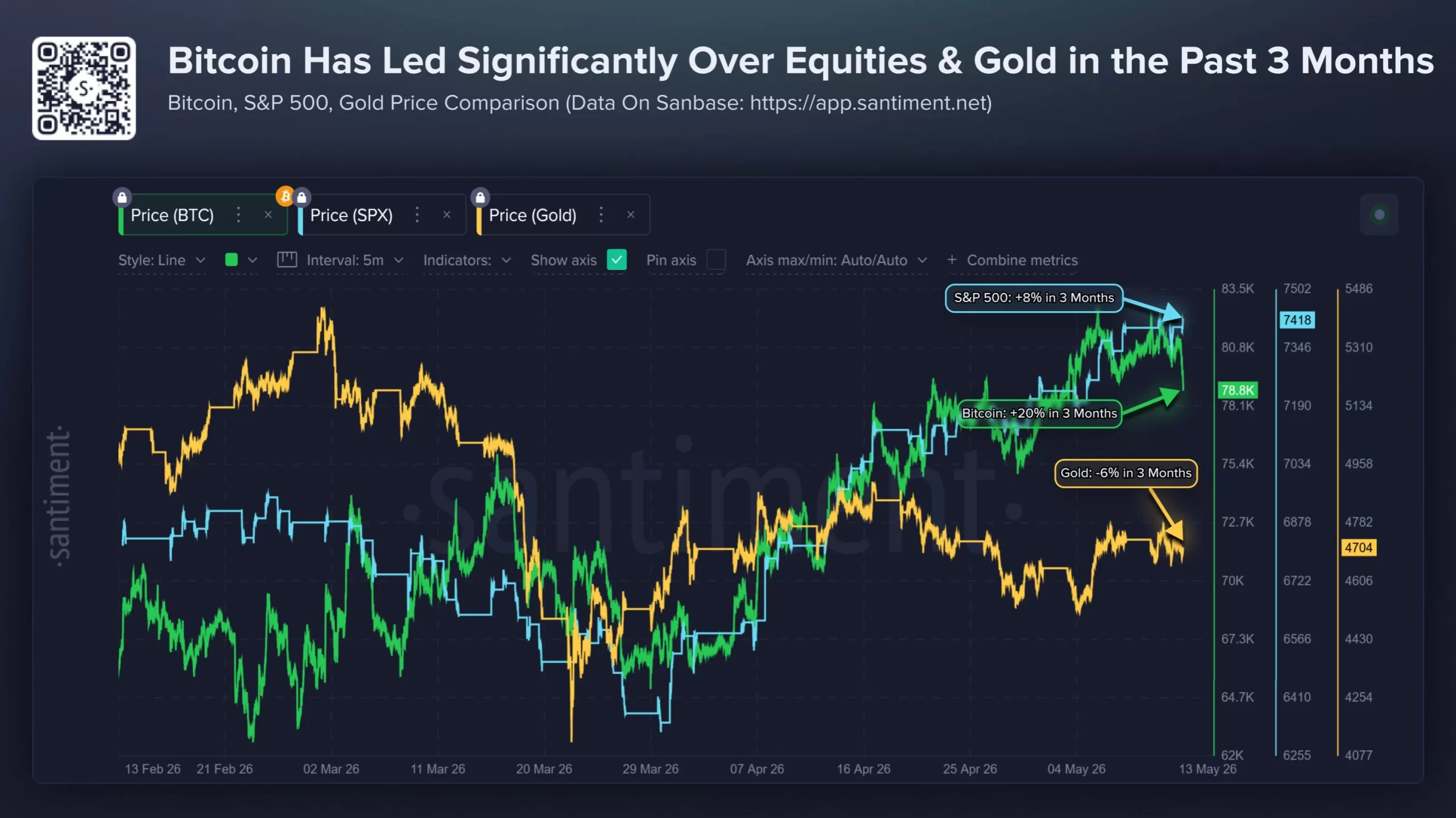

BTC has indeed seen a significant pullback since its all-time high of $126,000 recorded last October, but as the largest crypto by market cap, it has managed a strong recovery amid Middle East tensions and ongoing regulatory uncertainty with initiatives like the Clarity Act.
Despite increasingly negative mainstream media coverage of cryptocurrencies, the numbers signal continued strength and adoption, prompting optimism for 2026 and beyond.
However, if Warsh’s statements after taking office on Friday reinforce the current macro view, Santiment’s long-term optimism may be tested.
The power of the Bitcoin cycle
While many expect the negative macro outlook to weigh on crypto, some remain steadfastly focused on the recurring Bitcoin cycle. The anonymous analyst CryptoCon argues history repeats itself for BTC, with repeating bull and bear phases. He highlights the Halving Cycle Theory as a more robust indicator than business cycles, referencing global PMI data to support his point.

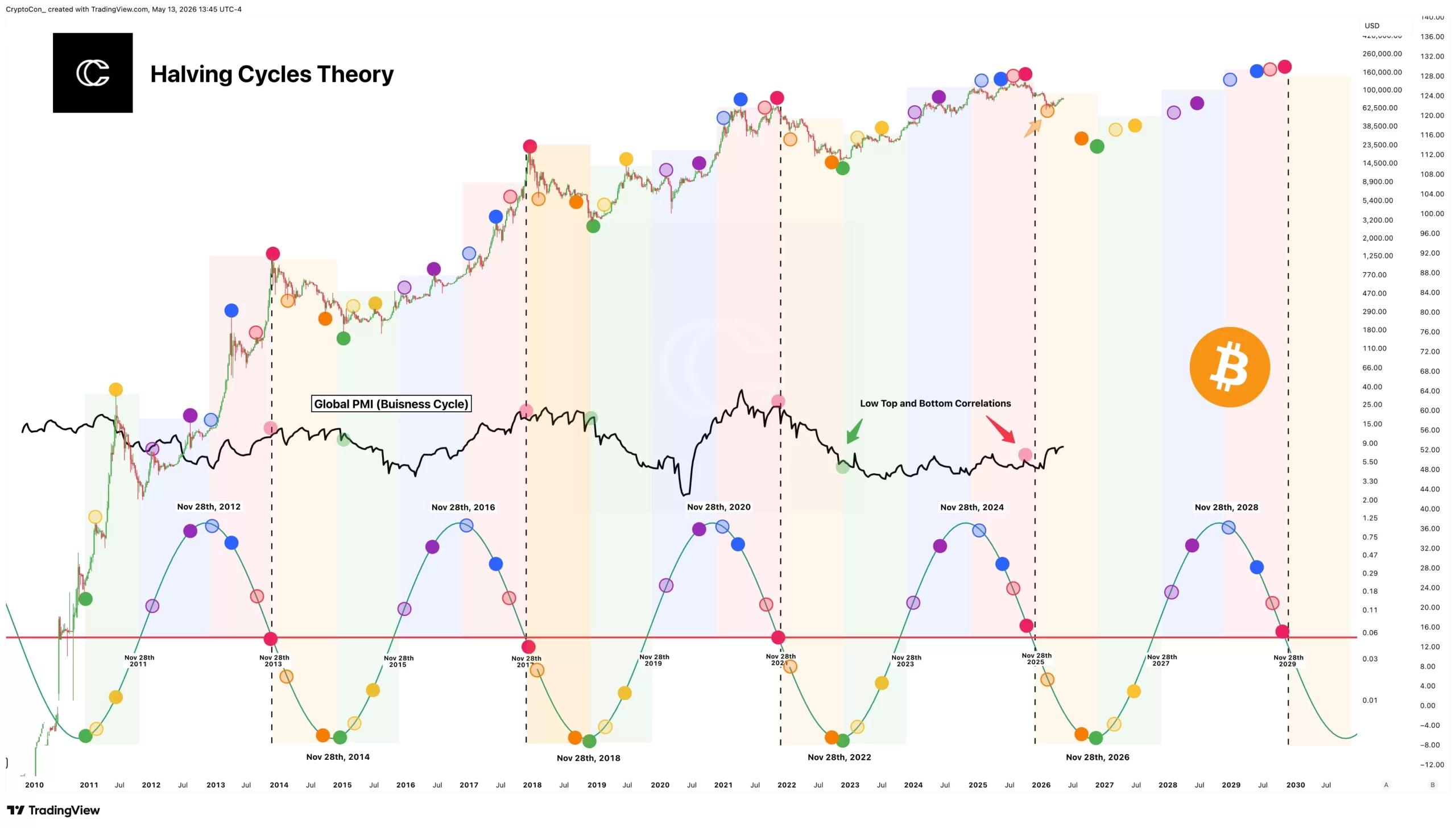
The sinusoidal waves at the bottom of the chart illustrate the Halving Cycle Theory, which suggests each Bitcoin halving (around November 28) prompts a three-year bull market followed by a one-year bear market. This model marks eleven critical highs and lows, with roughly a three-month window for each, and over Bitcoin’s 16-17-year history, the cycle has remained remarkably consistent.
There is low correlation between business cycles and Bitcoin cycles. The timing of major BTC peaks and troughs often appears random relative to business cycles. Notably, while business cycles were nearly flat from 2022 to 2025, BTC entered a typical bull phase. The Halving Cycle remains highly relevant, while the business cycle has little influence on it.
In summary, CryptoCon suggests that the deteriorating macroeconomic backdrop has limited impact on Bitcoin’s trajectory. Many analysts believe BTC’s price is more responsive to factors like market liquidity, sentiment, and its unique cycle, dismissing concerns rooted in macro negativity.
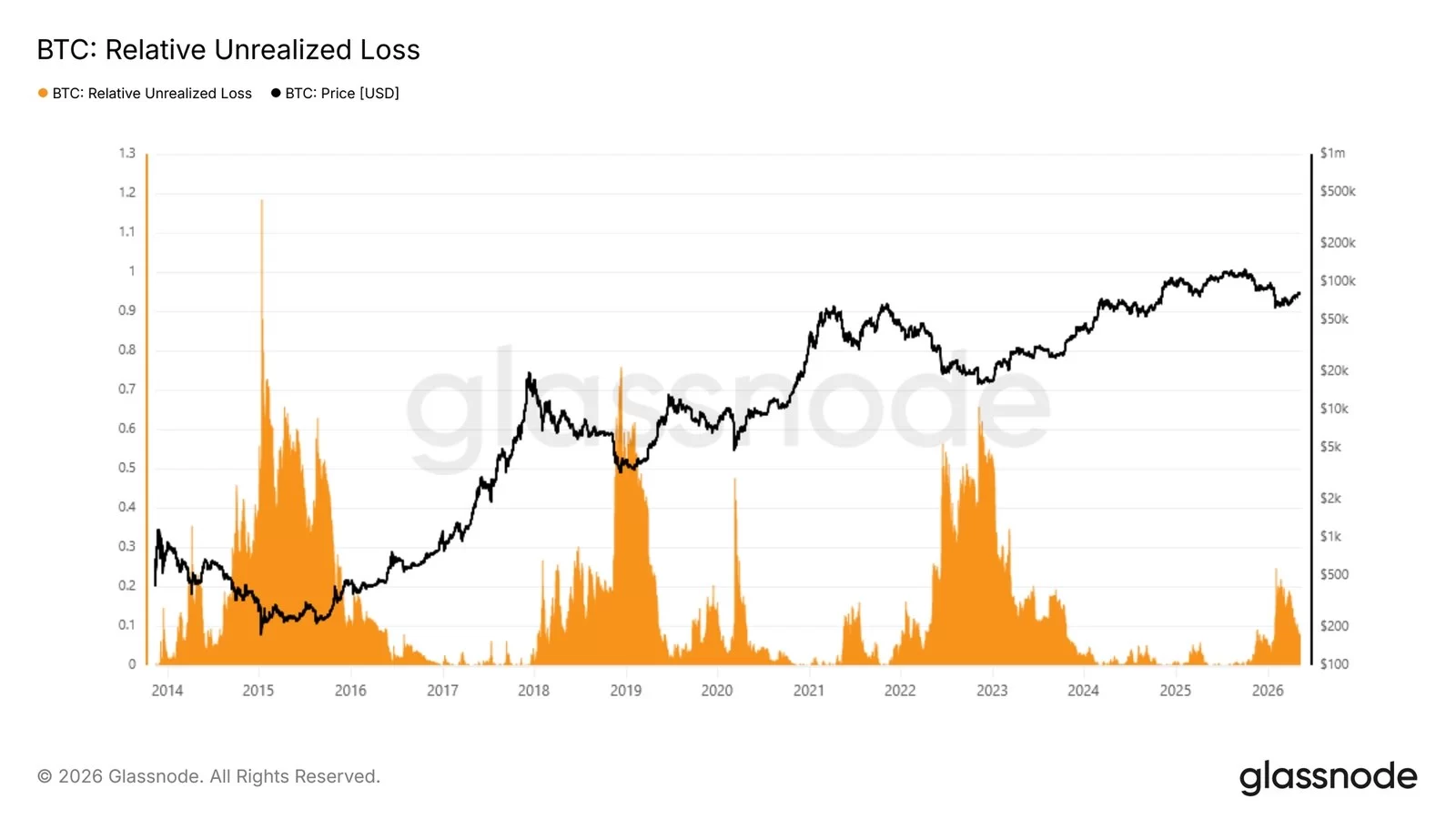
Kyle also notes that BTC has demonstrated resilience, holding firm despite lingering inflation, rising interest rates, and the risk of tighter monetary policy.
On-chain unrealized losses peaked at around 25% during the February crash and have now compressed toward 8% after BTC reclaimed $80,000. This is a rapid recovery in price action.
If $60,000 marks the cycle low, this period could go down as the shortest BTC bear market in history.