Bitcoin surged towards the $82,000 mark in a dramatic move, a rise attributed to speculation over China’s possible involvement in ongoing Iran tensions. However, as this rally unfolded, U.S. officials issued contradictory statements, leaving cryptocurrency traders navigating a familiar web of geopolitical uncertainty.
Conflicting signals on China and Iran from trump and officials
Former President Donald Trump hinted that China might play a proactive role in reopening the Strait of Hormuz, saying the country would “do what it takes” to address the situation. Meanwhile, U.S. Secretary of State Rubio publicly dismissed this notion, insisting that there was no reliance on China. As these statements reverberated through the markets, Rubio clarified:
“China and the United States agree that the Strait of Hormuz should not become a military zone. In discussions with President Xi, the main agenda item was not arms sales to Taiwan. Trump has not requested any help from President Xi; the United States does not need assistance from China.”
Market mood, crypto legislation, and fed expectations
Recent enthusiasm for artificial intelligence has buoyed global equities, and Trump’s remarks regarding Iran have given cryptocurrencies a further boost. Additionally, the Senate Banking Committee’s approval of the crypto transparency law contributed to market optimism. While executive orders on crypto could be swiftly reversed with a change in administration, the passage of the GENIUS Act and the impending CLARITY Bill (expected by July) promise a more stable regulatory environment for the sector.
Yet, despite legal steps and technological excitement, inflation remains a stubborn challenge. Analyst TKL emphasized this by sharing a widely circulated chart, noting that the likelihood of further interest rate hikes by the Federal Reserve is now more than just speculation.

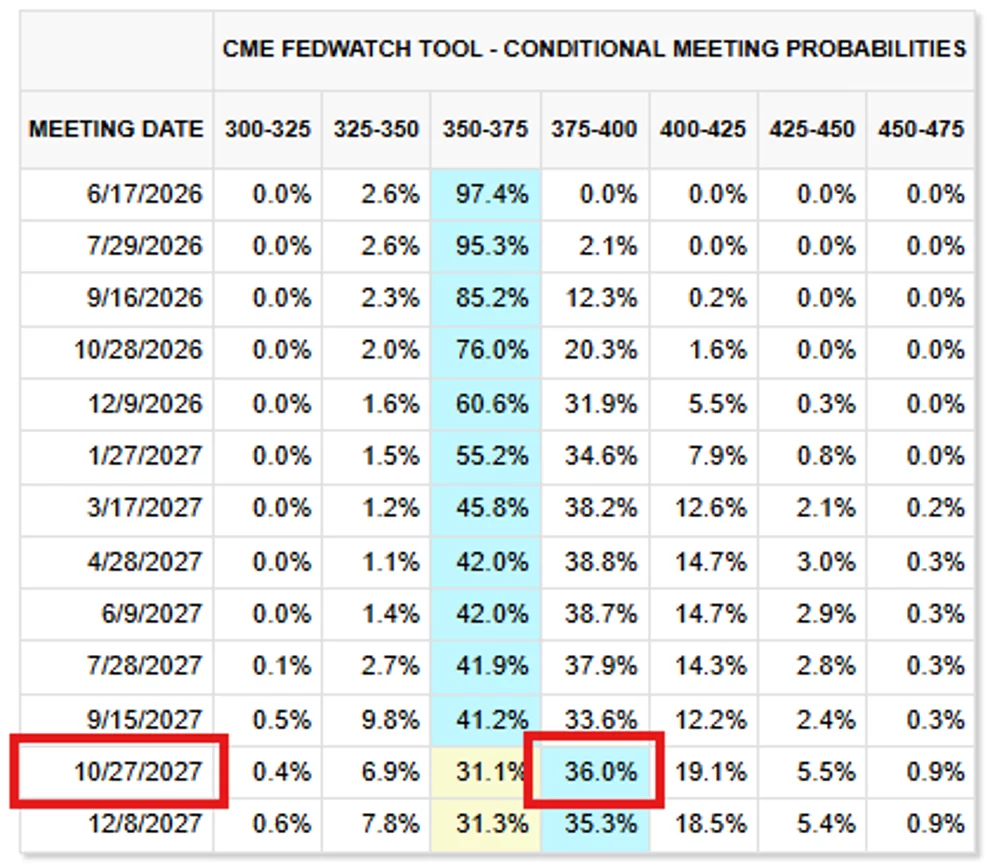
“Interest rate futures suggest that the Fed’s base scenario involves a rate HIKE as its next move. In fact, there’s only a 1% chance of a rate cut before July 2027. Inflation has reached its highest point since 2023, leaving the Fed with little choice. Meanwhile, consumer confidence has fallen to a record low, and the labor market is weakening in unusual ways. Rate hikes are pointing the way towards stagflation.”
This change, highlighted by TKL, has been a growing theme for months and appears now to be confirmed following this week’s Producer Price Index data. The so-called “crypto oracle” shared a chart predicting that BTC will quickly drop below the $75,000 threshold.

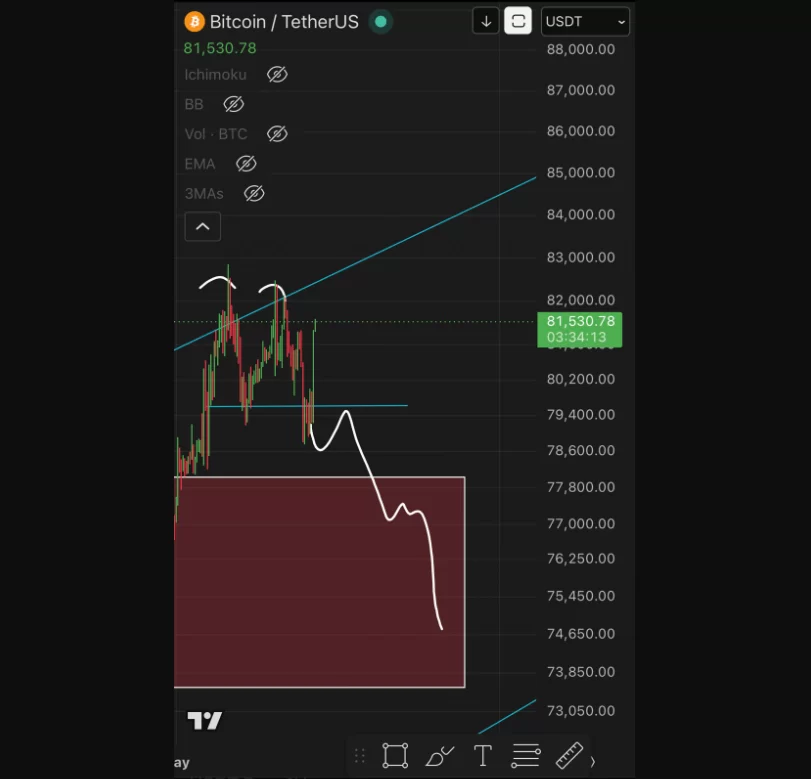
Even with these forecasts, BTC was still trading close to $82,000 as of press time, drawing in buyers eager to ride the latest wave of market volatility.
The ever-changing interplay of political maneuvering, legislation, and macroeconomic signals is clearly tightening its grip on both traditional and digital asset markets.
Investors are now bracing for further clarity from the Federal Reserve as inflation numbers push expectations for policy tightening even higher.
While the CLARITY Bill holds the promise of cementing regulatory “guarantees” for crypto, the short-term outlook remains clouded by the threat of higher rates and geopolitical crosscurrents.
For crypto holders, the coming weeks promise more volatility as policy and political winds continue to shift. The market’s path forward may depend as much on central bank decisions as on unforeseen developments in China, Iran, or Washington.