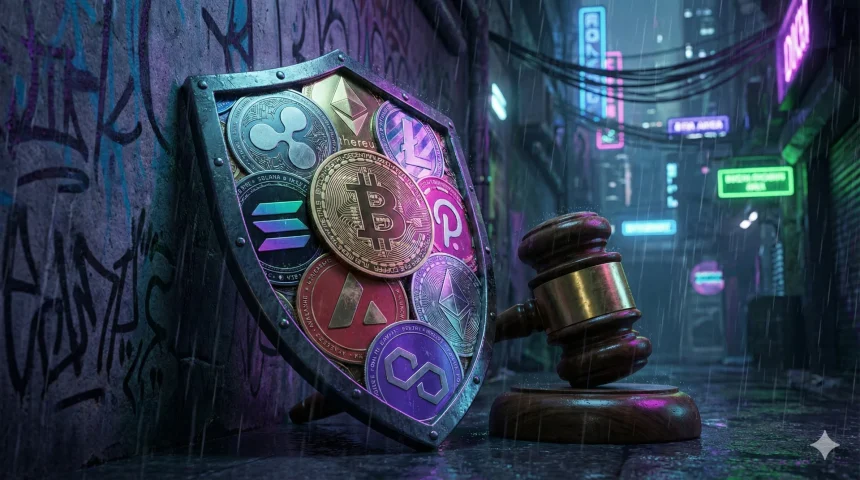

Hong Kong has introduced a proposal to expand its cryptocurrency licensing regime, aiming to bring brokers, investment advisers, asset managers, and custodians under the direct supervision of the Securities and Futures Commission (SFC).
Expanded regulatory oversight for digital asset services
The proposed Virtual Asset Services Legislation (Amendment) Bill 2026 would require all firms in Hong Kong offering these crypto-related services to either obtain a license or register with the SFC. The initiative seeks to align the oversight of digital asset businesses with the standards already applied to conventional financial services providers.
Banks and stored-value facility operators, which are entities such as payment platforms already regulated by the Hong Kong Monetary Authority, would have to register with the SFC before offering any covered digital asset services.
This legislative push follows earlier regulations implemented for cryptocurrency exchanges in 2023 and, more recently, for stablecoin issuers in August 2025.
The Hong Kong government stated that the expansion aims to introduce “fitness and propriety” prerequisites for digital asset firms, bringing their obligations in line with those faced by players in traditional finance.
SFC Chief Executive Julia Leung described the proposal as a step toward strengthening investor protection while providing clear operational guidelines for the burgeoning crypto sector.
SFC Chief Executive Julia Leung said the proposed framework would give digital asset businesses a clearer set of rules while bolstering investor protection throughout the sector.
The bill is scheduled to be read for the first time in the Legislative Council on December 2, though it has not yet been enacted into law.
Mini dictionary: Securities and Futures Commission (SFC): The SFC is Hong Kong’s primary securities market regulator, overseeing securities, futures, and leveraged foreign exchange markets to protect investors and ensure orderly market operations.
Hong Kong’s evolving approach to digital asset regulation
This move continues Hong Kong’s recent trend of adapting its financial regulations to keep pace with rising institutional and retail interest in cryptocurrencies. The earlier introduction of licensing requirements for both exchanges and stablecoin issuers marked significant steps toward a comprehensive digital asset regulatory structure in Asia’s financial hub.
Government officials claim that a more robust and unified licensing system will improve transparency and help prevent abuse in the rapidly growing digital asset space.
If the new bill passes through the Legislative Council, it will reinforce the expectation that all digital asset service providers in Hong Kong must comply with established compliance and reporting standards.
Market context: Volume shifts and industry reactions
The news comes as market data for October shows spot cryptocurrency trading volumes in Hong Kong dropped 9.7% to $1.02 trillion. In contrast, perpetual contracts tied to real world assets (RWA perps) surged 24.1% to $611 billion. Simultaneously, derivatives trading now makes up 79.1% of total centralized exchange (CEX) volume, highlighting the growing appeal of advanced crypto trading products over spot markets.
| Metric | October Value | Change |
|---|---|---|
| Spot trading volume | $1.02 trillion | -9.7% |
| RWA perpetuals volume | $611 billion | +24.1% |
| Derivatives share of CEX volume | 79.1% | Increased |
Broader conversations around tokenization and digital asset market risks continue globally, with international regulators monitoring Hong Kong’s moves as a possible blueprint for future policy frameworks.