Bitcoin hovered close to the $78,000 threshold as Donald Trump, during his latest statement, issued familiar warnings regarding Iran. Despite previously vowing to resolve the situation within four weeks, Trump found himself extending the ceasefire and intensifying his rhetoric toward Iran. The former president stressed that the outcome hinges on either reaching a deal or the United States mounting a strong military response if Iran does not comply. Iran, however, remains resistant to negotiations.
Trump’s remarks and market consequences
During his ongoing remarks, Trump expressed his relief that oil prices have not soared to $200 per barrel, contrary to some initial fears. He referenced historic conflicts lasting for years or months, indicating that the situation could drag on. Today’s comments from both Trump and Iran suggest that the standoff might persist. This points to a need for the global markets to brace for prolonged inflation and potential interest rate hikes.
Key points from Trump’s address
Some of the essential highlights from Trump’s speech illustrate both a continued hardline stance and a degree of uncertainty surrounding future developments. Trump touched on issues ranging from Iran’s leadership changes to the effectiveness of economic sanctions, and the potential impact on global oil flows.
“If we see those arrogant Iranian vessels, we’ll destroy them. Perhaps Iran has armed itself in the interim, but we’ll eliminate them too.
Iran’s top leadership has changed entirely; they are struggling. Our blockade is 100% effective. Iran cannot conduct any business.
Iran claims it wants a deal, and we are speaking with them.
We’re giving Iran a chance to resolve this turmoil, but economically and financially, they are not in a good spot. We’ll see what happens; we’re under no pressure. We could strike a deal, but we want only the best and want it to last. If there’s no deal, I’ll finish it militarily. If needed, we’ll take out Iran’s remaining targets. We are not the ones who should be rushing—they are.
If Iran does not export oil, its infrastructure will be blown up. Iran has only a few days left before this might happen. U.S. ships are prepared.
Iran is coming to us, but they are disorganized.
Americans will pay more for gasoline for a while. I once thought oil would hit $200 a barrel. Oil is now at a much different level than everyone expected. Nuclear attacks are worse than $200 a barrel oil.
Oil prices are going up slightly, and I don’t like that. I doubt the conflict with Iran will last very long. We don’t know who’s in charge in Iran, which is causing delays. I would not use nuclear weapons against Iran.”
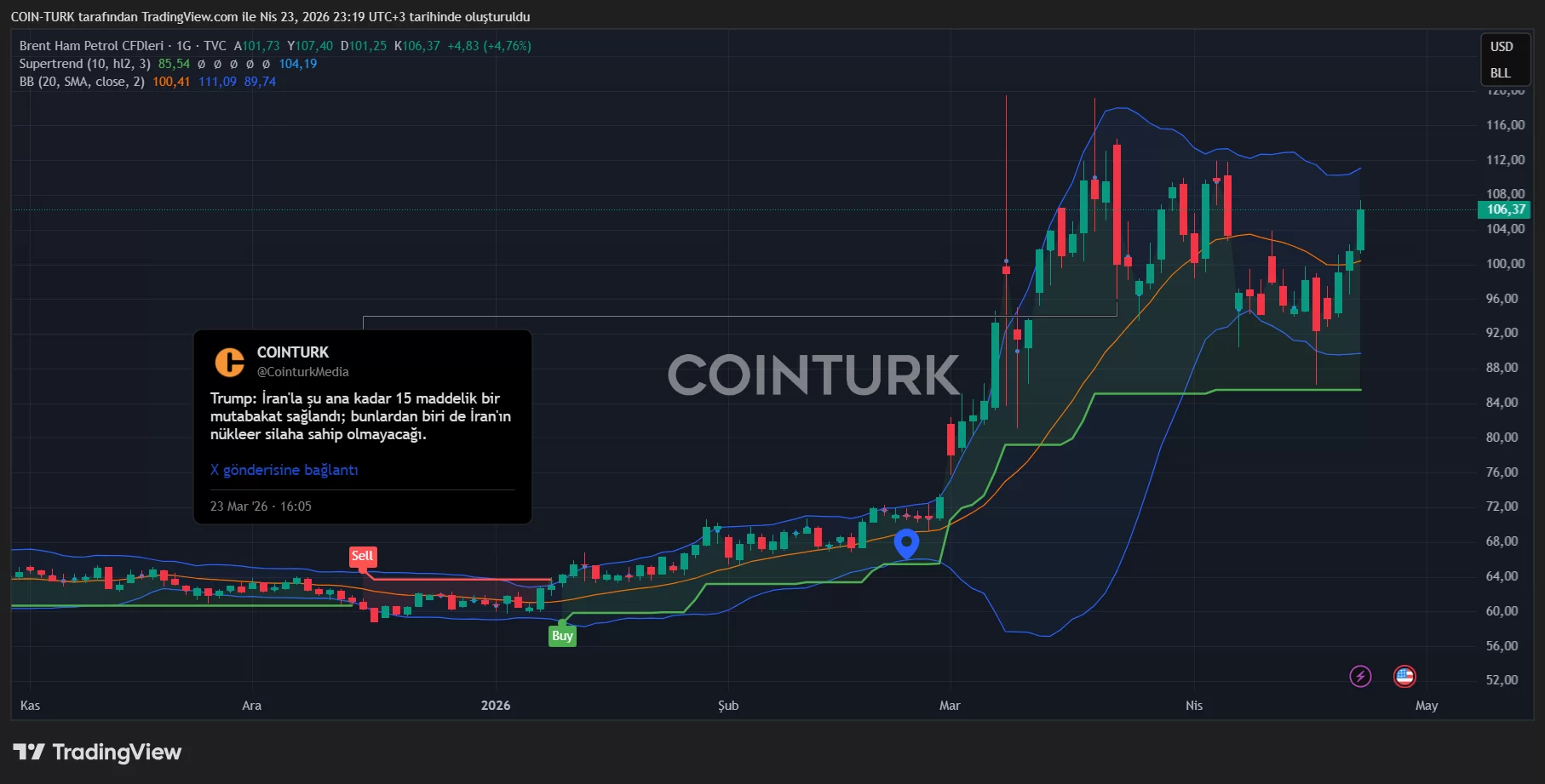
Oil prices remain in triple-digit territory, raising questions over whether ongoing tight monetary policy into its fifth year will be palatable for U.S. voters as midterm elections approach. The economic impact of prolonged high prices and tension in the Middle East could shape political outcomes.
A crucial caveat is that it’s often unclear whether Trump’s statements are bluffs, exaggerations, jokes, political theater, or genuine policy positions. It would not be surprising to hear him adopt an entirely different tone in a few hours. For now, what’s clear is that the longer this crisis persists, the less likely the Federal Reserve is to cut rates—and indeed, the possibility of further rate hikes emerges. That spells a negative outlook for cryptocurrencies.
Investors are watching closely as uncertainty and shifting rhetoric have created a volatile environment for both traditional and digital asset markets. The prospect of higher interest rates has weighed on the outlook for everything from equities to $BTC.
Geopolitical risk is adding to price swings not just in crypto, but also in major commodities. Potential supply shocks in oil markets are keeping traders on edge, and U.S. military readiness is heightening those jitters.
Meanwhile, any sustained disruption in Middle Eastern oil supplies could have ripple effects globally, exacerbating inflationary pressures and strengthening the dollar, while also putting downward pressure on cryptocurrencies.
Markets will likely remain highly sensitive to any shifts in tone or policy, especially from major geopolitical actors. Volatility could persist until there’s concrete resolution, or until monetary policy signals become clearer.