As Bitcoin (BTC) fights to hold the $78,000 level, geopolitical tensions related to Iran continue to dominate headlines. Iranian Foreign Minister’s planned visits to three countries indicate increased diplomatic activity, raising expectations for important statements over the coming weekend. For the cryptocurrency market, the central question remains: what milestones need to be crossed for a sustainable rally?
Long-term BTC investors under strain
In his recent on-chain analysis, Darkfost focused on the situation of BTC’s Long-Term Holder (LTH) group. All investors moving into this classification over the past six months have been registering losses, as BTC saw sharp declines during that period. As of today, just 66.5% of the BTC supply held by long-term investors remains in profit—a figure that’s relatively low compared to historic averages.
“We have even reached the average of -1 standard deviation, showing this metric has now approached a negative extreme compared to typical long-term levels,” as Darkfost observed in his assessment.
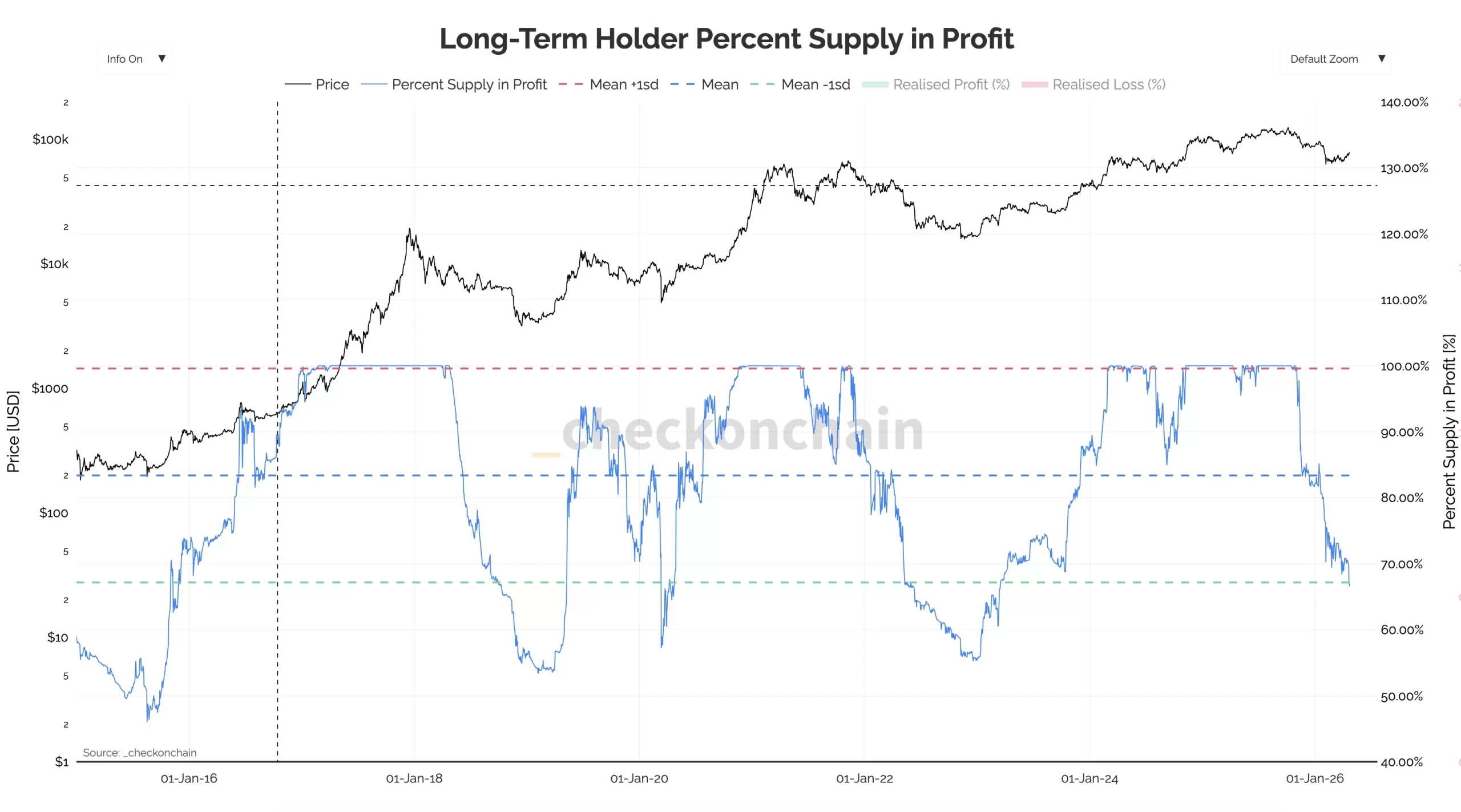
Losses among long-term holders are expected to deepen over time. BTC entering the LTH category now was often purchased at higher prices, so even with a rising spot price, these holdings can still remain underwater. This has pushed the share of long-term supply in a loss to noteworthy levels, underscoring the growing pressure on these investors.
For long-term holders to feel relief, BTC needs to approach their aggregate cost basis—implying a need for further price appreciation. Analysts believe a move toward the $90,000 mark could serve as a key inflection point. If BTC manages to clear this area, on-chain signals are likely to shift even more strongly in favor of the bulls.
In summary, for a sustained uptrend in cryptocurrency markets, BTC must decisively claim and hold above the $80,000 range. However, such a move may only materialize following substantive diplomatic breakthroughs involving Iran.
Geopolitical risks from Iran and the US
At present, there is no sign that a second round of diplomatic negotiations is imminent. So far, only Pakistan and Iran have confirmed plans to meet. According to Axios, Iran continues to lay more mines in the Strait of Hormuz this week. If any meetings do take place over the weekend, emerging newsflow will reflect those developments, but optimism remains muted for now.
Even without formal talks, officials from both sides are expected to issue new statements throughout the weekend. The United States and Iran have imposed tough conditions, making compromise difficult. As Washington deploys new naval assets to support its blockade and Iran intensifies mine-laying, the region faces escalating tensions. The Iran conflict has already reshaped global inflation prospects for 2026, and even an eventual agreement would not return conditions to those at the start of the year. The European Central Bank, the UK, and potentially even Japan could start raising interest rates, while even if Warsh takes the helm at the Fed, US rate cuts may remain off the table under current circumstances. Nonetheless, the crypto world is known for sudden surprises and rapid shifts in direction.
Since the Iran conflict began, the US has launched over 1,000 Tomahawk cruise missiles and fired between 1,500 to 2,000 critical air-defense missiles. Replenishing these stockpiles could take up to six years. To sustain its Middle East operations, the US has pulled air defense systems from the Pacific region. Ultimately, both sides may be forced to find common ground.