
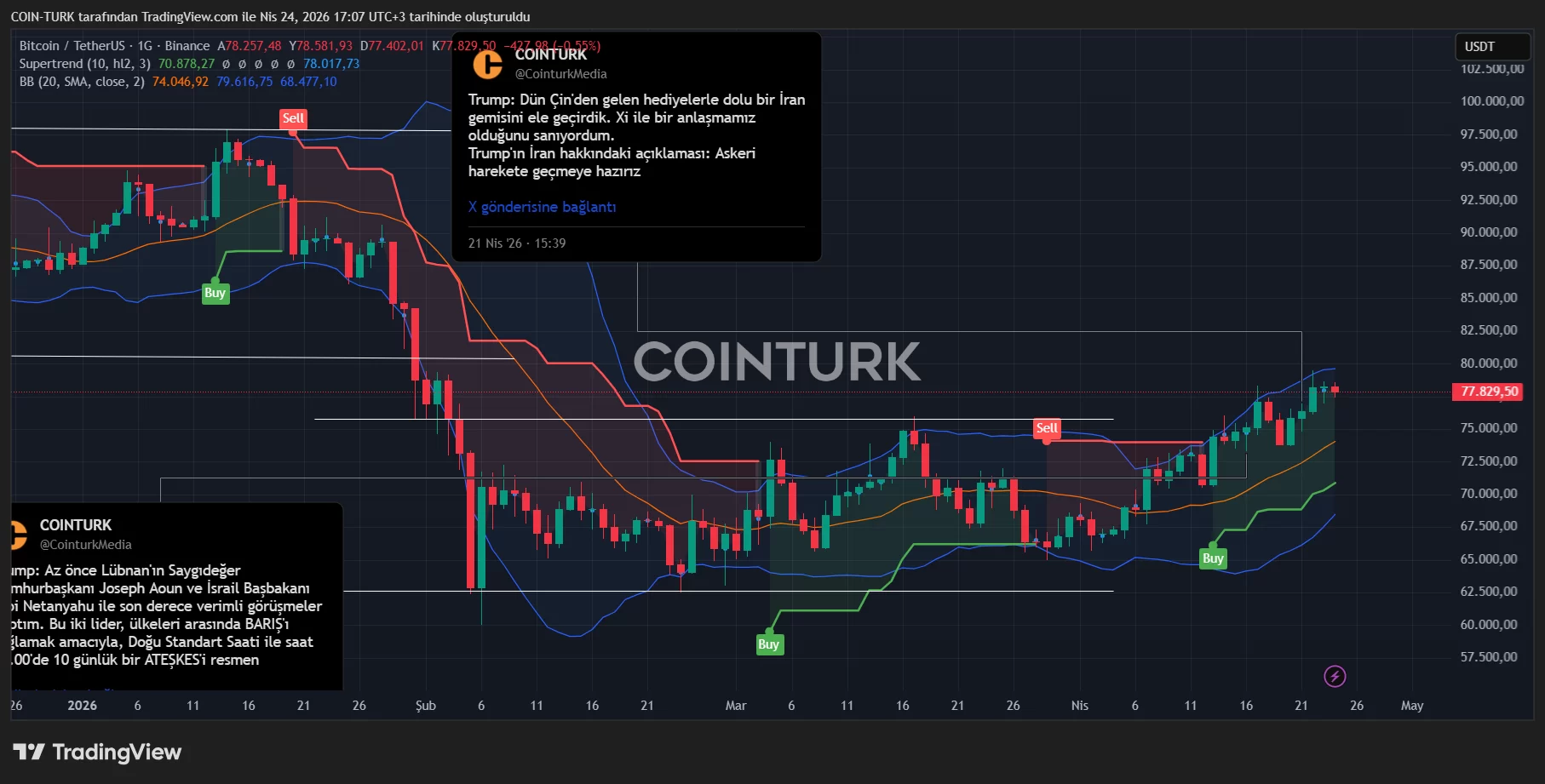
With the release of new data, BTC fell below $78,000, largely influenced by developments in Iran and growing concerns over prolonged conflict in the region. Iran’s Foreign Minister is scheduled for a series of diplomatic visits over the weekend, but with no meetings planned with the US, the timeframe mentioned by Trump yesterday may well be pushed to its limit.
US economic data impacts markets
This weekend, Iran is set to meet with Pakistani officials, and a response to the US is anticipated. The lack of direct negotiations with the US has contributed to negative sentiment in the cryptocurrency markets. The sudden decline that coincided with the release of the latest figures was fueled by confirmation that no direct talks between the nations will take place over the weekend.
Michigan sentiment and inflation numbers
The latest Michigan data were as follows:
- University of Michigan Consumer Sentiment Index Final: 49.8 (Forecast 48.5, Previous 47.6)
- University of Michigan 1-Year Inflation Expectations Final: 4.7% (Forecast 4.8%, Previous 4.8%)
Director of Consumer Surveys Joanne Hsu observed that consumer sentiment has particularly mirrored the chaotic days marked by trade tariff disputes, especially in relation to the labor market.
Joanne Hsu explained, “Consumer confidence slipped 3.5 points this month, dropping to its lowest since June 2022. The decline was broad-based, affecting all political affiliations, income groups, age, and education levels. Expectations for both short- and long-term business conditions worsened, reaching nearly the same low levels observed during last year’s reciprocal tariff regime. Although gasoline prices fell slightly following the announcement of a two-week ceasefire, the confidence index only regained a small fraction of its earlier losses. The Iran conflict appears to be shaping consumer attitudes mainly through shocks in fuel and possibly other prices. On the other hand, military or diplomatic moves that fail to ease supply constraints or lower energy costs are unlikely to boost consumer confidence.”
One-year inflation expectations surged to 4.7% this month from 3.8% in March, marking the largest monthly jump since April 2025. This new figure exceeds levels seen throughout 2024 and remains well above the 2.3-3.0% range from the two years before the pandemic. Meanwhile, long-run inflation expectations, which had moved between 3.2% and 3.3% over the past four months, rose to 3.5% in April, their highest since October 2025. For context, these figures had ranged between 2.8% and 3.2% in 2024 and stayed below 2.8% during both 2019 and 2020.
Leading up to the data release, cryptocurrency investors were already bracing for volatility as news reports highlighted increasing tensions in the Middle East, particularly between Iran and the US. Lack of diplomatic progress and ongoing uncertainty fueled risk aversion across digital assets.
Traders have been monitoring both geopolitical signals and US macroeconomic data closely, given their impact on market direction and safe-haven demand for assets like BTC. The latest data provided little reassurance, prompting a price dip in the world’s largest cryptocurrency.
Financial analysts highlight that both inflation worries and regional instability continue to weigh on sentiment, contributing to market choppiness. Investors remain cautious, hesitant to take larger positions amid uncertain outcomes and rising geopolitical risk.
As the weekend unfolds without US-Iran talks, eyes are now on further political developments and any unexpected statements or market-moving events. For now, caution is likely to remain the order of the day in both traditional and crypto markets.