
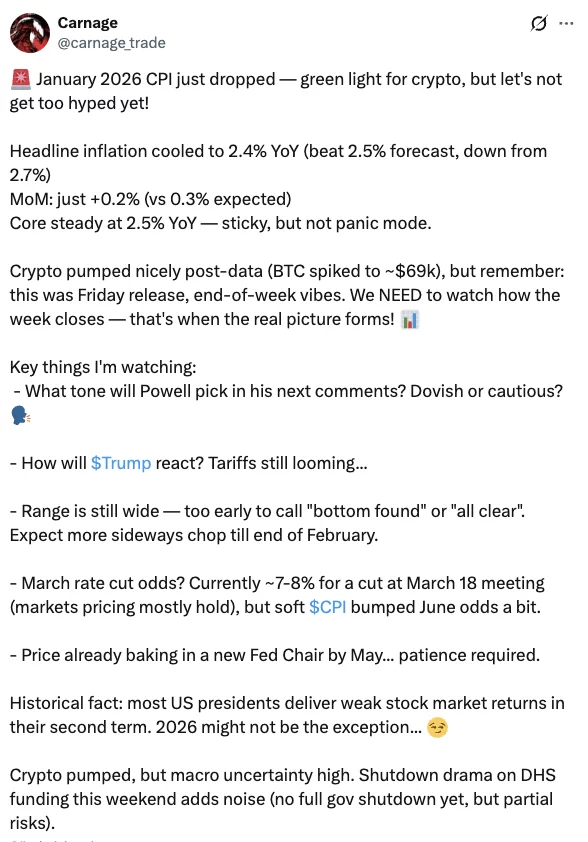
Cryptocurrency markets experienced a brief respite following the release of January inflation data from the United States. Ethereum traded at $2,051, seeing a limited recovery after the data, while Bitcoin began moving toward $69,000—an early indicator of renewed market risk appetite. Despite these positive signals, caution remains, particularly regarding the technical outlook for Ethereum.
U.S. Inflation Figures Shape Market Sentiment
The U.S. Consumer Price Index (CPI) increased by just 0.2% in January on a monthly basis, coming in below expectations. Annual inflation eased from 2.7% to 2.4%, driven largely by a 1.5% drop in energy prices. Meanwhile, core inflation, which excludes volatile items like food and energy, crept up by 0.3% month-over-month. This combination of data reinforced the view among market participants that the current disinflation trend in the U.S. remains intact.
Ethereum’s Technical Outlook Remains Cautious
While supportive macroeconomic indicators have emerged, Ethereum’s price action does not yet suggest a clear trend reversal. Market watchers identify the $2,100 level as a crucial technical threshold: a sustained break above this hourly high could trigger short coverings and provide fresh momentum for the asset. However, so far, Ethereum’s resistance at this level has held, keeping many traders on alert.
On the downside, $1,924 stands out as the nearest support point. Should Ethereum decisively breach this level on the hourly chart, selling pressure could deepen and set the stage for a further move down toward $1,866. Based on recent market behavior, this lower boundary is now seen as a significant liquidity target for short-term traders.
A cautious optimism prevails throughout the wider crypto market. Last week, notable inflows into spot Bitcoin ETFs pointed to sustained institutional demand. The renewed interest from large U.S.-based funds in crypto assets could provide medium-term price support, should this trend continue.
Inflation Data Influences Fed Rate Outlook
The cooling inflation figures prompted a pullback in U.S. Treasury yields, with two-year yields dipping by a few basis points. U.S. equity futures, meanwhile, traded mostly flat. According to market pricing, the chances of a rate cut by the Federal Reserve at the March 18 meeting remain low, hovering between 7% and 8%. In contrast, expectations for a rate reduction at the Fed’s June meeting have strengthened slightly in the wake of weaker inflation data.
Elsewhere in the financial sector, another development has caught the attention of analysts. Several regional banks in the U.S. have begun shrinking their balance sheets, and tighter credit conditions may pose fresh challenges for riskier assets. If liquidity in the broader market contracts as a result, cryptocurrencies could face increased volatility and turbulence ahead.
Bloomberg Economics analysts highlighted that the decline in core inflation appears more pronounced than in previous years. They added that drops in automobiles, food, and energy prices could continue to weigh on inflation in the months to come. However, resilience in services and entertainment spending suggests the battle with inflation is far from finished.
Overall, while macroeconomic winds are partly at Ethereum’s back, the technical outlook still advises caution. Market participants are watching closely to see whether Ethereum can surmount key resistance levels—and how the Federal Reserve might shape monetary policy in the second half of the year.