Trump did not get what he wanted from Powell yesterday, and it is now expected that Warsh will become the new Fed Chair after securing Senate confirmation on May 4. However, today’s economic data suggest that lowering interest rates will not be as easy as hoped. Indeed, the European Central Bank is also considering an interest rate hike due to changing market conditions related to Iran.
Trump’s criticism and foreign policy tensions
At the time of writing, Trump was making pointed statements about the German Chancellor. Frustrated that Germany left the US isolated in the conflict with Iran, Trump’s anger now extends to NATO as a whole. This issue is expected to remain a hot topic in the coming months. Trump expressed his views as follows:
“The German Chancellor should dedicate more time to ending the war between Russia and Ukraine (where she has been completely ineffective!) and solving her country’s issues, especially migration and energy. She should interfere less with those trying to eliminate Iran’s nuclear threat. That way, the entire world, including Germany, would be a much safer place! President DJT”
Economic outlook and advisor insights
Meanwhile, Trump’s senior economic advisor, Kevin Hassett, was giving a live interview. Key points from his remarks included:
“It would be a policy mistake for the ECB and the Fed to raise rates. The increase in productivity will keep core inflation under control. New home construction could boost growth to 4-5 percent.”
At 15:30, newly released reports confirmed that inflation remains stubbornly high, with PCE at 3.5 percent and Core PCE at 3.2 percent. Meanwhile, GDP growth has already slowed to 2 percent, indicating the economy is losing momentum even as prices remain elevated. This is precisely the scenario the Fed dreads: a slowing economy with persistent inflation.
Such a situation raises the risk that interest rates may stay higher for longer—or, in a worst-case scenario, could even rise. This spells trouble for risk assets and may be an early warning signal for a potential bear market.
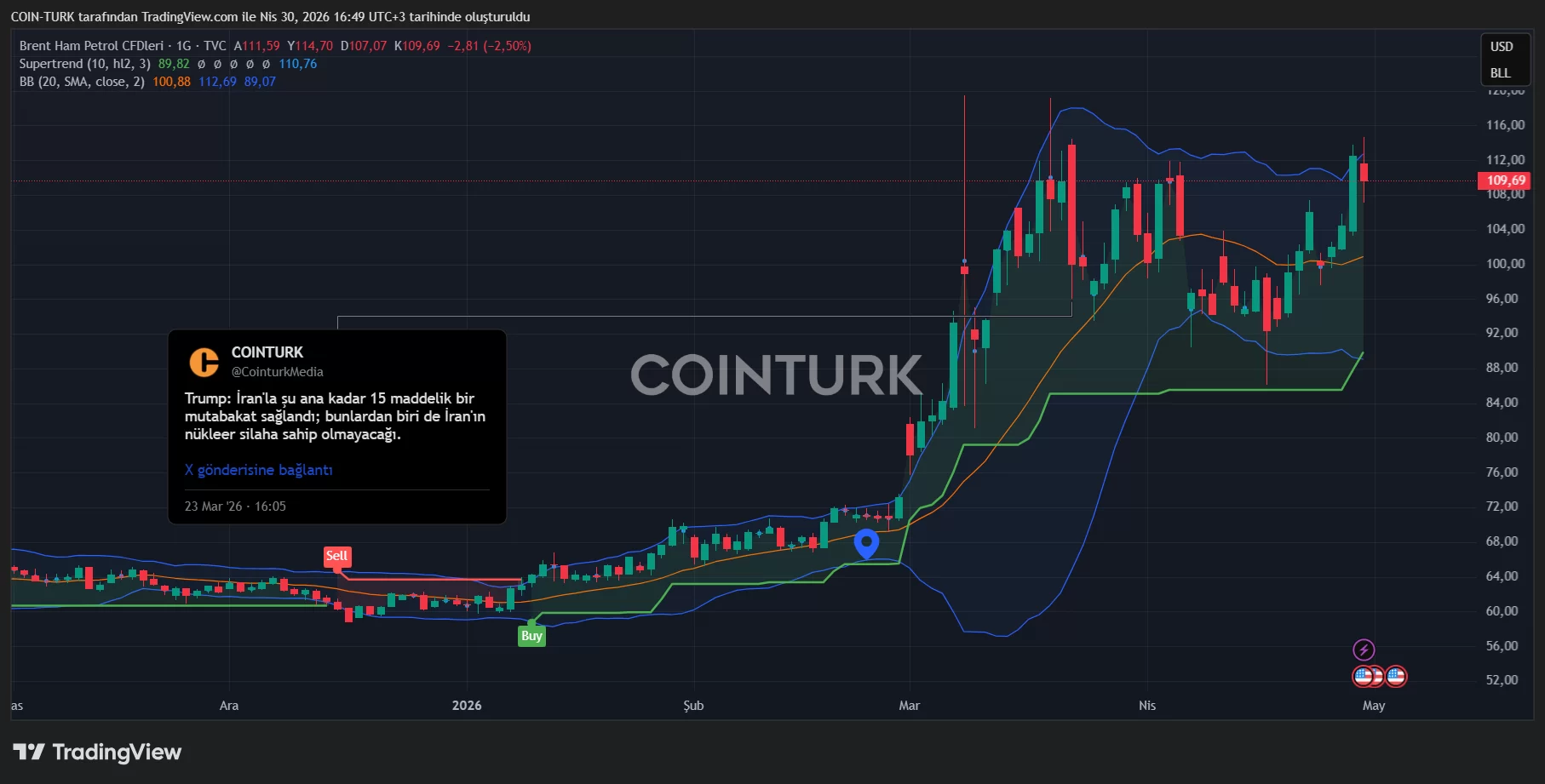
Oil prices have dipped below $110 for now, but with the intensity of official statements expected to increase over the weekend, heightened volatility in energy markets seems almost inevitable.
The interplay between central bank decisions, inflation, and global tensions is creating a highly uncertain outlook for investors. Both the Fed and the ECB are now caught between the risks of runaway inflation and the dangers of stifling growth.
Markets are weighing the likelihood that central banks may abandon rate cut plans and, instead, keep financial conditions tight. The resilience of inflation, as shown by the latest PCE report, will keep policymakers on alert for some time.
With geostrategic friction intensifying from Iran to Ukraine, statements from leaders like Trump are adding to global uncertainty, impacting everything from safe havens to cryptocurrencies.
As policy expectations shift in Washington and Europe, traders are bracing for the possibility of prolonged market turbulence in the coming weeks.