





Kraken, the prominent cryptocurrency exchange, has become the first crypto company to secure direct access to the U.S. Federal Reserve’s main payment infrastructure. The milestone approval, reported by the Wall Street Journal and based on direct sources within Kraken, is expected to reshape how digital asset firms interact with the traditional banking system. The move allows Kraken to sidestep intermediary banks, offering faster, cheaper, and more secure dollar transactions for its users—a significant leap for the crypto industry’s integration into mainstream finance.
Kraken Achieves Groundbreaking Regulatory Approval
With this groundbreaking decision, Kraken can now conduct U.S. dollar transfers directly over the Fed’s core payment rails, including the Fedwire and FedNow systems, without relying on intermediary—or correspondent—banks. Historically, access to these systems had been exclusive to conventional banks, separating crypto companies from the heart of the nation’s finance infrastructure. Now, Kraken’s direct entry marks a significant softening of those boundaries, ushering in a new chapter for the intersection of digital currencies and established financial systems.
Immediate Benefits for Kraken’s Customers
The direct access granted to Kraken is expected to have immediate, tangible benefits for its clients. Deposits and withdrawals in U.S. dollars are set to become much faster, with the potential for reduced fees—an innovation the crypto user base has long awaited. It is a dramatic shift from just a few years ago, when crypto exchanges faced an uphill battle simply finding U.S. banking partners. Now, Kraken’s customers can benefit from instantaneous, round-the-clock transfers via the FedNow network, closing a critical gap between digital assets and fiat banking.
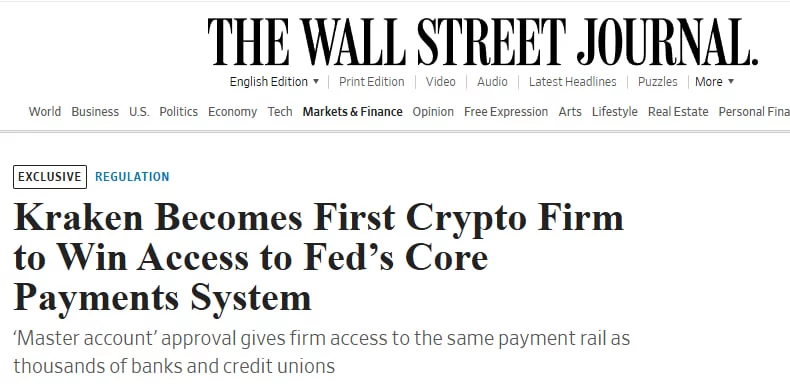
According to Kraken, this move will make the process of depositing and withdrawing dollars not only far more rapid but also considerably more affordable for users. The significance is heightened by the recent history of crypto firms, which once struggled to establish banking relationships in the United States. These advancements reflect major progress in how closely crypto businesses can now work with the broader financial system.
Even more notably, with the integration of FedNow, Kraken users will gain access to continuous, 24/7 money transfer capabilities—an option virtually unheard of in traditional banking circles. This around-the-clock service promises to set a new benchmark for speed and efficiency in financial transactions involving digital assets.
Industry observers highlight that this development could encourage other crypto companies to pursue similar permissions. It sends a powerful signal that U.S. regulatory attitudes toward the sector are evolving, especially after a period marked by official clampdowns and uncertainty in the digital currency space. Kraken’s approval may act as a catalyst, potentially accelerating innovation throughout the market.
Long-term, the move is poised to help cement the presence of crypto firms within the U.S. financial ecosystem. Some experts suggest that the decision, coming during the Biden administration, signifies a dramatic reversal from the stricter tone adopted in recent years. As more crypto entities receive similar permissions, the broader digital asset market in the United States could enjoy heightened security and legitimacy under federal oversight.
“This milestone demonstrates the growing acceptance of cryptocurrency firms by traditional finance and regulatory institutions,” Kraken stated in their public announcement. They see this as not just a technical upgrade, but a foundational step towards further integration of crypto with regulated banking services.
As the dust settles on this landmark development, Kraken’s successful bid for direct Federal Reserve access not only sets a precedent for the crypto sector but could also lay the groundwork for broader adoption and acceptance of digital asset services within the U.S. economy. The landscape for cryptocurrency in the country, once fraught with regulatory hurdles and banking uncertainties, now appears poised for genuine alignment with mainstream financial networks.