US President Donald Trump was widely expected to deliver critical statements this week, and the first of these announcements has just arrived. After sending thousands of troops to the region and designating April 6 as a deadline, Trump declared that Washington is “on the verge of reaching an agreement.” While Iran initially denied any communication with the US—let alone the prospect of talks—it has now shifted to denying only the likelihood of a deal, signaling some progress toward negotiations. The pressing question now is: what happens if no agreement is reached?
Political stakes rise for Trump as oil prices climb
As the US approaches midterm elections, Trump’s aggressive actions toward Iran are seen by many analysts as one of the most pivotal—and potentially risky—moves of his political career. Crude oil prices have surged above $107 per barrel, remaining in the triple-digit range for weeks. This persistent increase has been pushing US inflation higher, making it unlikely that interest rates will fall this year. As a result, Trump is eager to bring this cycle of escalation to a swift close—and he has no shortage of reasons to do so.
Trump signals “painful” consequences if no deal emerges
In a statement moments ago, Trump claimed that significant progress has already been made but warned that failure to reach an accord with Iran could have damaging consequences for the country. According to Trump, the US is in the midst of “serious negotiations” with a “new and more reasonable regime” in Iran, aiming to bring an end to ongoing military operations.
“The United States is engaged in serious negotiations with a NEW AND MORE REASONABLE regime in Iran to bring an end to our military operations there.
Significant progress has been made; however, if, for any reason, a deal cannot be reached soon—which is quite likely—and if the Strait of Hormuz is not immediately reopened to traffic, we will conclude our ‘friendly visit’ to Iran by destroying every power plant, oil well, Kharg Island, and possibly all water treatment facilities, which we have so far deliberately left untouched. This would avenge the many troops and others killed by the former Iranian regime during its 47-year ‘Era of Terror.’ Thank you for your attention. President DONALD J. TRUMP”
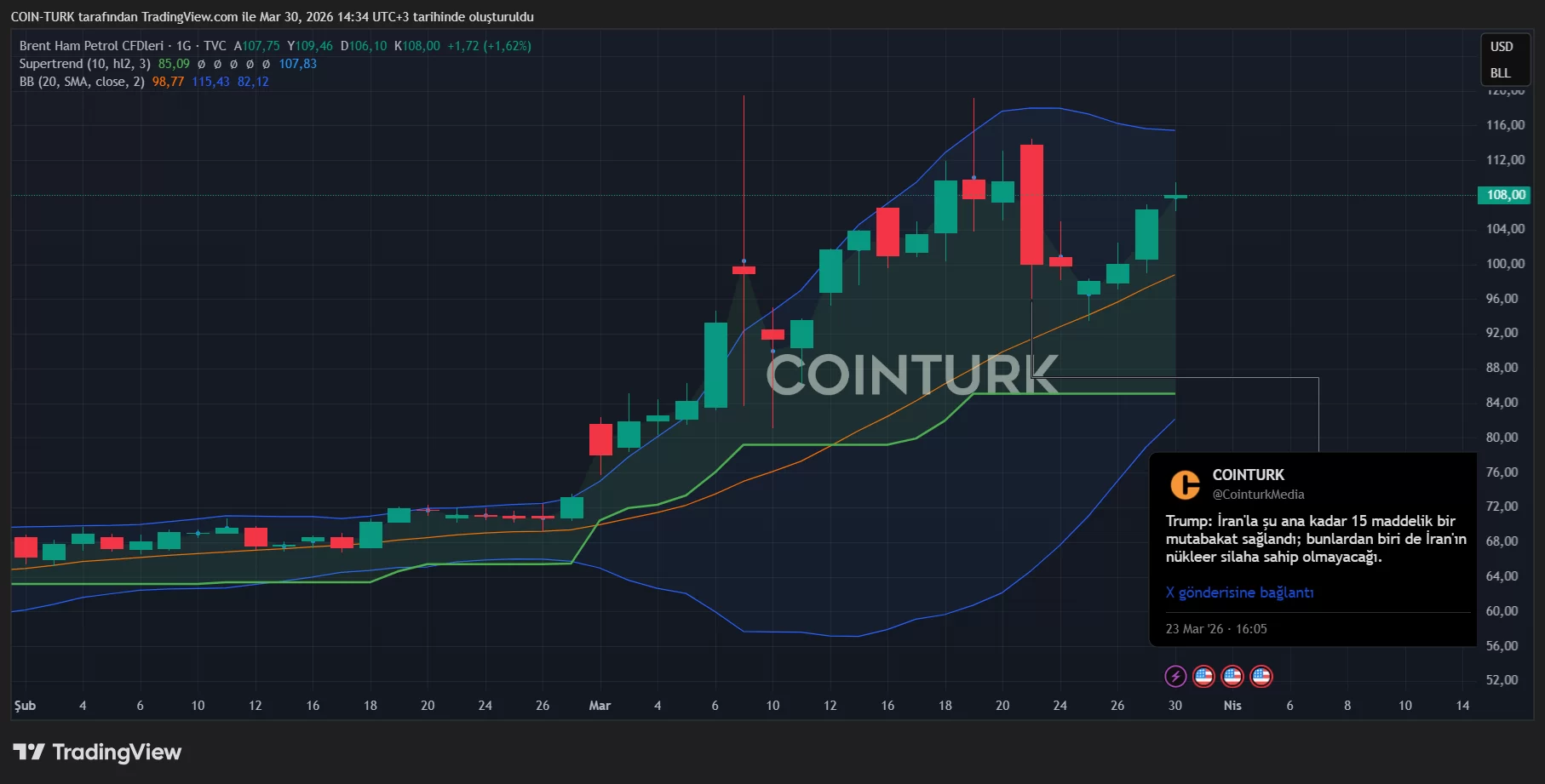
Market observers are now watching oil price charts closely. The recent developments have triggered a slight upward movement, indicating that investors are beginning to price in the growing risks associated with Trump’s latest announcement.
While Trump’s warning adds a new dimension to already tense US-Iran relations, experts note that both military and economic factors are at play. The possibility of further escalation—especially targeting Iran’s vital infrastructure—has not gone unnoticed by global markets, as reflected in increased volatility in energy prices.
Iran has so far sought to downplay reports of dialogue, sticking to a more dismissive tone regarding any negotiations. However, shifting from outright denial of contacts to denying the likelihood of a deal is seen as a subtle but meaningful change in rhetoric. This nuance suggests progress toward at least the preliminary stages of diplomacy, even if a breakthrough remains uncertain.
International analysts are weighing whether Trump’s strong statements are intended more for domestic audiences ahead of elections, or whether a genuine diplomatic opening is emerging between the two adversaries. Either way, tensions are running high, with energy markets bearing the immediate impact of each development.
As the April 6 deadline approaches, attention remains focused on both the negotiating table and the oil markets—two fronts likely to shape the next phase of US-Iran relations. Investors and policymakers alike are bracing for swift responses depending on whether talks yield a deal or give way to new escalations.