Originally conceived to enable payments without banks, Bitcoin soon evolved into a widely used investment tool, catalyzing the development of the broader cryptocurrency ecosystem. In recent years, a notable shift has occurred: payment services have migrated toward stablecoins, and the concept of tokenization has come to the fore. Tokenization refers to the digital transformation of real-world assets through blockchain technology, ushering in what some call the “new digital age.”
Understanding tokenization
At its core, tokenization involves transferring real-world assets such as bonds, commodities, and property onto the blockchain. Essentially, it is the process of dividing an asset into pieces and giving each piece a digital certificate, much like company ownership is represented by shares. Through tokenization, a wide array of assets—from houses and gold to artwork and bonds—can be digitally represented and traded. This shift is seen as revolutionary, akin to the leap from depositing cash in a bank to viewing one’s funds in a digital account. Extending this innovation to assets like stocks via blockchain signals a comparable paradigm shift in finance.
Assets that typically require months to sell, such as property or fine art, can now be traded instantly around the clock on exchanges using tokens. Tokenization reduces the manual interventions of intermediaries like notaries, land registries, or banks, instead automating transactions via smart contracts. While the NFT boom previously ignited similar discussions, the tokenization phenomenon is much broader in scope. Ambitions for U.S. exchanges to operate as 24/7 tokenized platforms demonstrate the seriousness of this financial evolution, as industry leaders break ground on such initiatives.
Major financial institutions like BlackRock and JPMorgan foresee a future in which the entire financial system adopts this model. Traditionally, stock trades require two days to settle (T+2), but tokenization slashes this process to mere seconds, dramatically improving efficiency.
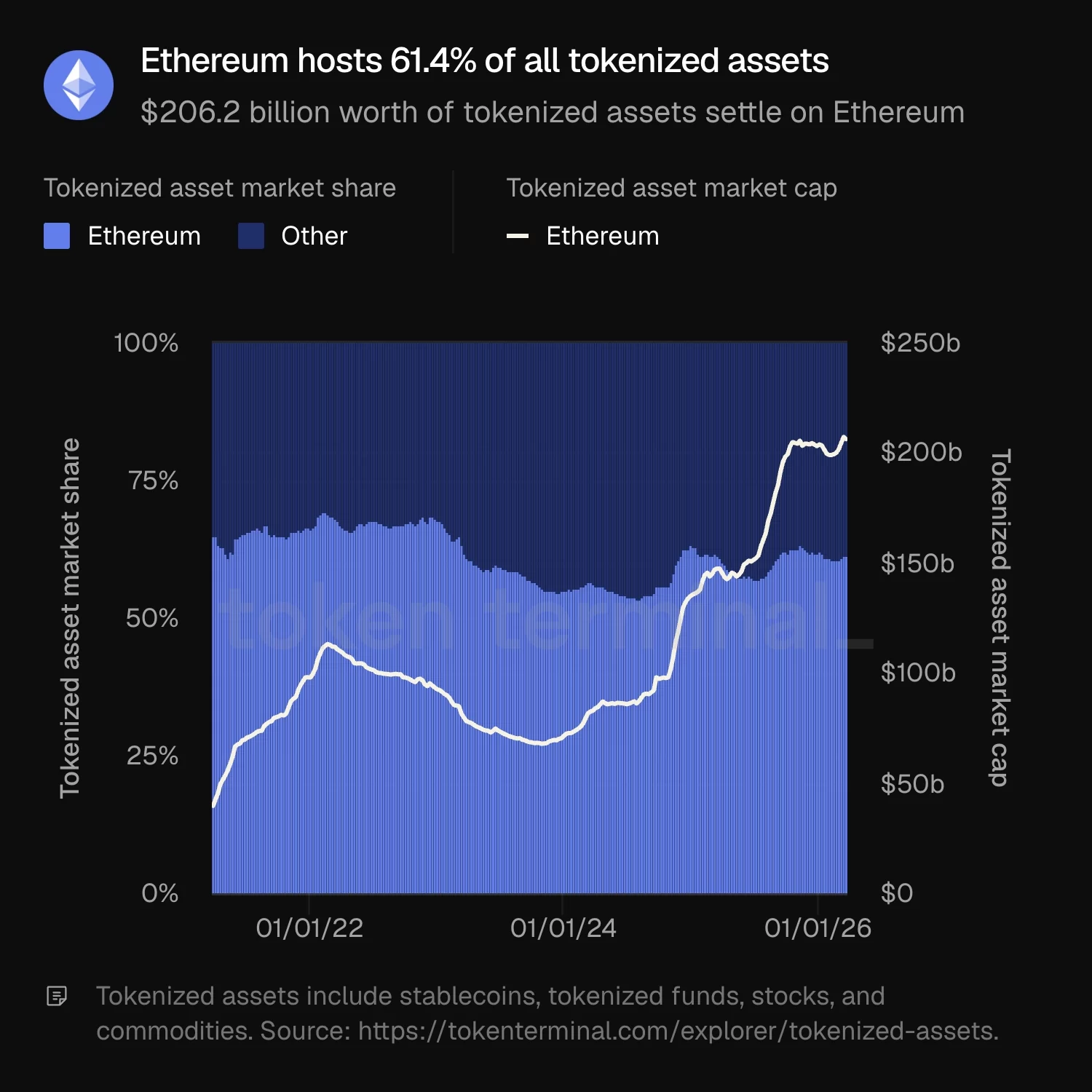
According to Token Terminal, Ethereum currently hosts 61.4% of all tokenized assets, underlining the major growth opportunities for public blockchain networks. The total value of tokenized assets transacted on Ethereum has reached $206.2 billion. Compared to the same period last year, the market capitalization of such assets on Ethereum has surged by over 40%, underscoring the rapid expansion in this sector.
BCG’s outlook for tokenization
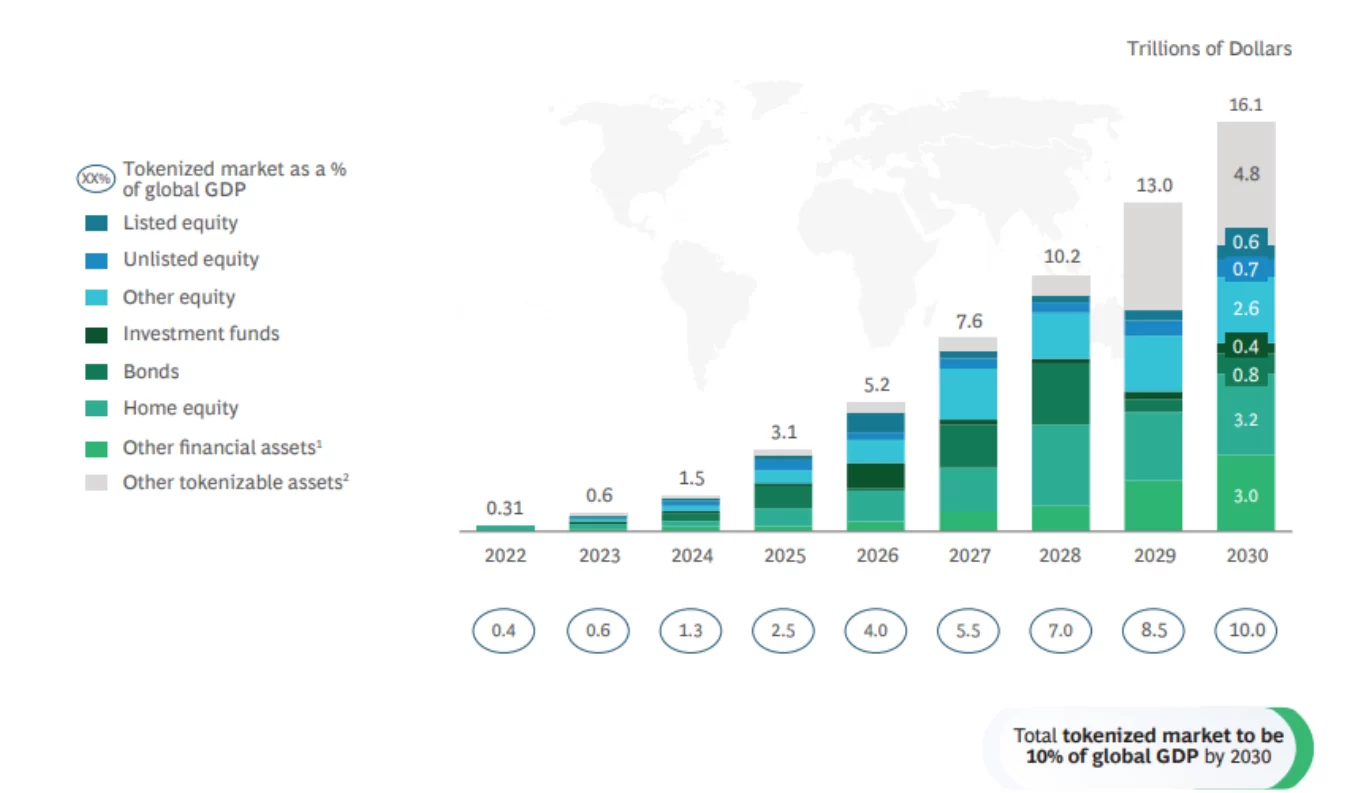
A joint report by BCG and ADDX projects that tokenization could grow 50-fold by 2030, representing a $16.1 trillion business opportunity. The report positions tokenization as a pivotal milestone in the ongoing transformation of traditional finance, offering a new paradigm for asset management and liquidity.
More than half of global assets are currently held in illiquid formats. While these typically trade at a discount compared to liquid assets, the BCG report suggests that tokenization offers a direct solution to enhance their liquidity and market accessibility.
Key perspectives from McKinsey
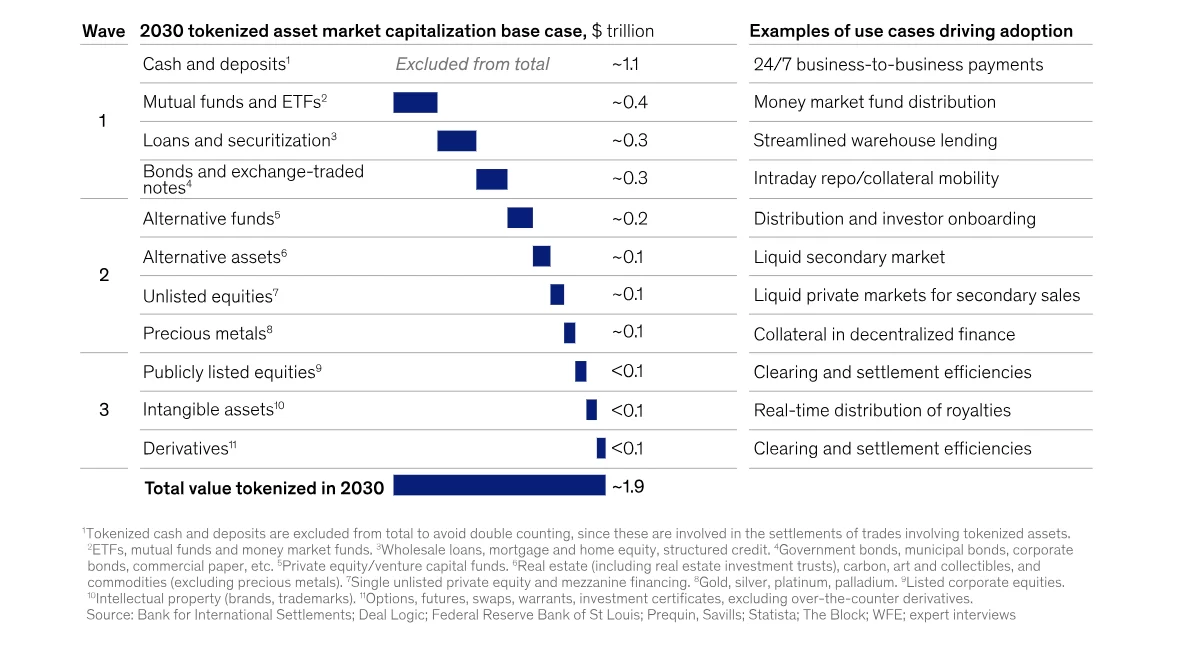
Even the most conservative analysts from McKinsey anticipate that the market value of tokenized financial assets will approach $2 trillion by 2030. The move away from T+2 settlement toward real-time transaction possibilities stands out as one of the principal innovations driving this transformation. McKinsey’s report emphasizes several key aspects:
“Fractionalization of assets democratizes access, allowing small investors to participate in assets that would otherwise be out of reach.
For difficult-to-track assets like carbon credits, blockchain provides a reliable mechanism for oversight, thus boosting the credibility of green finance projects.
Liquidity improves as previously illiquid assets become easier to exchange, a process bolstered by the development of secondary markets.
By 2030, cash and deposits are projected to claim the largest share, with a potential of $1.1 trillion. Central Bank Digital Currencies (CBDCs) are central to this evolution.
Transparency requirements make loans and securitization processes a priority, with the volume in this area expected to reach $0.3 trillion.”
BlackRock’s stance and future vision
Since 2023, BlackRock CEO Larry Fink has shown a pronounced interest in cryptocurrencies, marking a turning point for Bitcoin when the asset management giant began offering crypto services to its clients. Fink highlights Bitcoin’s distinctive ability to price risk and maintains that tokenization will soon become deeply embedded in everyday life.
In his yearly “CEO Letters” and interviews with major media outlets, Fink repeatedly describes tokenization as the way forward. He points out the inefficiency of the current system—where settlement takes two days—and argues that tokenization will enable instant (T+0) transfers, enhancing capital efficiency and reducing costs. For asset managers, tokenization encapsulates the very qualities they seek: greater accessibility, speed, and lower expenses. By offering millions of clients access to tokenized products, BlackRock can further expand its revenues, making Fink’s endorsement of tokenization a strategic business rationale rather than a sentimental stance.
In BlackRock’s 2026 trends report, analysts emphasized the platform’s long-term potential:
“Ethereum enables exposure to the growth of digital infrastructure, innovation, and potential returns within the crypto ecosystem by providing an opportunity to invest in blockchain adoption and in tokenization’s integration as a core segment of the financial system.”