Bitcoin daily new Runes count fell below 250 in the last six days; the 157 Runes mined on May 13 indicate a 99% drop from the late April peak. The decline followed a highly successful series a week after launch, with an average of 14,700 new Runes mined daily between April 26-30, including the record 23,061 on April 26, according to the Dune Analytics dashboard created by RUNES.
What’s Happening on the Runes Front?
Runes, launched on the fourth Bitcoin halving block on April 20, garnered significant interest as a new token standard. The protocol allows memecoin and NFT enthusiasts to transfer and trade their favorite artworks, images, sounds, and videos on the Bitcoin network.
Initially, it provided a much-needed income boost for Bitcoin miners looking to mitigate the impact of the latest halving, which reduced the block subsidy to 3.125 Bitcoin worth $196,800 at current prices. However, the 157 Runes mined on May 13 provided Bitcoin miners with only $3,835 in transaction fees, much less than the hundreds of thousands of dollars they received daily in late April.
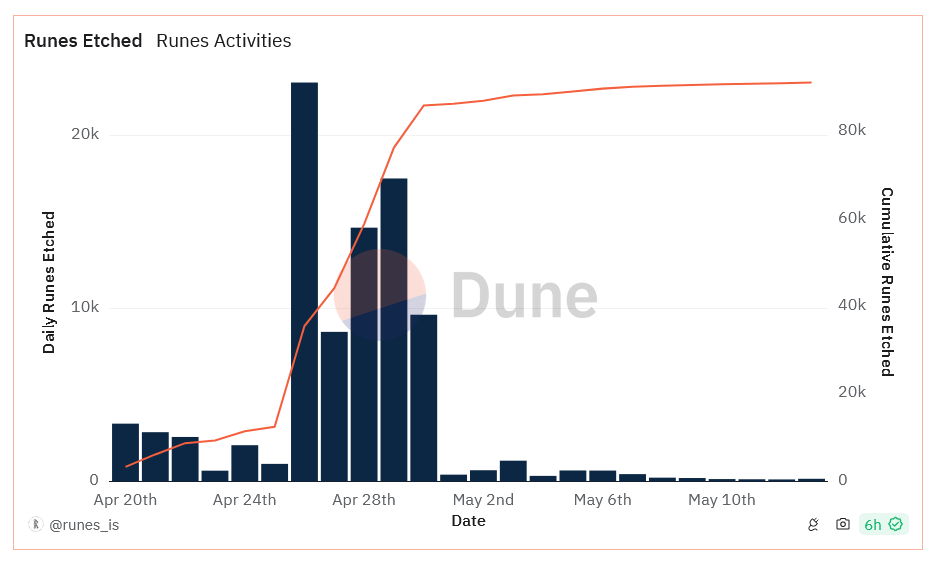

Since the launch of Runes on April 20, Bitcoin miners have been paid a total of $4.5 million in transaction fees, averaging about $189,000 per day. So far, just over 91,200 Runes have been mined on Bitcoin.
Notable Statements About Runes
Despite the decline in the number of Runes mined, Runes transactions continue to dominate the majority of transactions in May, largely on marketplaces like Magic Eden, OKX, Ordinals Wallet, and UniSat. According to Binance Research, Runes was launched by Ordinals inventor Casey Rodarmor, aiming to use block space more efficiently than its main competitor, BRC-20s.

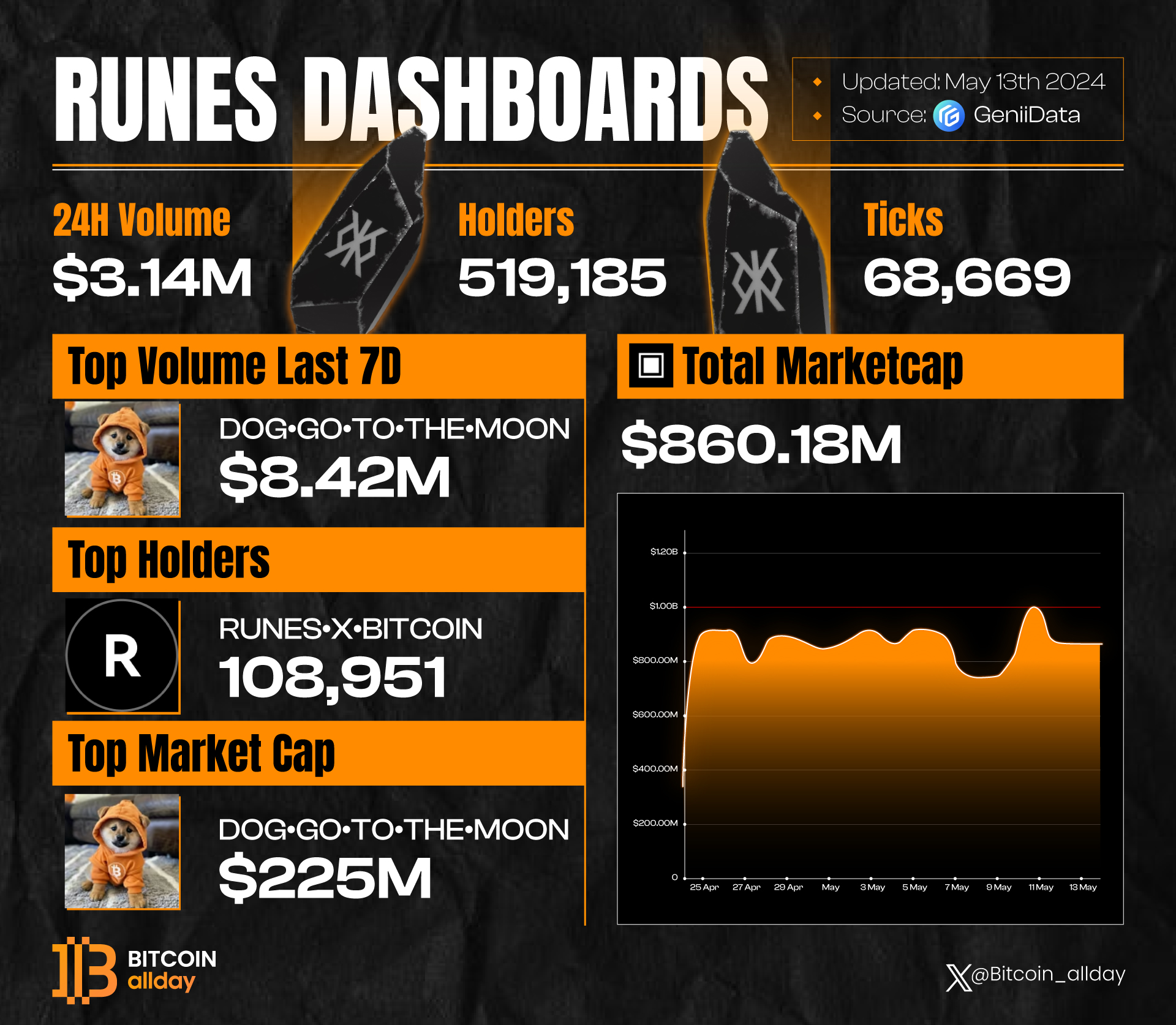
Unlike BRC-20s, Runes are compatible with Bitcoin’s unspent transaction output (UTXO) model, where UTXOs can hold arbitrary NFTs like Runes. However, in a recent interview, Rodarmor emphasized that Runes are not the future of finance but rather something for degens to have fun with on Bitcoin.