
Following the death of Ali Khamenei, his son Mojtaba has assumed leadership in Iran, marking a significant shift at a critical juncture for the region. In the lead-up to his first official speech today, market observers braced for heightened volatility, anticipating that his statements could have far-reaching consequences for both regional stability and the global financial landscape.
Cryptocurrencies Sink on New Khamenei’s Escalating Threats
As Mojtaba Khamenei addressed the nation live on Iranian state television, his rhetoric was strikingly aggressive. This comes just days after former US President Donald Trump openly urged the new Iranian leader to avoid belligerence against the United States. Mojtaba’s uncompromising language, however, has likely cemented his position as a high-priority target for future US operations. Speculation now swirls that Washington could soon initiate a special operation specifically targeting him.
“We need unity among our people and call on all citizens to participate in Quds Day events.
We will not forgo taking revenge for the school attack. All American bases in the region must shut down immediately, and those remaining will be attacked. The Strait of Hormuz must remain closed.
To exert pressure on the enemy, we must persist in keeping the Strait of Hormuz closed. Iran will not hesitate to avenge the blood of its martyrs.
Iran will claim compensation from its enemies,” Mojtaba Khamenei declared during his inaugural speech.
Geopolitical Unrest Jolts Bitcoin Below $70,000
Within moments of Mojtaba Khamenei’s broadcast, financial markets responded sharply. Cryptocurrencies, which had shown resilience amid previous turbulence, experienced a notable sell-off—Bitcoin (BTC) fell back below the $70,000 threshold. Market analysts warned that volatility was likely to intensify in the hours ahead, especially as global leaders—most notably Trump—prepared potential responses to Tehran’s escalatory signals.
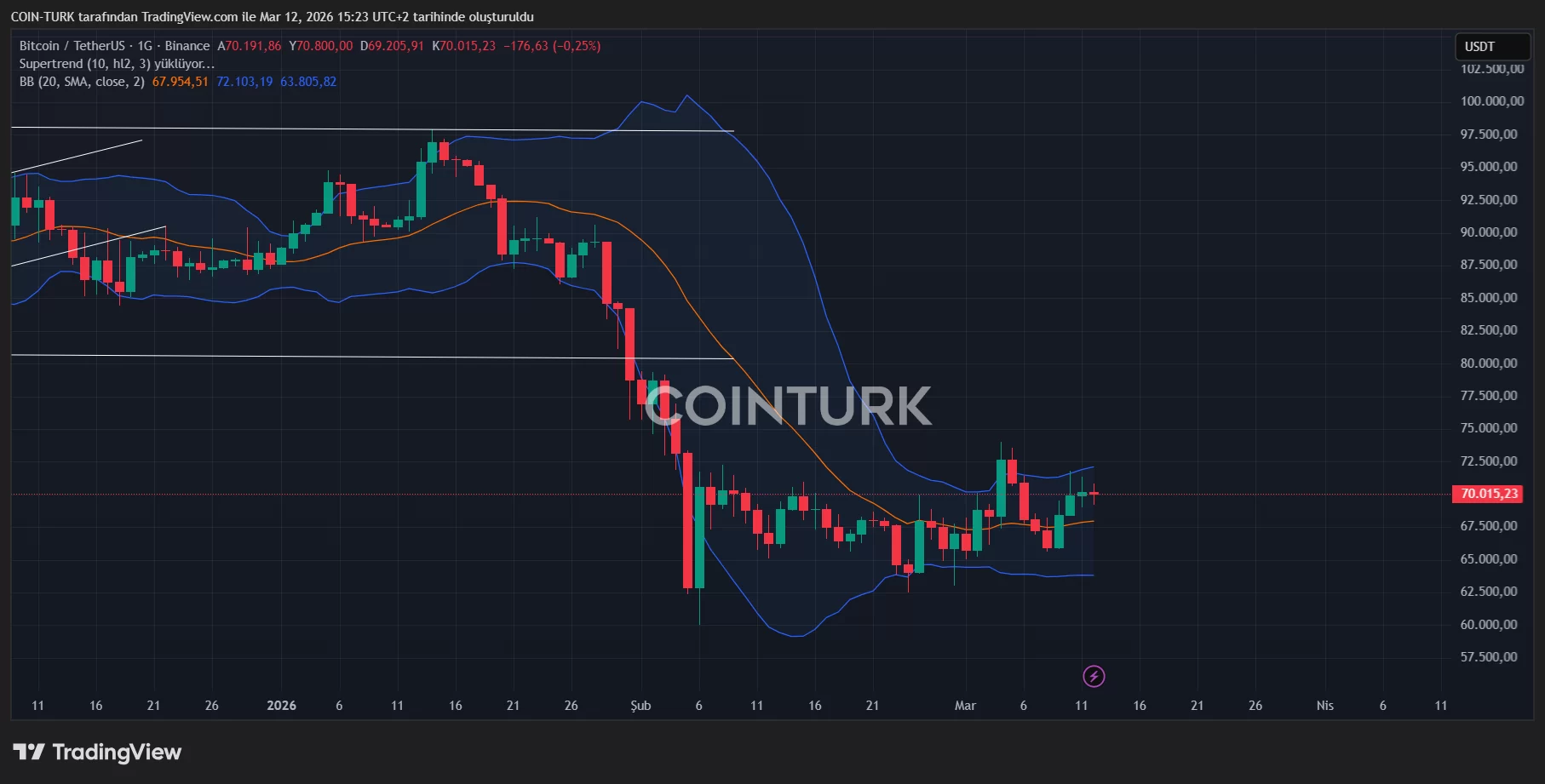
The situation remains extremely fluid. Amid deepening war rhetoric, financial assets closely tied to regional stability—including cryptocurrencies—have become increasingly sensitive to any political announcements or provocative statements. Many investors are now reevaluating risk exposure given the hardening tone from Tehran.
The international community is watching closely for any reactions from Washington, particularly from figures such as Trump. A forceful diplomatic or military response could trigger further market swings and escalate matters beyond the current war of words.
Regional analysts point out that Iran’s threats to close the Strait of Hormuz—a vital corridor for global oil shipments—could have sweeping economic repercussions reaching well beyond digital currencies. Such a move could send shockwaves through traditional commodities markets and disrupt global supply chains.
As Iran warns of revenge attacks and calls for unity among its people, the risk of direct confrontation grows. With enthusiasm surging for mass participation in Quds Day events and rhetoric targeting US military assets, tensions across the Middle East have reached a boiling point.
While it remains uncertain how the standoff will develop, market reactions underline the direct link between geopolitics and digital finance. The world waits for the next move, knowing that global markets will remain on edge as this crisis unfolds.