
Bitcoin spent the weekend drifting below the $67,000 mark as trading volumes softened, reflecting growing anxiety across crypto markets. While major altcoins registered only minor losses, a sense of pessimism about the week ahead is gaining traction among investors. The deepening expectation of a significant downturn stems from a combination of geopolitical instability and recent data trends, leaving traders to question what’s next for digital assets.
Geopolitical risks weigh on sentiment
The coming week appears fraught for cryptocurrencies, largely due to escalating international tensions. Former U.S. President Trump, who initially announced April 6 as a hoped-for ceasefire deadline, has twice postponed this target. Ongoing mediation efforts, notably led by Pakistan, have so far failed to produce results. For Iran to take a place at the negotiating table, further time and diplomatic maneuvering seem necessary.
With Trump extending the deadline yet again, pressure mounts for decisive action. Two U.S. aircraft were recently downed, though the pilots were evacuated at the last moment. Updates during Trump’s most recent national address revealed that the process would extend beyond his initial four-to-six week outlook. As the new deadline lapses, speculation grows that increased military strikes might be used to pressure Iran toward a settlement.
Iran, in turn, is expected not to remain passive. Authorities have previously stated that, in response to infrastructure attacks, they are prepared to target oil production, desalination facilities, and energy infrastructure across Gulf states. Such potential countermeasures could further inflame the situation and market unease.
Rising tensions are already influencing oil prices upward, fueling broader concerns about stagflation. In addition, inflation figures due on Friday are anticipated to show a monthly climb of at least 1%, which could further pressure risk assets like cryptocurrencies. These factors combine to create a highly challenging short-term environment for digital currencies.
Investors brace for possible downturn
According to data compiled by Santiment, social media sentiment surrounding Bitcoin has reached its most negative point since late February. Traditionally, Bitcoin’s price tends to anticipate major market events, often stabilizing after the fact—as was the case when conflict broke out with Iran. This raises the possibility that widespread bearishness has already been priced in, and that a feared drop may yet fail to materialize.
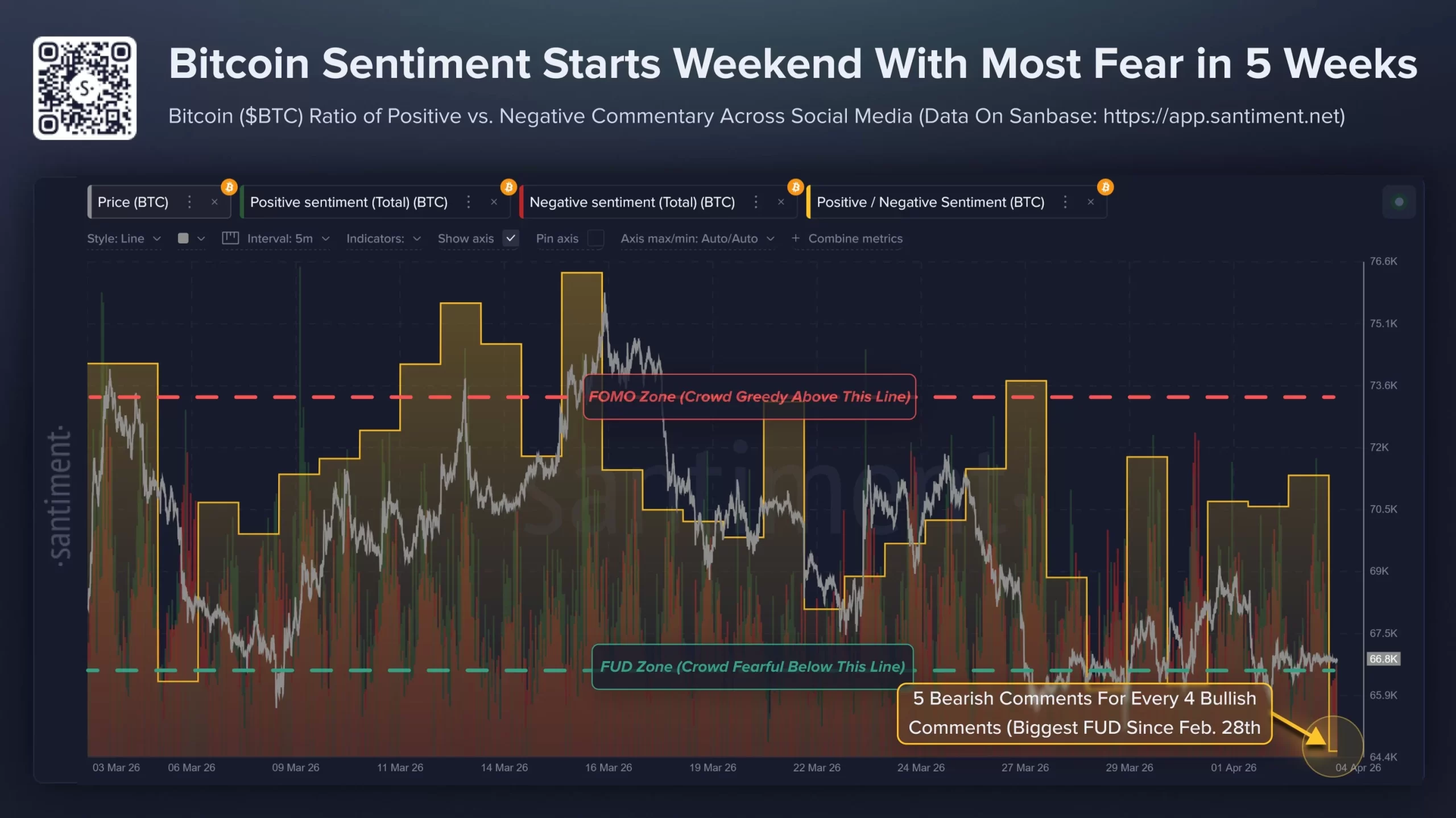
Santiment interprets this prevailing pessimism as a potential sign that a market reversal could be on the horizon.
Citing activity across platforms like X, Reddit, and Telegram, Santiment notes that Bitcoin is currently experiencing the highest rate of bearish discussions—commonly associated with fear—since February 28. The resurgence of FUD (fear, uncertainty, and doubt) has meaningfully diminished optimism within the community, a sentiment often crucial for price recoveries.
Throughout 2026, cryptocurrencies endured a prolonged period of stagnation. On Saturday, the ratio of negative to positive comments on social media stood at 1.00 to 0.81, which Santiment identifies as the lowest this year so far.
Santiment points out that markets often move counter to the crowd’s expectations. Accordingly, while current “what if” scenarios—such as the Iran conflict or potential regulatory developments like the Clarity Act—dominate sentiment, such elevated FUD could signal that positive change is eventually on the cards.
In summary, while crypto traders approach the new week with heightened caution given geopolitical and economic headwinds, some observers believe the growing negativity in sentiment could ultimately pave the way for renewed stability or even a rebound. For now, however, risks remain front and center.