
The price of Bitcoin climbed to as high as $70,000 in the past 24 hours, defying forecasts for the start of the trading week. While many cryptocurrency investors were bracing for a downturn due to the looming inflation report and former President Trump’s ultimatum on Wednesday, the market instead staged a strong rally. This reversal caught even seasoned analysts off guard and has many questioning the factors behind this unexpected surge.
Sentiment and short squeeze drive the rally
On Sunday, data from analytics firm Santiment indicated an extreme level of fear, uncertainty, and doubt—known as FUD—among crypto traders. Historically, such intense fear has often marked the local bottom for digital assets, setting the stage for a rebound. This time, however, prevailing news flow led some to interpret the signal differently, expecting fresh lows. Against these expectations, the classic pattern reasserted itself: Bitcoin shot back above $70,000 just as consensus expected it to fall further.
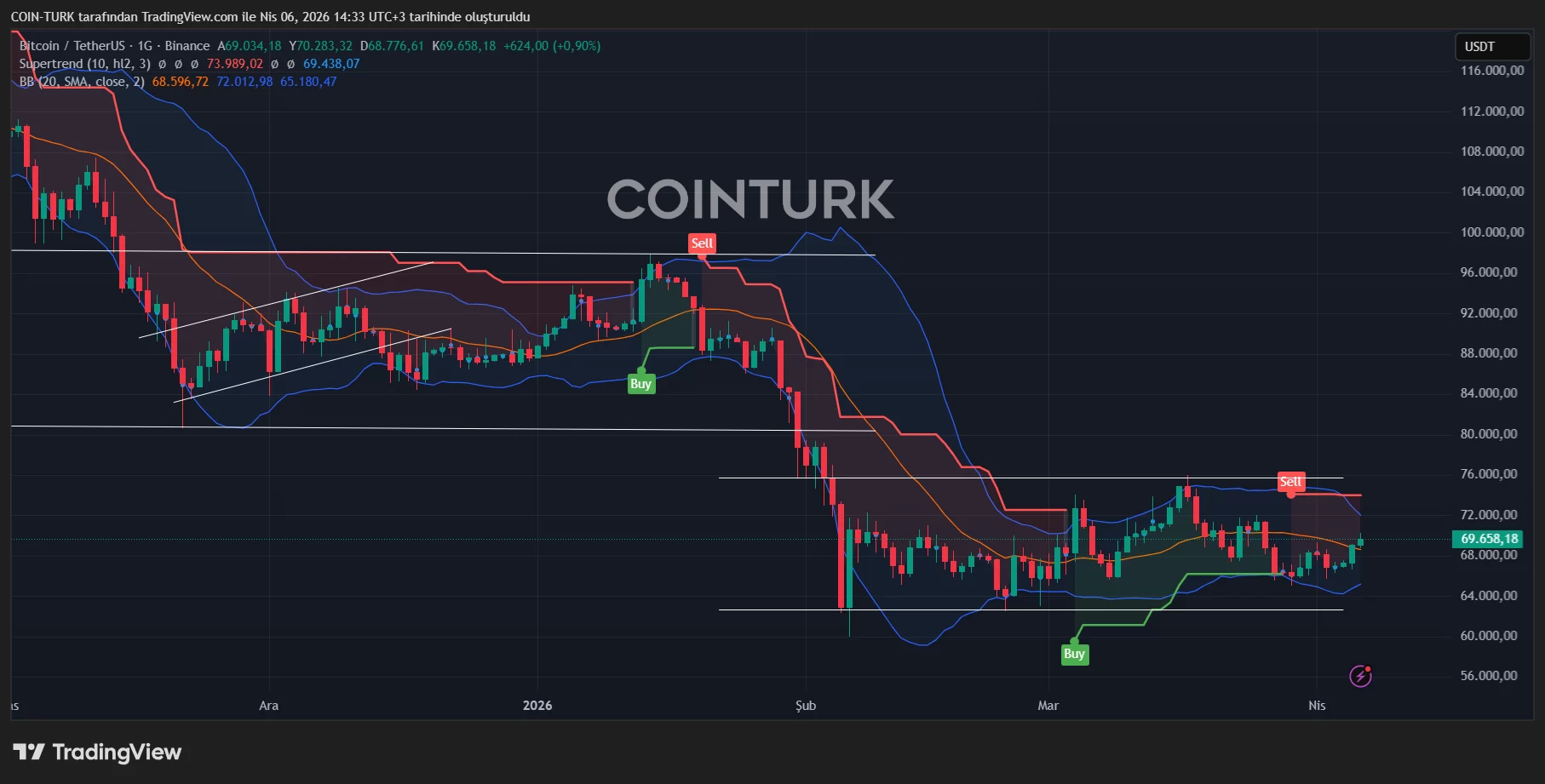
Liquidations mount as markets reopen
Having rebounded from its recent lows, Bitcoin has returned to a mid-range position on technical charts. If the leading cryptocurrency can push past the $71,400 mark, it may soon test the major resistance at $75,000. Should the rally stall, however, a pullback toward $62,500 would align with earlier bearish scenarios. Market data from Coinglass reveals that $273 million in short positions were liquidated over the past 24 hours—likely a result of traders betting heavily on downside, only to be caught off guard by the surge. In total, liquidations reached $325 million, marking a 238% increase compared to the previous day. Open interest grew 6.5% and trading volume leapt by 88%. This uptick coincided with U.S. markets reopening after the holiday-long weekend, sending an influx of traders and liquidity into the crypto space.
With U.S. financial centers returning to action after a break, cryptocurrencies experienced a positive start to the week—contrary to expectations that the pause might bring renewed selling pressure. The combination of liquidated shorts and revived spot trading sent signals of renewed confidence or at least aggressive short-term positioning among traders.
Geopolitical uncertainties linger over Iran
Political risk continues to loom large, particularly regarding Iran. Trump’s statement set a deadline for Wednesday at 3 a.m. Turkish time, following a second extension. If no agreement is reached by then, observers believe the former president may feel compelled to take significant action—a development likely to push oil prices even higher. Rising energy costs would, in turn, dampen sentiment for cryptocurrencies, which are often viewed as risk assets sensitive to global macro shifts.
Meanwhile, economists expect inflation to rise 1% month-on-month this week. As energy prices continue climbing, these cost pressures are likely to persist in the coming months, feeding headline inflation figures and keeping upward pressure on consumer prices. Persistent inflation is widely seen as a headwind for speculative assets like cryptocurrencies.
Labor market data in the U.S. remain surprisingly robust, intensifying the likelihood that the Federal Reserve will respond to inflation pressures with higher interest rates. This scenario has analysts predicting that the news cycle may soon tilt against digital assets. If Bitcoin’s price surge prior to the inflation data is a familiar countertrend rally, it could signal volatility ahead. Traders are therefore urged to review their stop-loss strategies with increased diligence for the days to come.
The coming days will likely see heightened volatility; investors should carefully assess their stop levels, market analysts advised.