
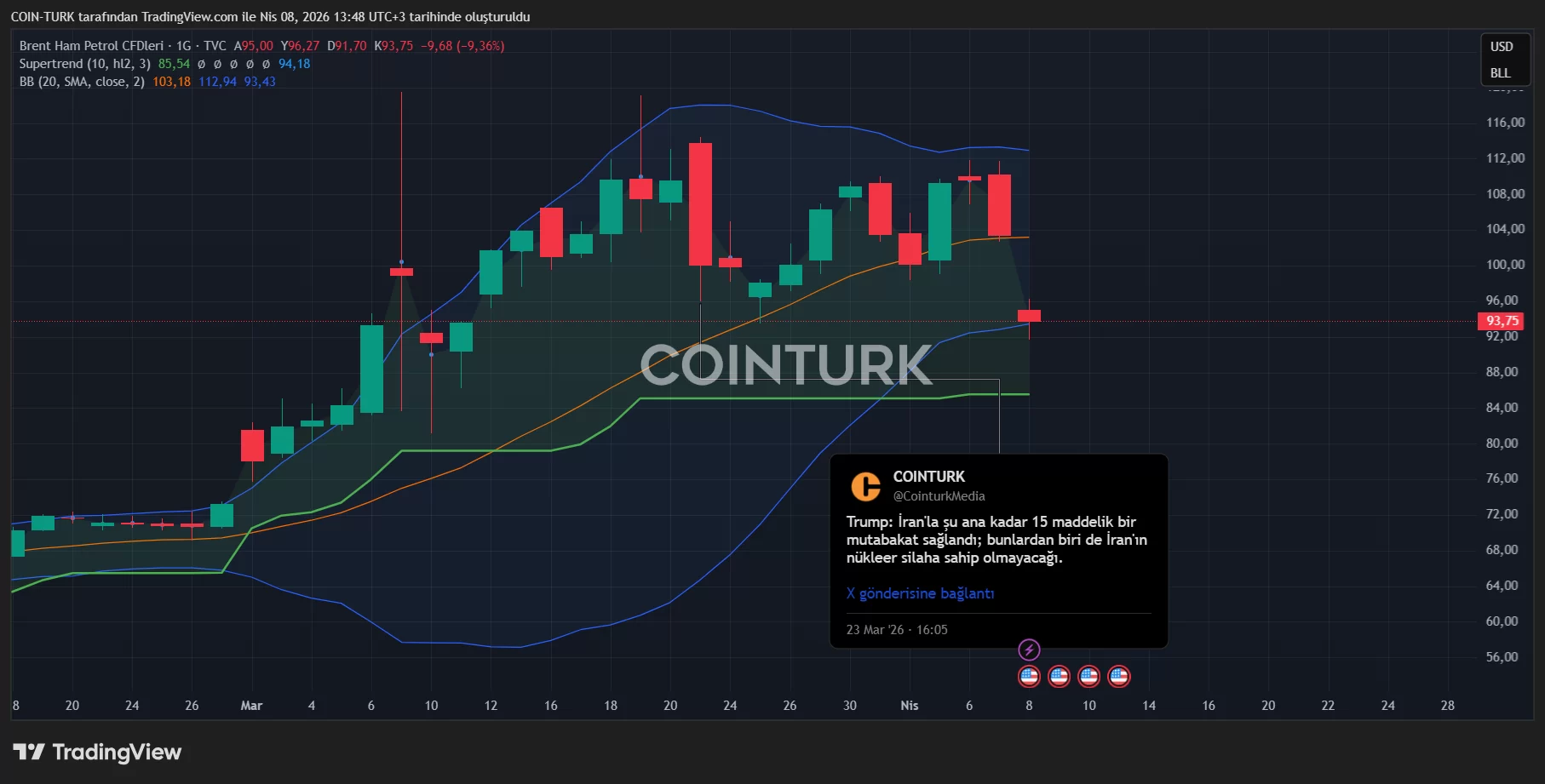
Roughly 90 minutes before 3:00 a.m., former U.S. President Donald Trump announced that a ceasefire deal had been reached, which triggered a rapid decline in oil prices. With the opening of the markets, oil prices dropped below $93, relieving investor fears and calming global markets. The recent developments have raised significant questions about how the ceasefire might impact the cryptocurrency market going forward.
Impact of the ceasefire on cryptocurrencies
Risk-sensitive assets had already begun to reflect the potential for interest rate hikes in 2026, and many analysts expected Bitcoin (BTC) to fall below $60,000 if the conflict remained unresolved. Much like last year, however, Iran—contrary to its earlier messaging—signed on to a two-week ceasefire, enabling a pause in hostilities. Moving ahead, analysts suggest the continuation of the ceasefire is in the best interest of both the United States and Iran, making a more permanent truce likely.
Within the last 24 hours, the price of Bitcoin surged as high as $72,761, while oil slipped from $93.70 to as low as $92 per barrel. If there are no disruptions to the process, analysts believe that a further drop toward $86.42 in the coming hours and days would clearly signal a reversal in the recent uptrend for oil markets.

Altcoins also posted strong gains, with some exceeding 5 percent. Notably, Ether crossed the $2,200 threshold, signaling that the broader cryptocurrency market could soon see even greater profits. Should Bitcoin maintain its position above $71,500, and Ether break and secure the $2,300 mark, 2026 may witness its first sustained rally in digital assets.
Prospects for a lasting ceasefire
A 10-point agreement has provided a framework for negotiation, described by U.S. sources as a solid foundation for talks, while Iran claims the terms have already been accepted by the United States. However, disagreements remain, potentially jeopardizing the truce. Another key factor is the reopening of the Strait of Hormuz and the resumption of safe passage for commercial vessels; both are crucial for maintaining the ceasefire. This would require Iran to halt its attacks during the delicate process.

According to United Arab Emirates sources cited while this article was being prepared, Iranian forces fired ballistic missiles into the region. Meanwhile, other reports indicated ongoing attacks targeting Sirri Island in the Persian Gulf, with Iranian media attributing the strikes to the United Arab Emirates’ armed forces.
Israel has repeatedly expressed dissatisfaction with the ceasefire, and should reports of Iranian attacks on the UAE prove accurate, the situation could escalate further through retaliation. The uncertainty surrounding the ceasefire’s longevity has resulted in oil prices failing to consolidate below $93 and Bitcoin not yet approaching the $75,000 mark—signs the markets remain cautious.
One analyst observed that markets have welcomed the initial ceasefire signs but remain wary, with both oil and crypto assets fluctuating amid skepticism over whether the truce will hold.