
At the time of writing, Strategy announced a massive $2.54 billion Bitcoin (BTC) acquisition, marking one of the company’s largest purchases ever. Recent remarks by former US President Trump appear to have motivated this bold move. With critical negotiations on the horizon and time running out, hopes are fading for a diplomatic breakthrough as Iran signals a hardline stance. What is the current state of affairs?
Iran’s actions shake global markets
With only hours left before the ceasefire deadline, optimism for a second round of negotiations dwindled. Doubts over the future of peace talks triggered a rally in oil prices and pressured US stocks and Treasury bonds. After the US Navy seized an Iranian vessel in the Strait of Hormuz, Brent crude oil spiked 4.6 percent, reaching $95 per barrel.
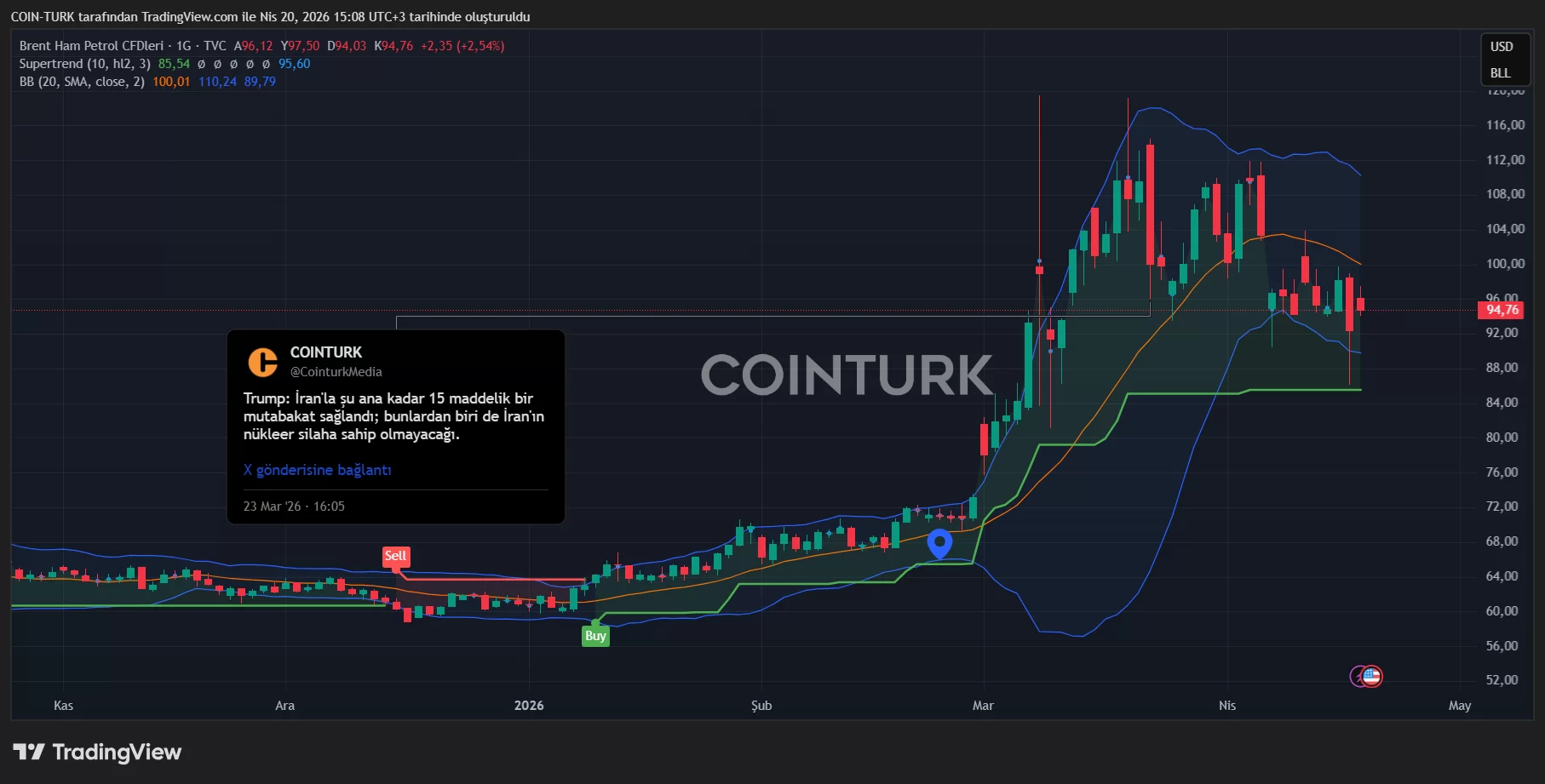
Iran’s approach remains unpredictable. Following declarations that the Strait of Hormuz would remain open, the country abruptly banned passage and attacked three ships on Saturday. Meanwhile, the S&P 500 futures dropped about half a percentage point after last week’s gains. European stocks declined by 1 percent, with bond yields in Europe climbing sharply and US Treasuries moving more moderately.

Gold stayed below $4,800. According to the Associated Press, Iran has signaled a readiness to join a second round of negotiations, but any talks must be announced within the next hours and commence by tomorrow at the latest to remain viable.
Central banks and monetary policy uncertainty
Market expectations could be jittered further by any signals that Warsh, a key figure, may favor monetary expansion or anticipates an energy shock due to the ongoing conflict. With Jerome Powell’s term as Federal Reserve Chair just weeks from ending, the agenda remains challenging for market bulls. The earliest potential rate cut of 25 basis points is priced at just a 50 percent probability for December.
Cryptocurrency market under pressure
Recent data show S&P 500 companies have reported profits 11 percent above forecasts, potentially helping to cap index losses. However, cryptocurrencies lack such a cushion. Even as Strategy’s large-scale acquisitions signal some positive sentiment, it appears insufficient without a decisive uptick in spot demand and Bitcoin maintaining levels above the $78,000 resistance zone.
Among the top 100 cryptocurrencies, ZEC, MNT, and HYPE recorded the largest losses, each falling over 5 percent. HYPE’s decline is less surprising given its surge past $40 and its near-flat weekly performance, but ZEC’s weekly drop soared to 14 percent.
ZRO suffered a severe blow following a hacking incident over the weekend. Despite a partial recovery, the coin remains down 20 percent for the week. Meanwhile, AAVE, which was affected by the hack, is fighting to hold the $90 threshold, now trading near prices last seen in July 2024.
As the Associated Press reports, Iran has expressed willingness to join a second round of talks, but any session must be declared within hours and begin by tomorrow to proceed.
Looking ahead, market participants are bracing for volatility as geopolitical uncertainty and fluctuating economic signals continue to cloud the horizon. The intertwining of traditional and digital financial markets reflects heightened risk aversion.
In summary, the push and pull between mounting geopolitical tensions and ongoing market pressures underscore the fragility of current risk assets, from crude oil and global equities to the volatile cryptocurrency sector.