The Brazilian B3 stock exchange drew significant attention recently when it launched a pilot project that allowed a farmer to use ten cows as collateral for a 100,000 Brazilian real ($19,600) loan. These livestock assets were digitally documented on a blockchain, illustrating a new frontier for agricultural financing in Brazil—a country where agribusiness plays a central role in the economy.
Tokenizing the unexpected
While the world debates the scope and purpose of tokenization, the B3 exchange’s experiment prompted observers to ask: if cows can be tokenized, what cannot? Across the crypto landscape, the idea of representing physical objects or intangible assets on blockchain technology has rapidly extended beyond traditional financial instruments.
Larry Fink, CEO of BlackRock, has argued that eventually every asset could be tokenized. Recent events suggest the industry is exploring just how far this prediction can be stretched. Projects have already moved from tokenizing luxury goods and stocks to more unconventional assets—such as bodily functions. During the pandemic, filmmaker Alex Ramírez-Mallis recorded his own flatulence and minted them as nonfungible tokens (NFTs), selling them for 0.05 ETH, or roughly $85 apiece at the time. While playful, sales of these NFTs underscored the wide latitude of digital asset creation.
While every asset may have its price, the rise of NFT-powered assets like Ramírez-Mallis’s project reveals how the novelty and uniqueness of an item can become central to its perceived value when transacted onchain.
In the case of Brazilian livestock, the innovation progressed beyond novelty. The farmer’s loan was structured by Target FIDC, an investment fund specializing in agribusiness finance. Each cow received a unique digital token linked to its individual identity, creating a new model for livestock-backed lending.
Although the proof-of-concept loan was modest, just $19,600, the model opens the way for potentially $80 million in livestock-backed financing on Brazilian farms, according to the project’s backers. The agricultural sector, valued at $4 trillion worldwide in 2023, could see further adoption of blockchain-based collateral, with sheep, goats, and chickens all potential candidates.
Mini dictionary: Target FIDC, an investment fund in Brazil that specializes in providing structured financial solutions for the agricultural sector, including innovative forms of collateral for loans.
From racehorses to uranium
Beyond agriculture, tokenization continues to disrupt traditional asset classes, including those historically limited to the wealthy. For example, real-world thoroughbred racehorse ownership—once reserved for elite investors—can now be divided into digital shares, allowing a broader group of people to buy partial stakes and participate in future prize earnings or resale proceeds.
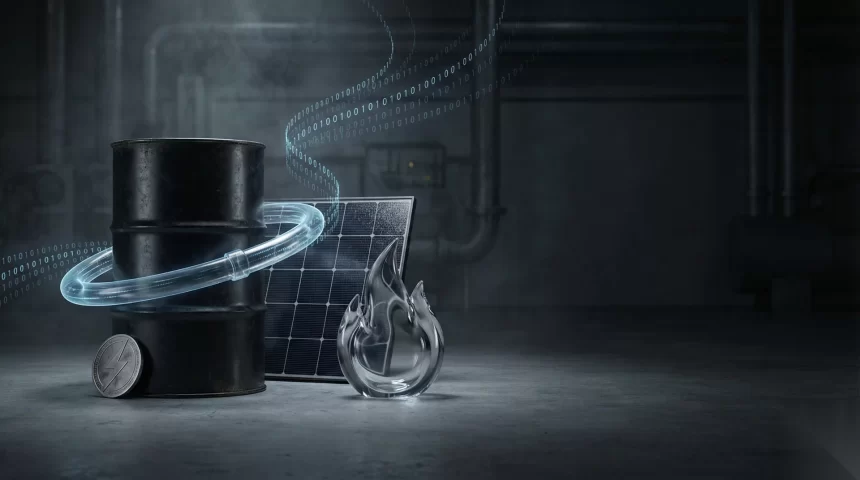
Meanwhile, blockchain developers have pushed further into the realm of commodities. Tezos-backed metals.io has brought uranium—a key material for the nuclear power industry—onchain. Arthur Breitman, co-founder of Tezos, highlighted that blockchain provides “auditable and cost-efficient financial rails” for unique commodities. Between November 2024 and July 2026, uranium trading volume on the platform reached $21.5 million over 18,200 transactions and involved approximately 7,400 different wallets.
Mini dictionary: Tezos, an open-source blockchain widely used for smart contracts and decentralized applications, and metals.io, a platform for tokenizing metals and commodity assets.
| Asset | Tokenization platform | Value/Volume Example |
|---|---|---|
| Cows | B3, Target FIDC | $19,600 (first loan), up to $80 million potential |
| Uranium | Tezos/metals.io | $21.5 million (Nov 2024–July 2026) |
| Whisky Casks | Various experimental projects | N/A |
Even more niche, a Chilean fish processing company attempted to structure a tokenized debt instrument with returns based on fish sales. Edwin Mata, CEO of the tokenization platform Brickken, explained that such proposals show the complex legal and operational hurdles in bringing real-world value onchain. Ultimately, these fish-backed tokens did not launch due to unresolved traditional reporting and audit requirements.
Cultural assets and digital ownership
Tokenization has also made its mark in the entertainment industry. Electronic musician 3LAU and rapper Nas partnered with the blockchain platform Royal to sell streaming music royalties, giving fans fractional ownership of song revenues. Despite the hype during the NFT surge, onchain music royalties have yet to reach widespread adoption, possibly due to the low profitability of streaming services.
Some athletes have experimented with selling sponsorship rights through tokenization, allowing fans or sponsors to own a share in what an athlete wears or displays during competitions. Ukrainian tennis player Oleksandra Oliynykova raised $5,400 by auctioning the rights to her next tattoo as an NFT—a new twist on traditional sports sponsorship.
In the art world, a group known as Burnt Banksy famously purchased a genuine Banksy print, burned it, and minted the act as an NFT, later selling the unique digital record for $382,000. The stunt ignited debate about the future of art and value in the age of blockchain.
Jack Dorsey, co-founder of Twitter, made headlines by selling his first-ever tweet—“just setting up my twttr”—as an NFT. The digital asset fetched $2.9 million, but when resold a year later, bids came in far below expectations, with the highest offer just $6,800.
| Tokenized Asset | Sale Price | Resale Offer |
|---|---|---|
| Dorsey’s First Tweet | $2.9 million | $6,800 (highest offer in resale attempt) |
| Banksy NFT | $382,000 | N/A |
The experiments in tokenizing everything from music royalties to digital representations of artwork reflect how rapidly the boundaries of digital ownership and value are evolving, sparking ongoing discussion about which assets make sense to bring onchain and which may be better left in the physical world.