Market watchers had anticipated strong signals ahead of Asia’s market opening, but the early statements on Monday diverged from expectations. There was widespread speculation that former U.S. President Donald Trump would announce a withdrawal, hinting an end to ongoing conflicts. Yet, despite a change in the tone and direction of his remarks, the impact was clear: Bitcoin experienced a decline, aligning with predictions that geopolitical uncertainty would weigh on the leading cryptocurrency.
Heightened pressure in energy markets
Iran’s ongoing closure of the Strait of Hormuz continues to put upward pressure on global oil prices, which have held firm in the triple-digit range for several consecutive days. This development fuels inflation dynamics worldwide. With no short-term resolution in sight, analysts warn that central banks could be forced to resume interest rate hikes to curb rising prices. Trump’s statements, delivered in summary form, highlighted the strategic and economic stakes:
“Iran’s navy has been neutralized; its air force is in ruins. Many of the nation’s top leaders are gone. Iran’s ability to launch missiles and drones is now diminished. We no longer need oil from the Middle East.
We will never allow Iran to possess nuclear weapons. Strategic objectives are nearly met. We will finish the job, and we will do so quickly. We are very close. Iran simply cannot be trusted with nuclear arms.
Gas price increases stem from Iran’s attacks on tankers, but the U.S. has ample supplies, so any recent rise is temporary. We are in a strong position for the future.
We never needed, nor do we need, the Strait of Hormuz.
Iran is essentially destroyed. The hardest part is over. Once the conflict ends, the strait will reopen naturally. The United States is on track to complete all military objectives very soon. In the next two to three weeks, we will deal a severe blow. Meanwhile, negotiations are ongoing.
We might target oil facilities in Iran. We hold all the cards; Iran has none. They are no longer a real threat.”
Markets brace for turbulence in cryptocurrencies
In his remarks, Trump referenced both world wars and broader conflicts, emphasizing that one month is a very short time in military terms and hinting that U.S. troop deployments in the region are intended for offensive, rather than diplomatic, action. The possibility of an imminent agreement with Iran has faded, casting doubt on previously rumored dates for de-escalation. Meanwhile, oil prices have surged, rapidly approaching the $110 per barrel threshold, reflecting renewed strain in energy markets.
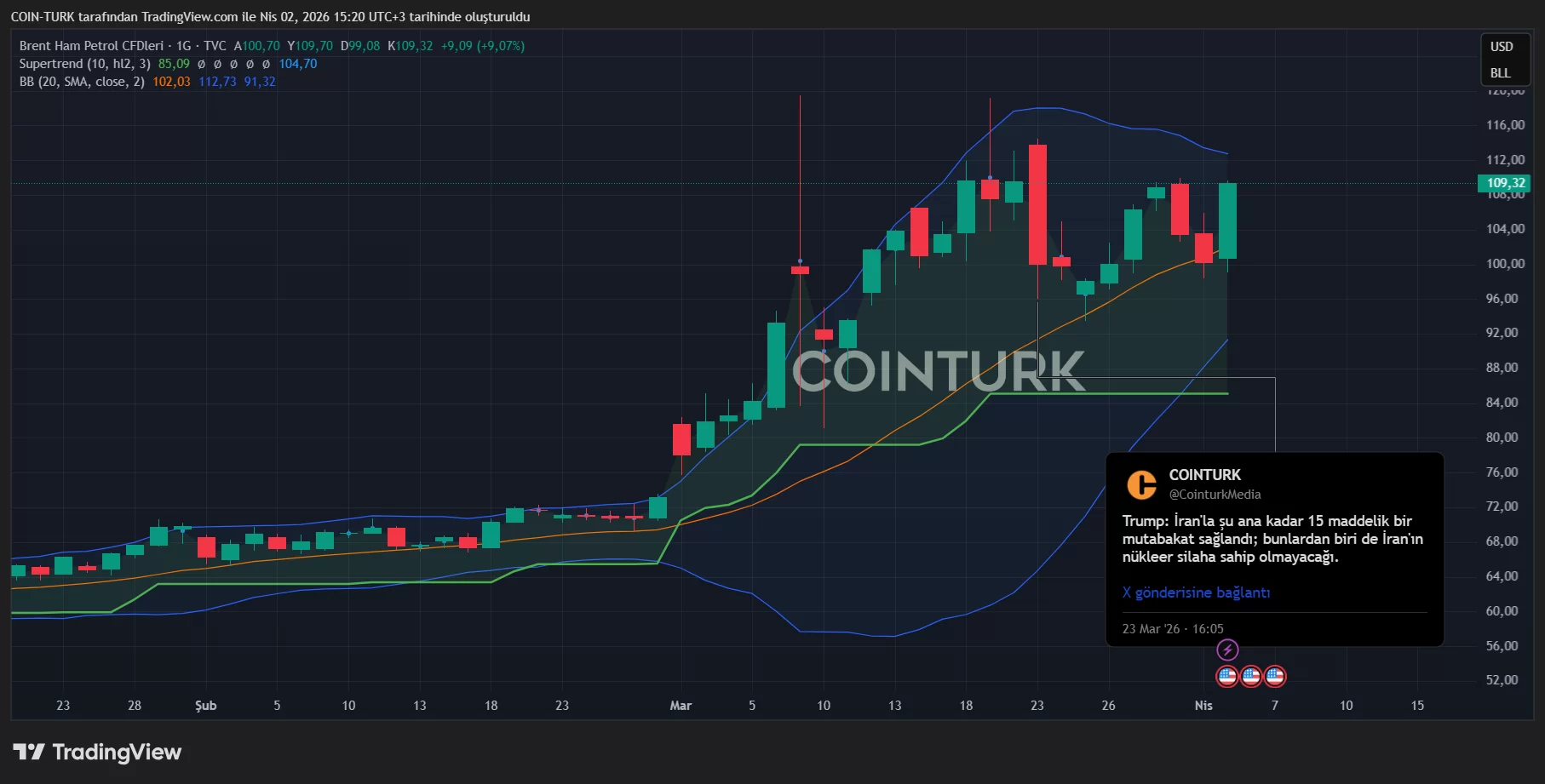
For the cryptocurrency sector, the implication is that the next two to three weeks may see further declines in asset prices. As the conflict drags on, the inflationary pressures on global economies are likely to intensify. Against this backdrop, digital assets, especially Bitcoin, could face continued headwinds, with traders factoring in the possibility of new rate hikes from major central banks—a scenario that typically results in reduced risk appetite among investors.
In such an environment, investors are likely to adopt a more cautious stance, potentially scaling back exposure to riskier assets like cryptocurrencies. The market’s expectation of tighter monetary policy, combined with ongoing geopolitical uncertainty, creates a challenging landscape for price recovery in the near term. Some analysts believe volatility will remain elevated as long as the risk of wider escalation and higher inflation persists.
Looking ahead, observers say that the interplay between oil prices, inflation, and monetary tightening will be critical for both traditional and digital markets. Central banks now face a delicate balancing act between safeguarding price stability and responding to rapid fluctuations in global commodity markets due to prolonged conflict.
In sum, hopes for a swift resolution in the region have faded, and with them, the prospect of immediate relief for inflationary pressures has diminished. As the weeks unfold, investors in both cryptocurrencies and broader markets may need to brace for more turbulence.