
Volatility in cryptocurrencies has continued to intensify following war-related headlines, with notable price fluctuations expected in the coming days. Tensions between Iran and the United States persist, marked by reluctant diplomatic engagements, particularly from Iran’s side based on official statements. Yet, a critical turning point is anticipated on Saturday, coinciding with the expiration of a deadline imposed by former U.S. President Donald Trump. As the market braces for turbulence, on-chain data paint an intriguing picture of investor sentiment and possible market directions.
Short-Term Holder Activity Signals Market Stability
Last week, Iran denied allegations of engaging in “communication” with Washington—only to acknowledge the contact this week. Currently, Tehran claims there are no “negotiations” underway, though further shifts in rhetoric could emerge in the coming days. While the early days of the conflict sparked panic in crypto markets, that panic has since receded. Although the outbreak of war a month ago triggered wild swings in oil prices, Bitcoin has managed to remain resilient by comparison.
On-chain analyst Darkfost pointed to data showing a marked reduction in anxiety among short-term holders. Despite ongoing geopolitical shocks and economic pressures, Bitcoin has shown signs of recovery. Most crucially, selling pressure from short-term holders (STH)—typically considered the most reactive segment—has eased, indicating the potential start of a new phase for cryptocurrencies as panic subsides.
At the beginning of February, when Bitcoin fell below $60,000, so-called “young investors” offloaded a combined 100,000 BTC to Binance in a single week. Recent statistics show that STH inflows to Binance have plummeted fourfold, reaching just 25,000 BTC—the lowest level on record. This sharp drop in activity among the most volatile group of investors suggests that the broader market is regaining steadiness and that real selling pressure is ebbing.

 ETH
ETH SOL
SOL BSC
BSC ROBINHOOD
 USDT
USDT AAPL
AAPL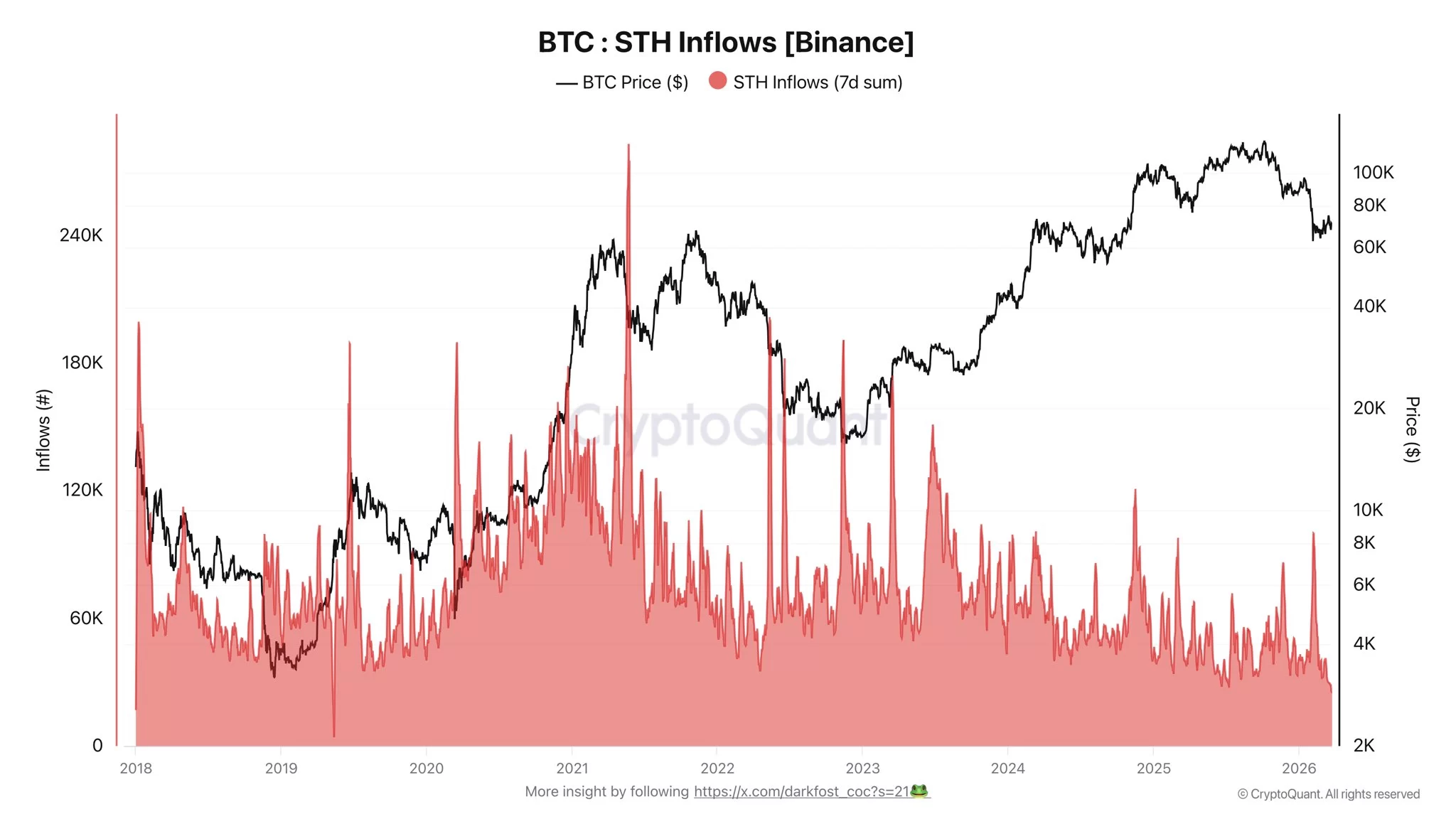
“The consolidation phase is still underway; it’s a typical pattern after sharp and significant value drops that saw BTC fall more than 50% from its recent all-time high.
Given that STHs are known as the most sensitive and unstable investor group, this is a very positive signal. Their reduced selling activity brings a degree of stability to the market and reflects a genuine drop in selling pressure, which is welcomed during what remains a challenging period for risk assets,” Darkfost wrote.
Gold or Bitcoin? A Shift in Capital Flows
Investors grew uneasy as gold’s price surged while Bitcoin faltered—a trend many expected to eventually reverse. Following Bitcoin’s recent decline, conversations about capital rotation from gold to crypto have finally picked up. As diplomatic efforts dominate headlines and inflation ticks up again, central banks may respond with further rate hikes this year. Such a backdrop could pave the way for Bitcoin to strengthen against gold in the months ahead.
After a robust start to 2026, gold has now entered a sharp correction, sliding below its 180-day moving average. This downturn has been fueled by forced liquidations and margin calls. Bitcoin, meanwhile, is stabilizing, though it continues to trade just under its own 180-day moving average of around $89,700. Market watchers note that if Bitcoin reclaims this technical threshold while gold remains below its own average, it could mark a particularly positive development for the cryptocurrency.
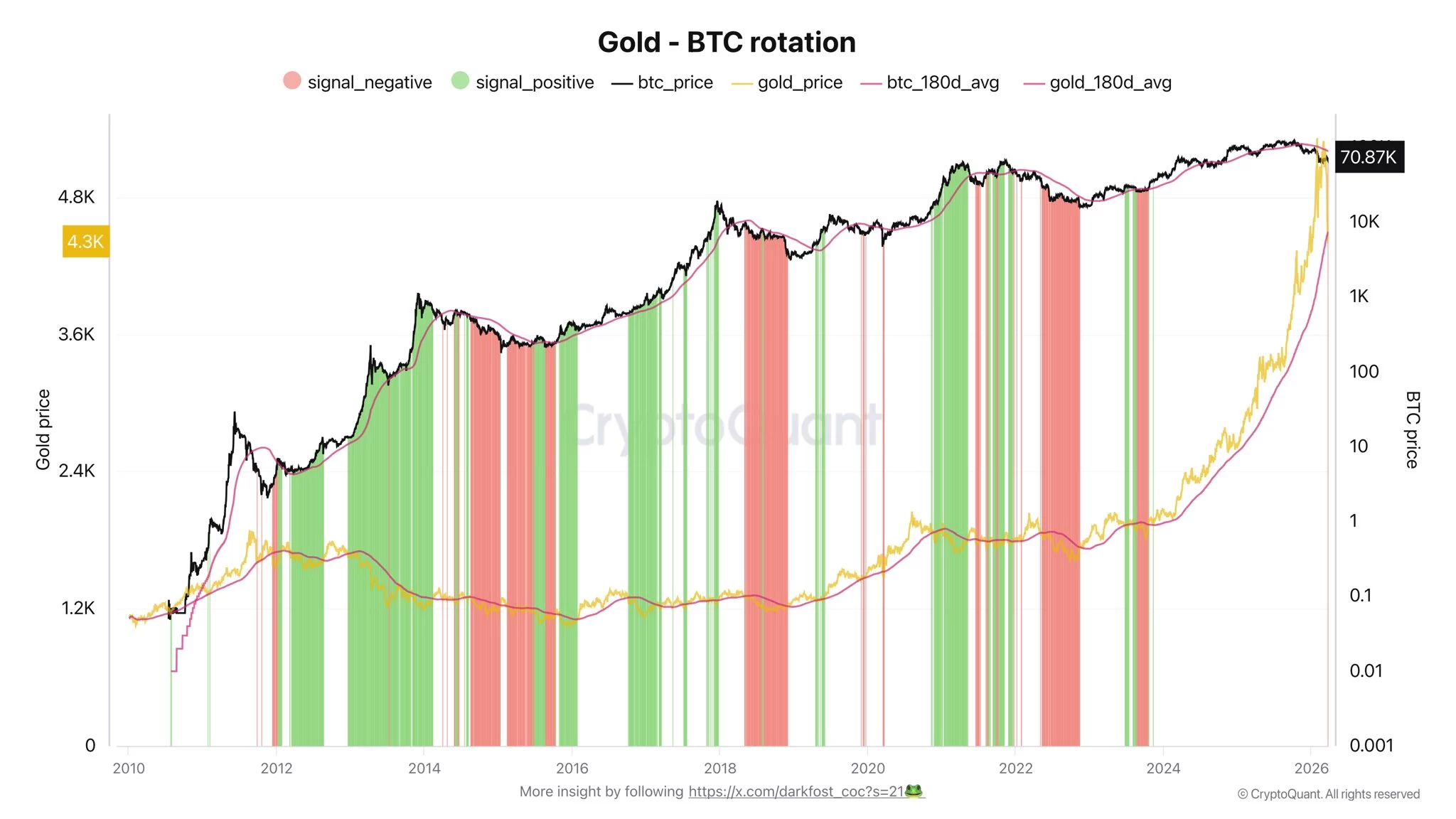
Darkfost, the analyst, expanded on this point, drawing attention to evolving trends between gold and Bitcoin flows:
“This approach helps identify notable divergences in the gold-Bitcoin trend—a simplified framework for imagining possible capital rotation. For now, though, such a rotation doesn’t appear to have taken place, or at least not at a level that would significantly move the Bitcoin market.
Ultimately, it remains a projection; it’s difficult to definitively say that funds leaving gold are directly flowing into Bitcoin right now.”