
The wave of selling through exchange-traded funds (ETFs) has regained momentum, pushing Bitcoin down to around $66,700 as of today. Even more concerning for investors is that this correction now looks likely to last longer than many initially expected. After weeks of stagnation near the $70,000 mark, Bitcoin’s loss of a critical support level is now setting the stage for altcoins to test deeper lows across the market.
Influence of U.S. investors and recent trends
Following the significant withdrawal of South Korean investors from the market last year, American investors have taken on even greater influence in shaping price trends. The relative stagnation seen in 2025 so far is, in large part, a result of Asian investors being far less active compared to 2024. This loss of momentum wasn’t confined to Asia; in both the final quarter of last year and the start of this year, U.S. investors also demonstrated a noticeable decrease in risk appetite.
Market signals and the Coinbase Premium Index
The Coinbase Premium Index has become a useful gauge for understanding how eager U.S.-based investors are in comparison to their international counterparts. According to data shared by analyst Maartunn, the index turned positive when Bitcoin crossed the $70,000 threshold earlier this month. However, recent weakness in the market is once again mirrored in the index, which has turned negative as investor sentiment sours.
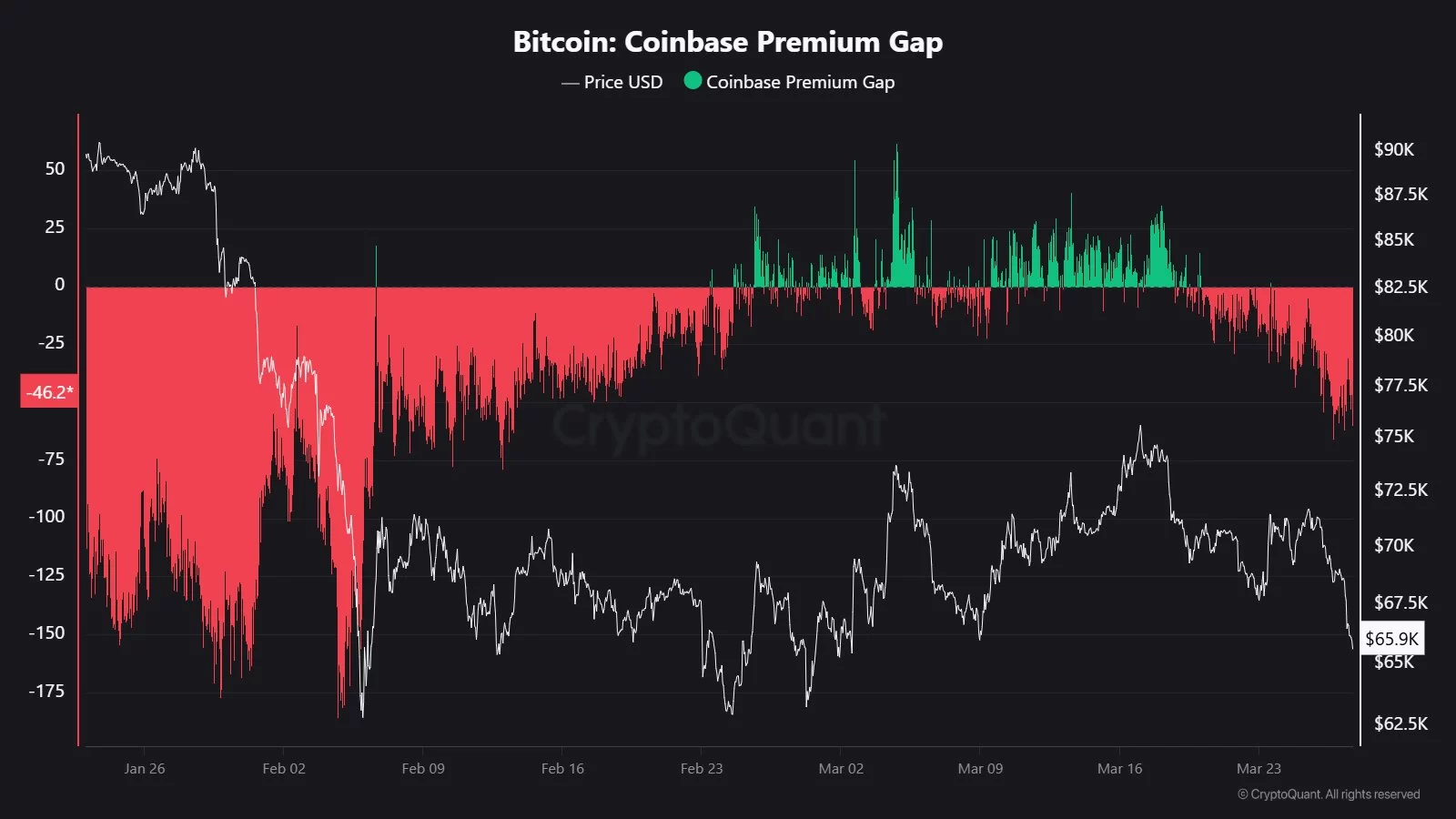

The lack of enthusiasm from American investors is viewed as a key warning sign, and growing negativity—compounded by escalating tensions involving Iran—could have dire consequences for the broader cryptocurrency sector. Outflows from the ETF channel are both fueling this negativity and being fueled by it in a self-reinforcing cycle that is difficult to break.
With an April 6 deadline looming, Iran is under pressure to formally announce its return to negotiations and accept the U.S.-proposed one-month ceasefire. Should these steps fail to materialize, experts warn that the resulting closure of the Strait of Hormuz amid triple-digit oil prices and supply disruptions for critical commodities could force both the European Central Bank and the Federal Reserve to hike interest rates before year’s end. This, in turn, may stoke stagflation concerns and trigger far-reaching equity market sell-offs—which would inevitably spill over into crypto markets as well.

Altcoins at a crossroads: Poppe’s outlook
Although hopes remain high that the Federal Reserve will continue cutting rates this year, the first quarter closed on a sour note for cryptocurrencies. Emerging risks, including the threat of delisting from MSCI indices and the aftermath of attacks involving Iran, have all put additional pressure on the asset class. Despite these headwinds, analyst Michael Poppe maintains an optimistic stance, arguing that the total market capitalization of altcoins is in the process of forming a bottom at current levels.
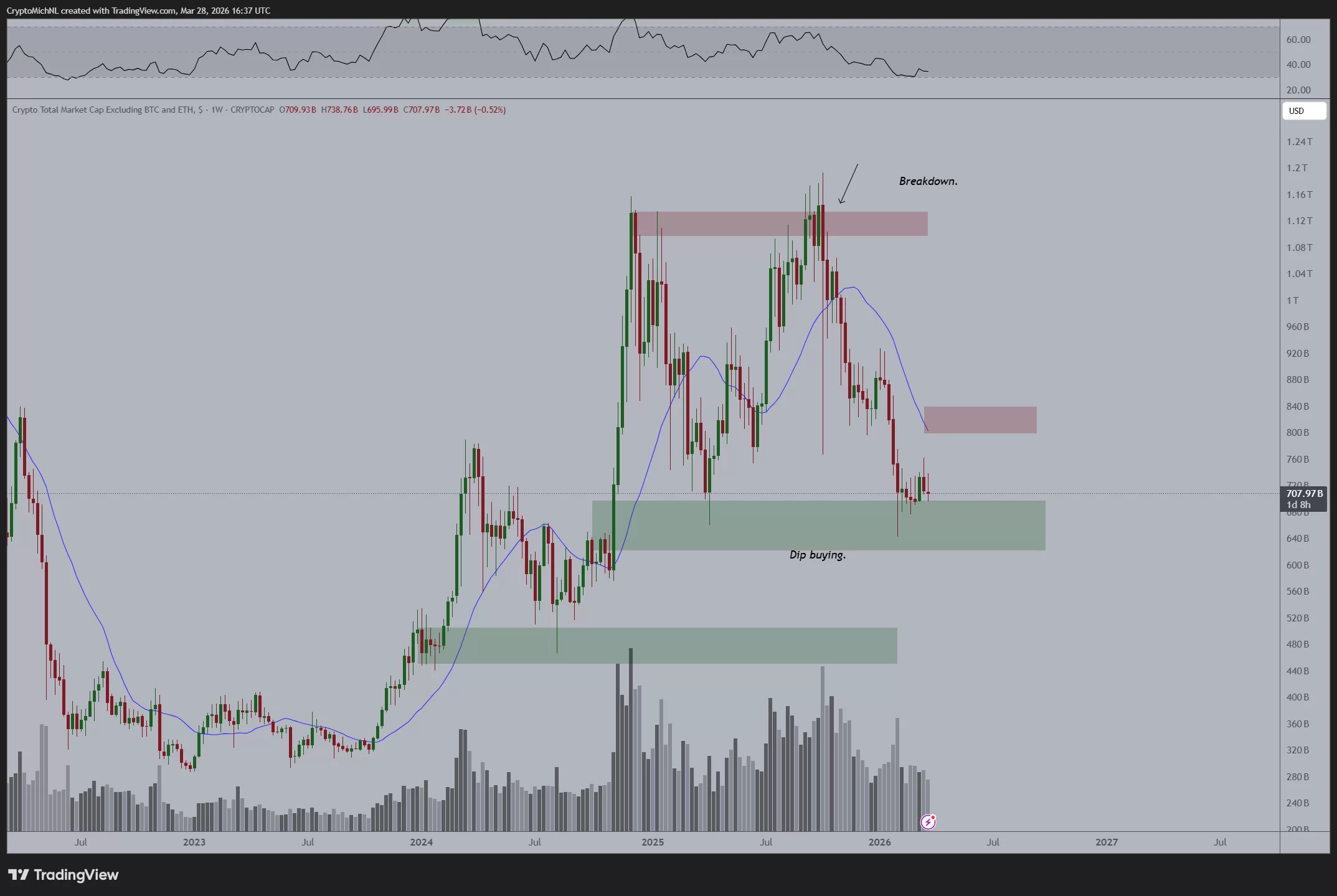
While a bottom may be in place, Poppe cautions that sideways and uneventful trading could persist for some time. He also reminds readers that such optimism comes from someone known for consistently positive outlooks on the market.
“Altcoins are currently establishing a bottom in total market capitalization.
A period of consolidation isn’t a bad thing, and yes, this phase might see the market retest support levels or even experience minor drops. Still, before a renewed surge in enthusiasm returns, I expect the crypto market to go through an extended period of relatively uneventful trading, followed by a gradual move upward. The next wave of market excitement will likely be driven by developments in AI protocols.”