Cryptocurrency markets have been on a roller coaster this week, with Bitcoin (BTC) experiencing another sharp decline following fresh headlines out of Iran. U.S. presidential candidate Donald Trump has spent weeks claiming regime change is underway in Iran, identifying Ghalibaf as the face of the supposed new government. The latest development circles back to him—and continues to shake up global markets.
Ghalibaf’s resignation intensifies uncertainty
According to N12 News, Iranian parliamentary speaker Ghalibaf has resigned from the country’s negotiation team. Both Ghalibaf and his colleague Arakchi had previously offered more constructive statements, with Trump recently describing them as the “new face” of Iran’s regime. Ghalibaf’s departure undermines the prospects for successful peace talks, triggering a drop in BTC to around $77,500.
The wider geopolitical fallout
Trump had extended a ceasefire in accordance with his own timeline, warning of major assaults if no agreement was reached. Now, with the dismantling of Iran’s negotiation team, those threats have proven hollow. The breakdown signals that the saga is far from over and fuels concerns that elevated oil prices could drive inflation worldwide.
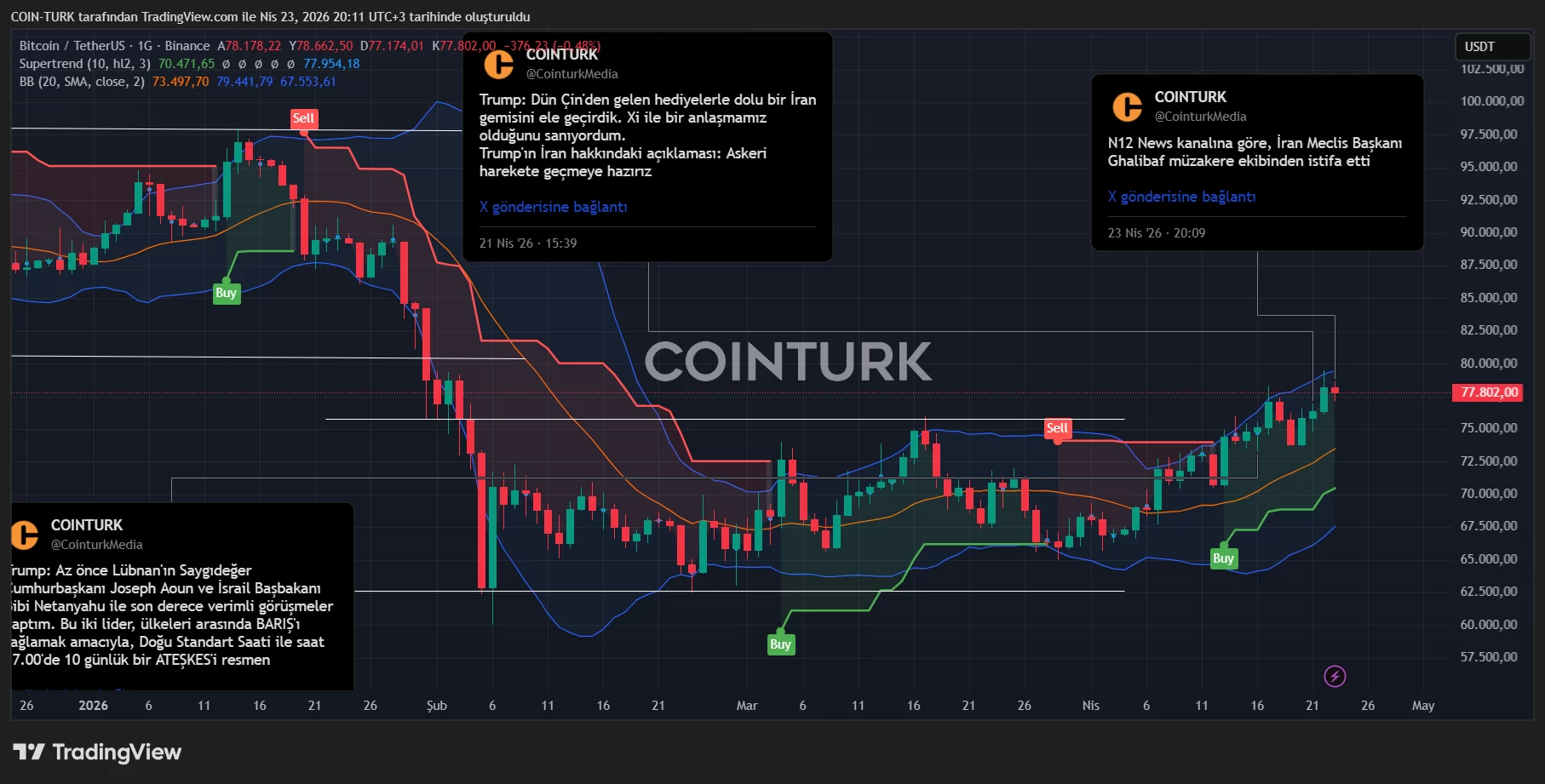
Unless more conciliatory statements renew hope for compromise, BTC could tumble below $77,300, potentially testing the $75,000 mark or lower. The protracted crisis is already creating medium-term inflationary effects, slashing the likelihood of a Federal Reserve rate cut in 2026. Meanwhile, the odds of interest rate hikes by the European Central Bank and others are increasing.
For investors, the drawn-out negotiations mean mounting volatility. With dialogue stalled, uncertainty will likely dominate the market, keeping traders on edge and potentially amplifying price swings in cryptocurrencies.
Commentators note that the longer the diplomatic impasse lasts, the greater the pressure on oil prices, which could ripple through global inflation and weigh on Bitcoin as a risk asset.
The developments underscore how sensitive digital assets remain to sudden geopolitical shocks. Rapid shifts in international relations and energy markets continue to play a pivotal role in steering BTC’s price action.
Despite temporary recoveries, concerns about prolonged Middle East instability risk capping any sustainable rebound in BTC for now. Investors are eyeing political headlines as closely as financial data.
As central banks recalibrate inflation expectations, the crypto market finds itself in the crosshairs of global economic turmoil. Any signs of progress in Iran could provide much-needed relief, but for now, the dominant mood is caution.
The next move in BTC prices will hinge on both the trajectory of peace talks and the response from world leaders and central banks to oil-driven inflation threats. All eyes are trained on future developments, as traders wait for clarity.
Until stability returns to negotiations and energy markets, Bitcoin’s price volatility seems likely to persist. Cautious optimism will only return if diplomatic overtures succeed in easing both tension and inflation fears.