Bitcoin (BTC) briefly surged above $78,000 following reports of a new offer from Iran but was unable to break through the $79,000 barrier. Despite this, major altcoins are seeing modest gains as the day progresses. Notably, PlanB, the analyst who gained fame for his predictions during the late 2021 bull market and later drew criticism in 2022, has released his latest assessment. Investors continue to puzzle over why Bitcoin remains unable to stage a sustained rally.
PlanB highlights mixed short-term Bitcoin signals
BTC ended April at $76,310, falling short of challenging all-time highs. PlanB’s stock-to-flow (S2F) model for Bitcoin remains widely discussed after successfully forecasting late 2021 price levels. However, in an update accompanied by fresh charts, PlanB acknowledged that signals are decidedly mixed for the near term.
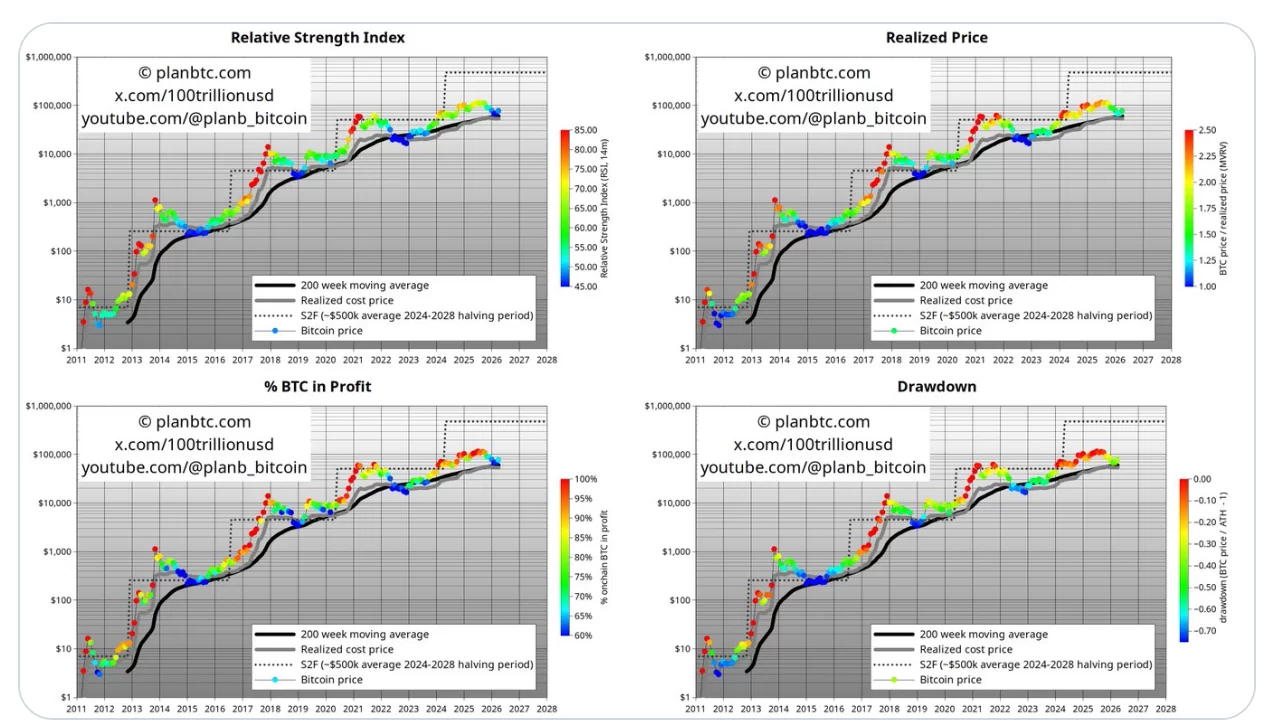
According to PlanB, “BTC will rise in the long run (due to devaluation and scarcity), but in the short run, signals are mixed. The left two charts show that RSI and %_BTC_in_profit are already at low levels — could BTC rise soon? The right two charts show Realized Price and Drawdown haven’t bottomed out — could BTC fall further?”
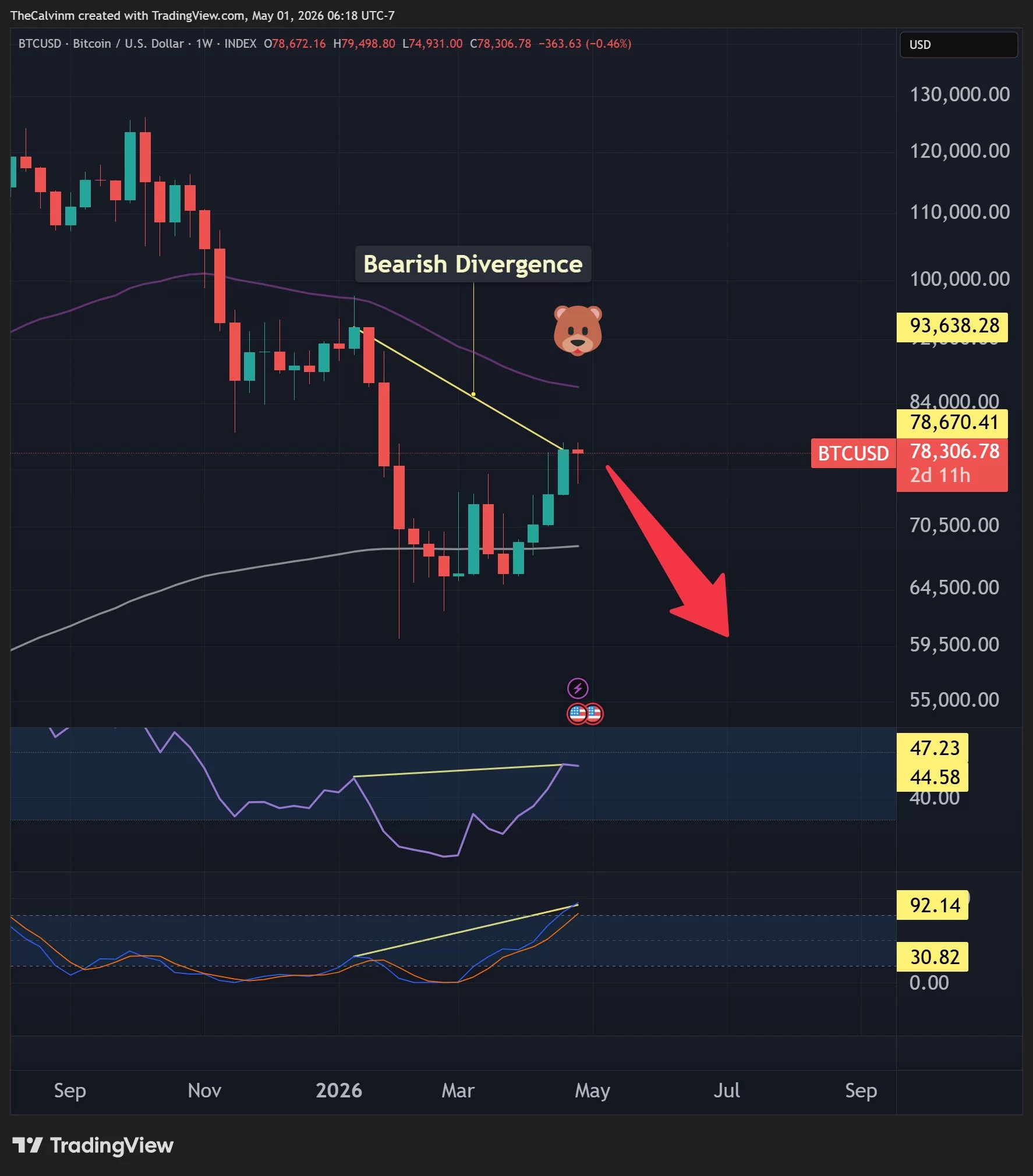
Other analysts are less ambivalent. Many investors sharing similar charts are expressing strong confidence that another downward correction is likely. On the Ethereum (ETH) side, short positions remain prevalent despite recent liquidations. Having scored easy profits with short selling for months, these traders expect the trend to continue, but only time will tell who is right in this standoff.
Weak demand weighs on Bitcoin’s recovery
Since February 6, Bitcoin has recovered by nearly 30%, sparking debate over whether the market has entered a new phase. However, analyst Darkfost cautions that it is too soon to make such claims. As a leading on-chain data observer, Darkfost notes that despite some recovery, demand for BTC remains weak—leaving the risk of further decline present.
The data reveals that visible demand (total over the past 30 days) is still in negative territory at -44,700 BTC. While this marks an improvement from the -89,000 BTC seen at the beginning of April, investor appetite is still notably subdued. Gradual improvement should not be overlooked, but strong demand is yet to emerge.
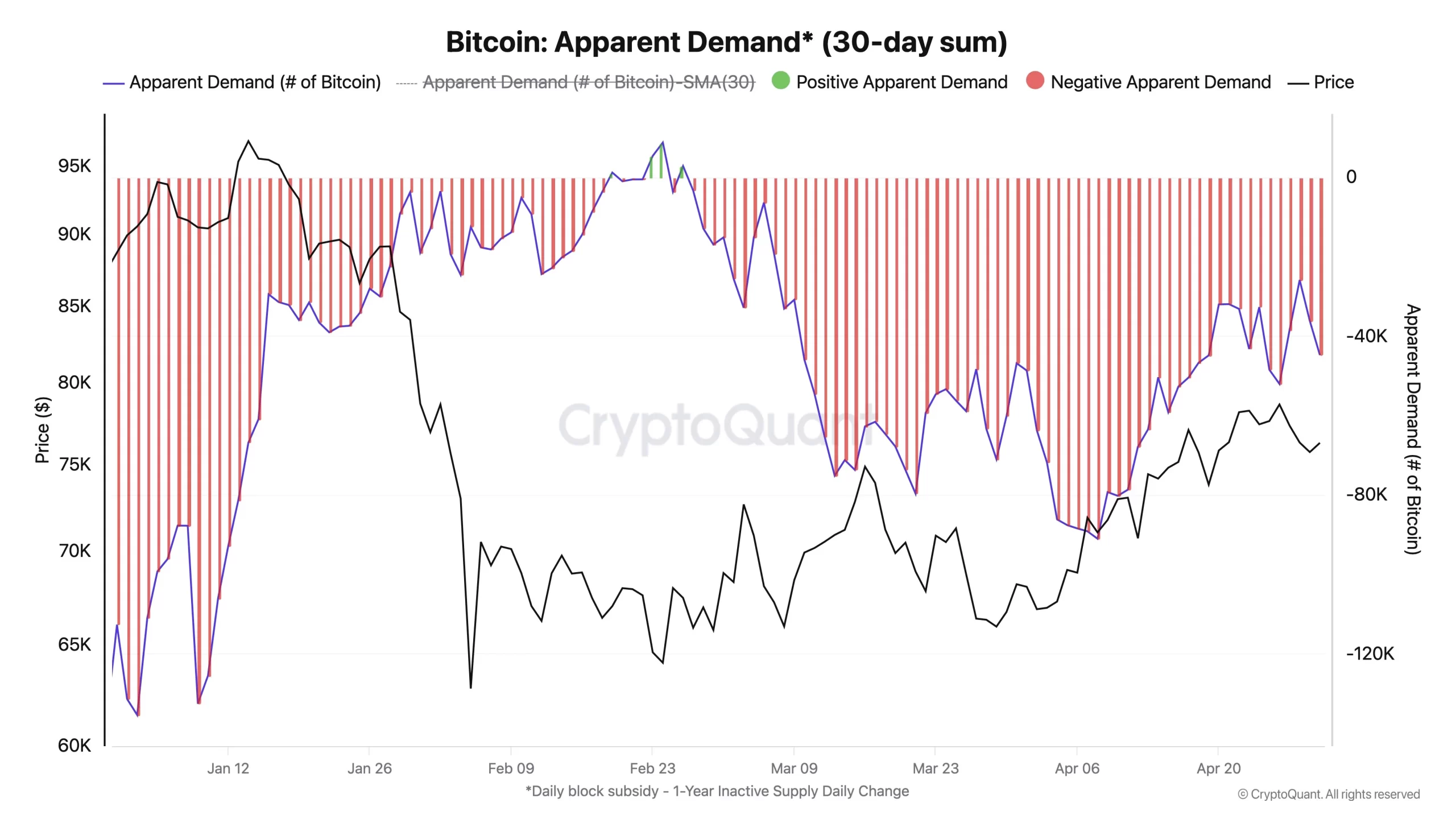
Darkfost summarized: “Visible demand has remained negative since the start of the year. Ignoring the brief uptick at the end of February—caused not by real demand but by a sharp fall in BTC issuance linked to severe weather affecting mining in the US—structurally, demand has not kept pace with new supply. This is calculated as the difference between new BTC issuance and the supply dormant for over a year, reflecting whether accumulation is sufficient to absorb new supply. Early signs of trend improvement are visible, but at this stage, BTC’s recovery still needs more robust demand to be sustainable.”
The market’s inability to maintain upward momentum despite positive headlines underlines the importance of renewed buying interest as a driver for future growth. The current lack of strong demand points to a cautious outlook in the near term.
While cautious optimism is noted due to recent improvements in demand data, both traders and analysts agree that clear signals for a bullish reversal are still lacking. Many participants continue to watch for further corrections before engaging more aggressively in the market.
Overall, Bitcoin’s price movements remain trapped between opposing forces—signs of improvement on one hand and lingering hesitancy among traders on the other. As mixed signals persist, the debate about the sustainability of Bitcoin’s next big rally goes on.