The Blockchain Association, a leading US-based crypto industry group, has taken aim at global market maker Citadel Securities’ call for tighter oversight of decentralized finance (DeFi) protocols, questioning the approach recently taken by the Securities and Exchange Commission (SEC). As financial markets accelerate their adoption of tokenization, the Association, which boasts over 100 members including Coinbase, Circle, and Mysten Labs, has stepped up its advocacy efforts.
Citadel’s call for stricter DeFi regulation faces resistance
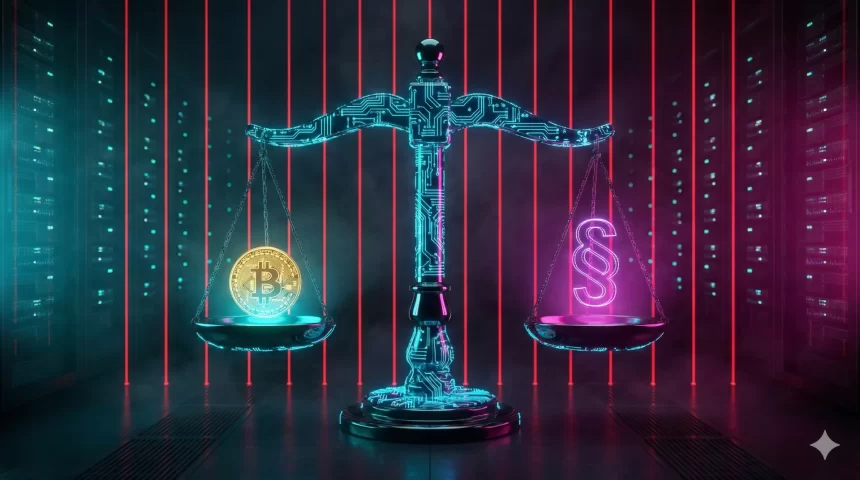
Earlier this week, the Blockchain Association sent a letter to the SEC in direct response to a December appeal from Citadel Securities urging stricter oversight of DeFi protocols. Citadel characterized these protocols as akin to exchanges that match buyers and sellers through algorithms rather than human intermediaries, and called for the SEC to move away from its current exceptions in favor of new, broadly debated legislation.
Disagreeing with this approach, the Blockchain Association argued that developers behind DeFi protocols should not be classified as brokers or exchange operators. According to the group, these definitions were crafted for human-directed intermediaries under existing law and are ill-suited to cover decentralized, automated financial systems.
The Association said in its statement, “We believe the Commission should move forward within the framework of the innovation exemption advocated by Chair Atkins’ staff. As with past financial technology advances, tokenized securities transactions should also be eligible for regulatory exemptions.”
The SEC explores regulatory test beds for blockchain assets
SEC Chair Paul Atkins recently announced the agency’s plan to seek public input on new regulatory initiatives, notably a proposal for an “innovation exemption”—a kind of regulatory sandbox—for on-chain assets. This move is designed to help regulators keep pace with rapid technology changes and allow innovative financial solutions to be tested.
Increasingly, companies are examining tokenization technologies that allow the trading of assets such as shares on the blockchain. These systems promise faster and more efficient transaction processing, potentially reshaping how financial markets operate.
Thus far, the SEC has granted limited approvals for select platforms, like Nasdaq, to experiment with tokenized securities. However, the agency consistently underlines that such instruments still fall within the definition of securities and must comply with established securities laws.
From the Blockchain Association’s perspective, traditional securities rules were intended to oversee intermediaries, not neutral infrastructure providers. The group contends that imposing full regulatory requirements on software developers or validation mechanisms would introduce unnecessary burdens and stifle innovation within the sector.
The Association added, “Validators, smart contracts, non-custodial software, and other blockchain-based tools only provide new forms of financial infrastructure—they do not become regulated intermediaries by nature of their design.”
While DeFi’s evolution continues, the Blockchain Association maintains that the SEC historically exercised ample authority to grant exceptions where justified. The group emphasized the need to extend this pragmatic flexibility as tokenization matures.
The Association also argued that Citadel’s procedural demands amount to a strategy to delay the adoption of new frameworks. They warned that an overly lengthy regulatory process would disadvantage both investors and the pace of financial innovation.