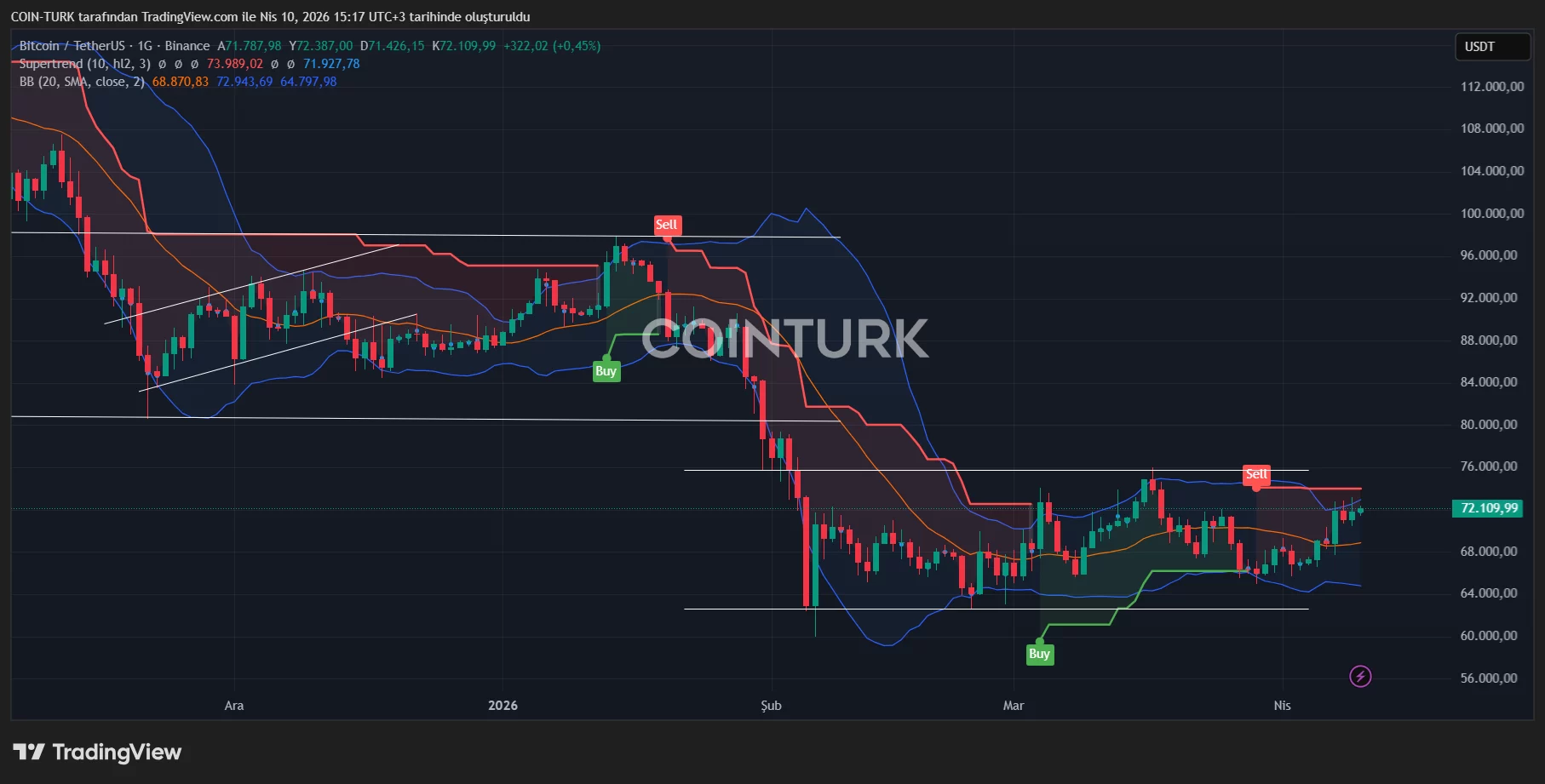
Just minutes before the release of major US inflation data, Bitcoin was trading above $72,000, with altcoins also staging a recovery as the ceasefire in the Middle East continued to hold. However, analysts caution it may be too soon for optimism. Negotiations are set to resume on Saturday, and any updates from these talks could introduce renewed market volatility.
Key developments in cryptocurrencies from April 6 to 10
The week began with markets digesting the potential for stagflation, prompting heightened investor caution until Wednesday, when a ceasefire announcement was made by Trump at 1:30 AM. The resulting turbulence in oil prices reverberated across crypto assets and altered expectations for interest rates throughout the period. Though inflationary pressures have not vanished, the risk of a deeper deterioration was significantly reduced thanks to the US-Iran ceasefire agreement.
Brent crude oil opened the week above $111, but slid 13% by midweek before rebounding to around $98. The recovery was fueled by ongoing restrictions on shipping through the Strait of Hormuz and the slow pace at which Gulf countries can restore previous production levels. Despite the recent calm, concerns over regional conflict linger, and signs of softer US economic growth are keeping downward pressure on risk assets.
In their latest briefing, QCP Capital provided further context:
On Wednesday, two-year US yields stood at 3.72% and ten-year yields at 4.25%. By Friday, both had rebounded slightly to around 3.78% and 4.30%, respectively. With US core PCE holding steady at 0.37% monthly and continued fragility in energy markets, the Federal Reserve remains in wait-and-see mode. Meanwhile, lackluster growth momentum does not justify a hawkish shift. As a result, markets have opted to move within a defined range, rather than in any decisive direction.
US futures and cyclical stocks initially rallied in response to ceasefire news, but gains faded once investors recognized that reopening the Strait of Hormuz carried more significance than diplomatic announcements alone. Sector leadership narrowed; technology and AI outperformed, while energy-sensitive and transport-linked assets continued to be influenced by crude oil prices.
What comes next for the crypto market?
Bitcoin climbed from $67,500 at the start of the week to $72,200 by Friday, with its sharpest surge triggered by the ceasefire news. Ether also regained ground above $2,200, suggesting renewed investor appetite. Further boosting sentiment was the launch of Morgan Stanley’s MSBT ETF, which, together with roughly $576.5 million in net inflows to Bitcoin ETFs this week, marked a significant rebound from the previous week.
Institutional positions remain cautiously optimistic, reflecting a preference for measured risk over outright exuberance. IBIT options maintained sustained open interest in May $45 call contracts, consistently holding above 80,000 contracts throughout the week. Meanwhile, ongoing use of put options and long-term hedges suggests that downside risks are still being covered. This combination indicates that, while the market is engaging in the rally, it has not abandoned hedging strategies.
Several key factors loom over the market and could determine the near-term direction of cryptocurrencies.
Will the current ceasefire persist? How will increased confidence in the ceasefire affect capital flows into crypto? Could oil prices reach new lows? Will we see a significant repricing of interest rate expectations?
For now, markets are not pricing in a guaranteed interest rate cut this year—a stance that many believe must eventually change for risk assets to rally further.
US CPI data, the ongoing US-Iran talks, and signals from the Bank of Japan are crucial, as they directly impact energy prices, inflation, and policy credibility—the market’s main pivot points. For cryptocurrencies, the outlook seems straightforward: If crude oil prices drop and real yields decline, Bitcoin could continue its rise, buoyed by institutional support. If energy risks intensify again, digital assets may revert to behaving like high-beta macro risk vehicles.