
Global markets remain on edge as the Iranian crisis drags on, with both sides continuing to contradict each other. Next week is expected to bring heightened volatility across asset classes. But what is the latest for Ethereum, and why are we witnessing such abnormalities? Meanwhile, Trump has managed to achieve a historic first.
Historic supply disruption unfolds
For the first time in modern history, the world is experiencing its largest-ever disruption to energy supplies. Since the outbreak of the Iran war on February 28, more than 500 million barrels of crude oil have been removed from global markets. Gulf states are now facing a multi-million-barrel loss in medium-term production capacity. TKL shared the following chart and noted:
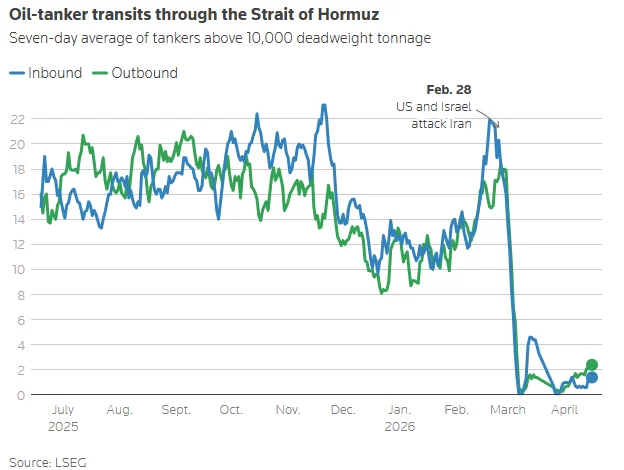
“Since the Iran war began around 50 days ago, global supply has lost roughly $50 billion worth of crude oil production. This amount equals the fuel needed to run the world’s international shipping sector for four months.
The world has never seen anything like this before.”
Trump now has the chance to go down in history once again, securing an unprecedented achievement. If a ceasefire is not extended or a long-term agreement is not reached by Wednesday, the supply crunch is expected to drive up the prices of goods, including food, and could push global inflation back to post-pandemic highs. That, in turn, could force the Fed into a historic position: tightening policy further instead of easing, potentially turning years of central bank strategy into a case study for economic textbooks.
Ethereum faces rare market behavior
As Trump ushers in a series of firsts on the world stage, few sectors have been as affected as cryptocurrencies. While the US stock markets have at times rebounded from tariff shocks and Iranian headlines, altcoins—especially Ethereum—have been gasping for air during the ongoing turmoil.
Throughout this cycle, Ethereum has come under unusually heavy selling pressure in derivatives markets. Net buyer volume—which measures the difference between buy and sell market orders in derivatives exchange order books—has remained mostly negative.
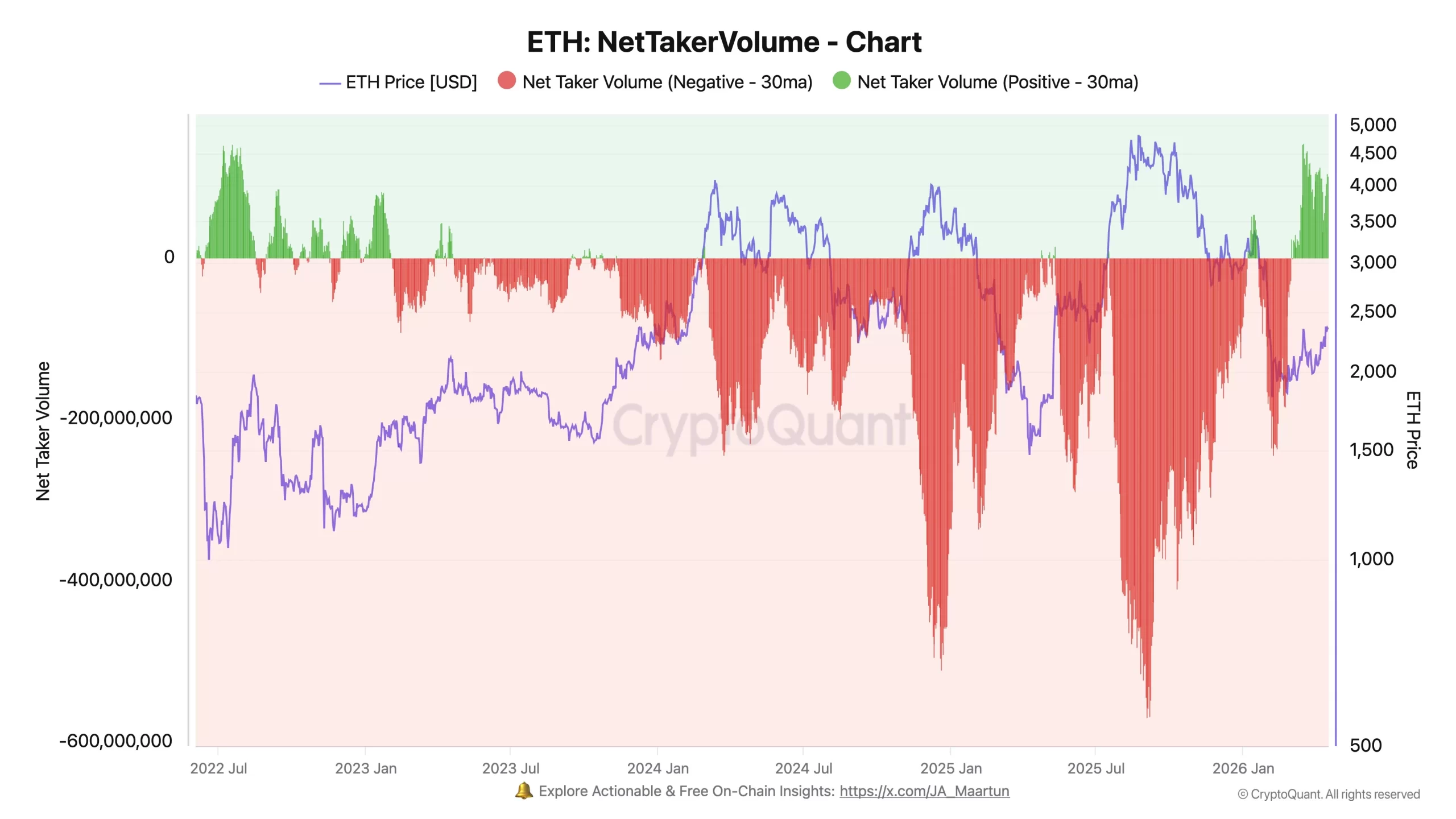
Back in December 2024, when ETH surpassed $4,000 to reach a new all-time high, its net buyer volume dropped to minus $511 million. As it pushed just below $5,000, setting another record, the figure reached minus $568 million. Since that stretch, sellers have dominated for an unusually long spell.
The tide appears to be turning. Since March, buy-side volumes have finally gained the upper hand, with a net $102 million booked today. Analyst Darkfost points to this as a potential early signal of reversal for ETH, following an extended period of lackluster market conditions. Similar patterns were last seen in 2022, when BTC struggled to reclaim $1,000.
“If this trend continues and buyers keep absorbing selling pressure, this could mark the early stages of a more robust structural recovery for Ethereum,” according to Darkfost.