
The US Federal Reserve has announced its second interest rate decision of the year, opting once again to hold rates steady. Markets had been abuzz with speculation ever since the Fed paused its rate cuts in January—a move that, according to historical data, typically signals there will be no rate reductions for at least three ensuing meetings. Heightened inflationary pressure from escalating tensions with Iran has all but dashed expectations for cuts this year, leaving investors adjusting their outlooks.
Fed’s Decision and Policy Outlook
At 9:00 PM, the Federal Reserve released its closely watched policy statement. Despite mounting pressure from figures such as Donald Trump, Fed Chair Jerome Powell made it clear he will resist lowering rates for the duration of his tenure. The statement, which included an updated economic forecast, offered a detailed look into the central bank’s projections for the coming years.
Key Takeaways from the Fed’s Statement
– The Federal Reserve left interest rates unchanged, keeping the benchmark rate in the 3.5%–3.75% range.
– Projections for the average Federal funds rate over the next two years remained at 3.125%, matching both previous estimates and market expectations.
– For the upcoming year, the median Fed funds rate is also forecast at 3.125%, a slight decrease from the prior 3.375%.
– The central bank’s long-term median rate forecast ticked up to 3.125% from 3%, indicating a more cautious stance.
– Fed officials anticipate only two 25-basis-point rate cuts—in 2026 and 2027—including the possibility that no cut may take place in 2026, while one policymaker even predicts a rate hike in 2027.
– The median long-term outlook now stands at 3.1%, up from 3%.
– Policymakers expect the unemployment rate to hold steady at 4.4% through the end of 2026, in line with December’s projections.
– GDP growth forecasts for 2026 edged slightly higher to 2.4%, compared to 2.3% previously, while the long-term growth outlook was revised upward to 2% from 1.8%.
– Inflation, as measured by the Personal Consumption Expenditures (PCE) index, is now expected to reach 2.7% by the end of 2026—up from the earlier estimate of 2.4%. Core inflation is also projected to rise to 2.7%.
The interest rate decision passed with an overwhelming majority—an 11 to 1 vote. FOMC member Miran stood alone in advocating for a rate cut, while the rest signaled ongoing caution. Meanwhile, US interest rate futures predict a modest easing of 21 basis points in 2026, reflecting no change from the Fed’s prior guidance.
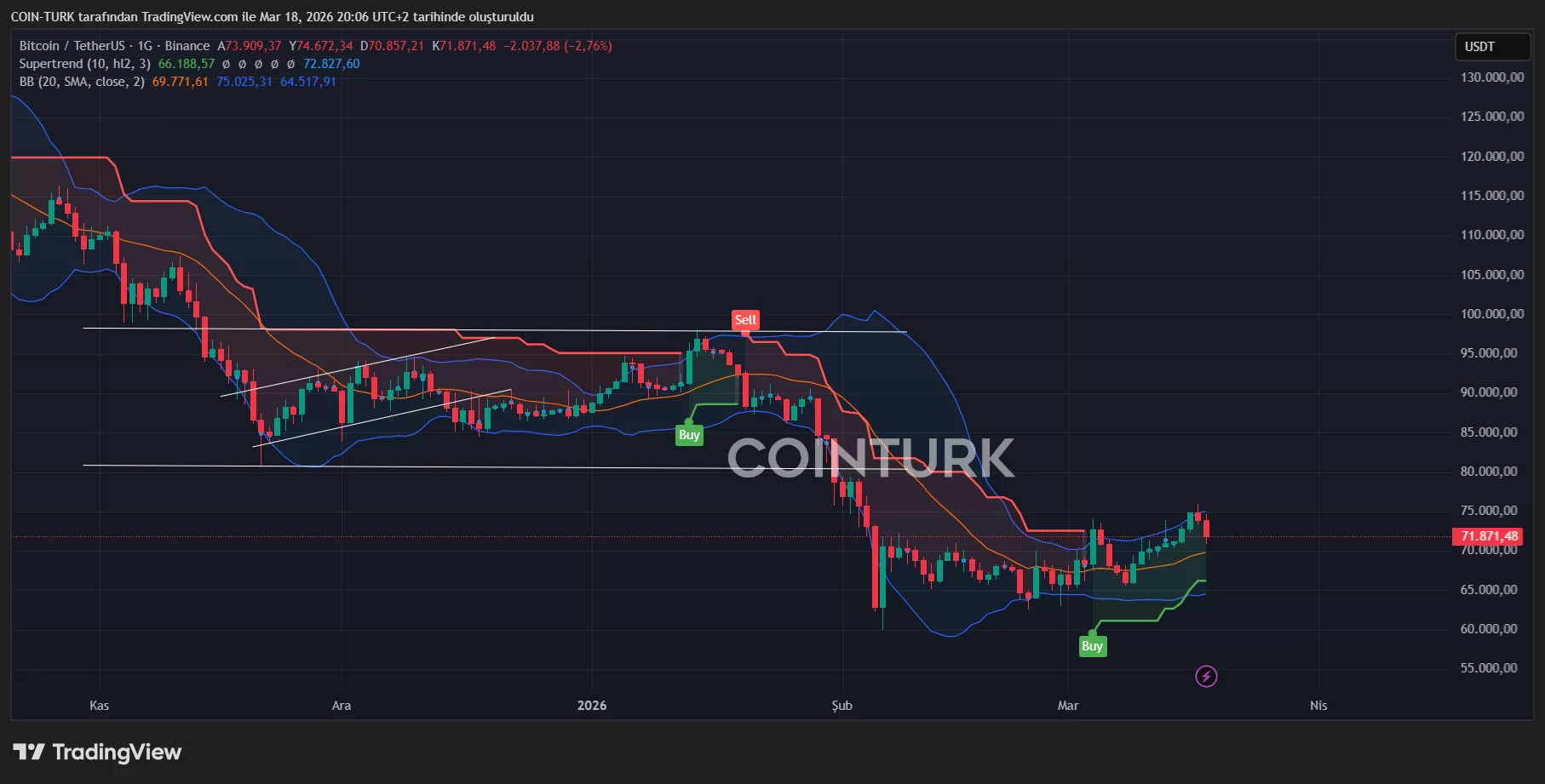
Following the announcement, markets responded with measured optimism. Although the outcome wasn’t what rate-cut advocates had hoped for, the decision was less severe than some investors feared, prompting a modest uptick in Bitcoin prices.
Over the past quarter, the Fed has consistently prioritized inflation containment over growth stimulation, especially as external shocks—including regional conflicts—stoke additional price pressures. By maintaining its current policy, the Federal Reserve signals ongoing concern about the stickiness of inflation and the uncertainties clouding the global economic landscape.
Despite external pressures, Powell emphasized the Fed’s independence, maintaining, “Our decisions reflect our mandate, not political agendas.”
This clarity demonstrates the central bank’s commitment to sticking to data-driven policy rather than succumbing to political rhetoric or market noise. Powell’s stance is widely viewed as a nod to institutional stability during a period of heightened volatility.
Looking ahead, the Fed’s updated projections suggest that any move toward monetary easing will be slow and cautious. With inflation proving more stubborn than anticipated, and economic growth outlooks holding firm, policymakers appear in no rush to adjust course. Observers will be watching closely for any indications of policy shifts as new economic data unfolds in the months to come.
For now, the US central bank appears resolved to maintain higher rates, prioritizing long-term stability and inflation control over short-term market relief. Both global markets and digital assets are poised to react swiftly to future policy moves, but today’s announcement is a reminder that the Fed is not yet ready to pivot.