As the U.S. Secretary of Defense continues to issue statements, global markets are bracing themselves following a major military strike on Iran. With Wall Street’s opening bell looming, expectations point to a tumultuous week ahead. There is, however, one note of relief: the financial pain endured while the market digested two separate crises may finally begin to subside. Both tariff hikes and war-related fears seem to have crystallized into “harsh realities” investors now openly confront. This shift has allowed Bitcoin’s recent slide to stabilize.
U.S. Markets, Cryptocurrencies Find Their Bearings
In times of heightened uncertainty, markets often price in fear in advance—volatility tends to quiet once events unfold. Over recent weeks, former President Trump repeatedly warned of imminent action against Iran and threatened supreme leader Khamenei directly, thus priming markets for the fallout. The widely anticipated deadline of March 1 arrived amid these escalating tensions. Recently, as Trump publicly emphasized this date—declaring Iranian leaders were well aware of it—an attack took place, resulting in Khamenei’s death. Contrary to expectations of a fierce backlash, Iran’s response fell short of its promised intensity. Now, there are indications that Trump’s calls for negotiations may gain traction, potentially leading to renewed diplomatic overtures.
Global Commodities Surge as Energy Anxiety Mounts
Turning to the financial markets, U.S. equities slipped while the dollar climbed. Oil surged to a four-year high, raising alarms about the inflationary pressure the spike could bring to the global economy. Trump had long touted his administration’s success in stabilizing energy prices and keeping inflation at bay. With employment recovering but inflation remaining stubbornly high, a fresh round of price increases driven by energy could delay rate cuts from the Federal Reserve—even as soon as July. So far, traders have not fully priced in this risk.
Asian and European equities mirrored U.S. declines, with S&P 500 futures dropping 1.1 percent. The effective closure of the Strait of Hormuz—a vital oil conduit that carries a fifth of the world’s crude—catapulted Brent crude by 8 percent to $79 per barrel. In Europe, natural gas prices soared as much as 38 percent, the steepest since August 2023.
Gold briefly approached $5,400 an ounce, as investors weighed whether surging energy costs would decrease the likelihood of a Federal Reserve rate cut. Meanwhile, yields on U.S. Treasuries trended upwards as risk aversion intensified.
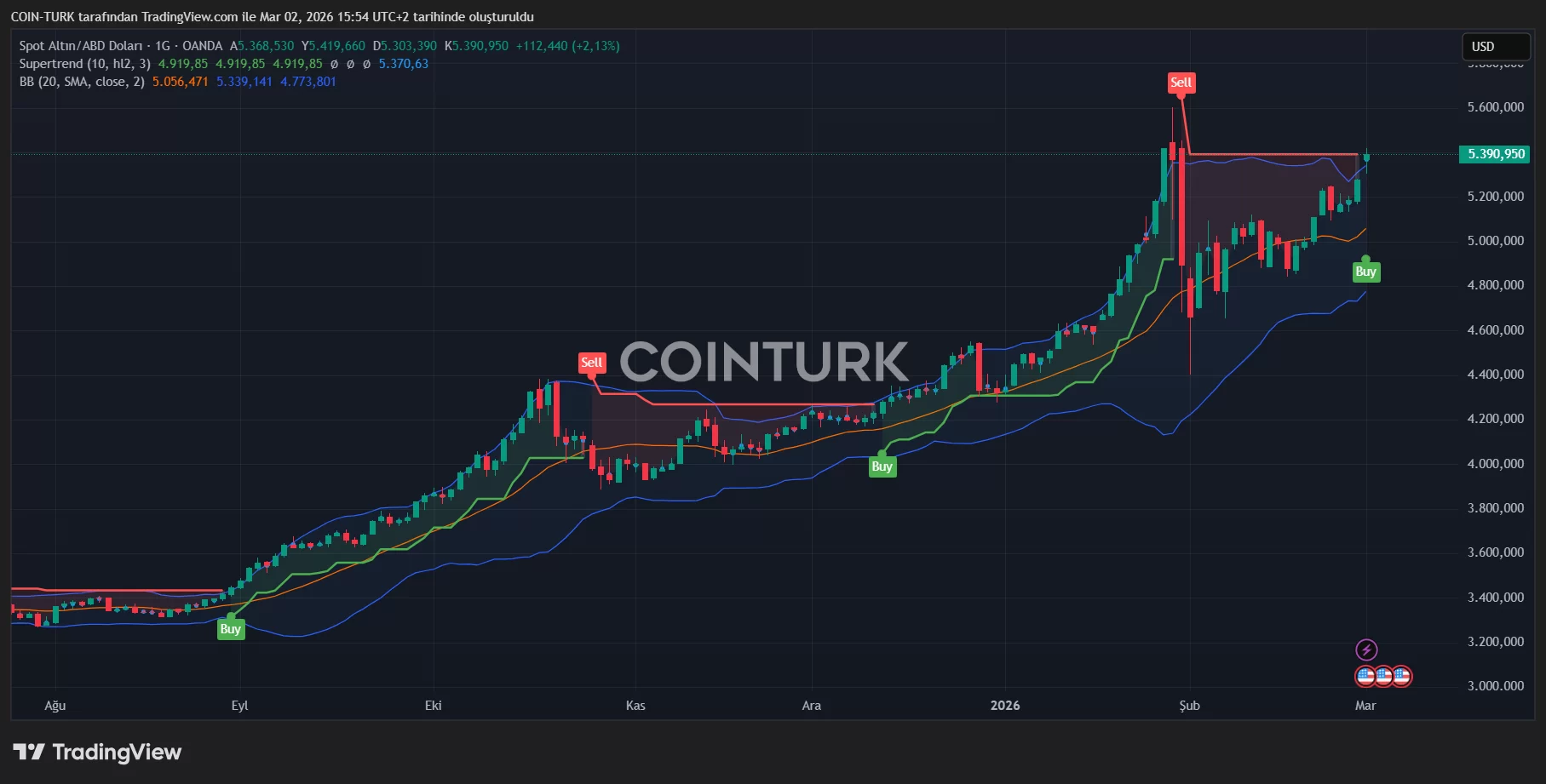
Key Developments on March 2
At press time, reports emerged of heavy U.S. strikes on targets in Lebanon. The Secretary of Defense cautioned that the current four-to-five week timeline for military actions could still shift. Meanwhile, out of the spotlight, debates over tariffs continue. The European Union, for example, is pushing back against the idea of paying hundreds of billions to the U.S.—arguing, based on current laws, that Trump does not have such sweeping authority. China and other trade partners also face a choice: swallow new costs or risk escalating standoffs.
Later in the day, the U.S. S&P Manufacturing PMI will be released at 17:45, with consensus pointing to a reading of 51.4. An improvement over the previous month could signal ongoing employment strength but would not bode well for near-term rate cuts.
Looking at the political calendar, Trump is scheduled to appear at a medal ceremony at 19:00, followed by a signing event at 21:30—though that is closed to the press. Policy meetings led by Trump will continue at 22:00 and again at midnight.
On the corporate front, Pocket Network plans to compensate node runners and stakers impacted by an accounting error. Ronin’s Cambria token presale is also set to take place today. Elsewhere, no major market-moving events are anticipated.