
Standard Chartered Bank’s global head of digital asset research, Geoffrey Kendrick, has revised his cryptocurrency outlook, cautioning that the months ahead could see further pain in digital asset markets. Known for issuing forecasts above market averages, Kendrick has adjusted his previously bullish stance, citing several evolving factors that have altered the crypto outlook for 2024.
Standard Chartered Updates Crypto Projections
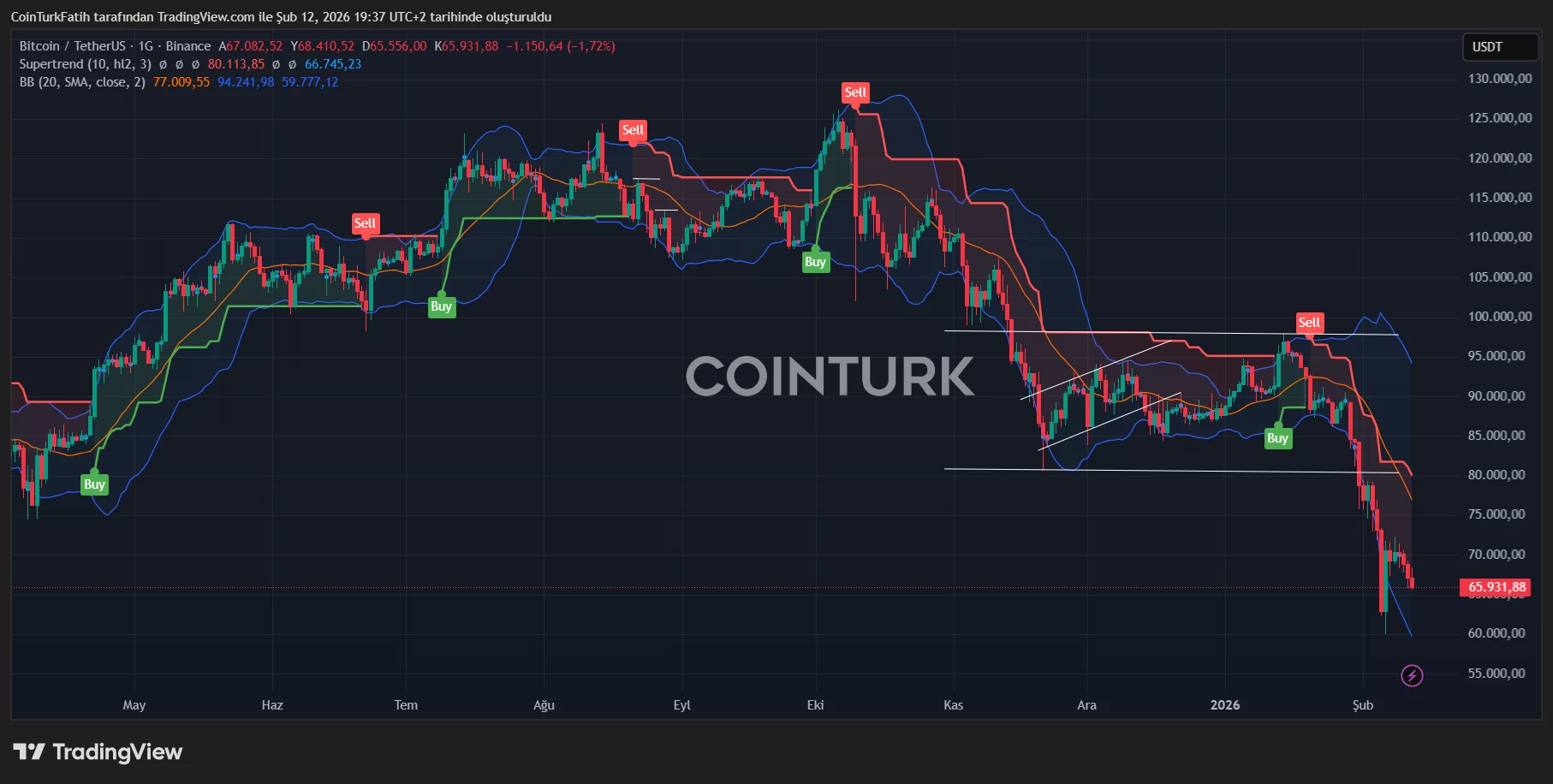
According to analysts at the British bank, the most challenging days for crypto investors may still lie ahead. The bank forecasts that Bitcoin could dip to $50,000 or below in the next few months, warning that investors should brace for more turbulence. They point to ongoing pressures that could spark another significant contraction across major cryptocurrencies.
Geoffrey Kendrick, leading Standard Chartered’s global digital asset research, shared his assessment on February 12 with the following remarks:
“Over the coming months, we expect more pain and ultimately a capitulation period in cryptocurrency prices.”
Alongside a predicted 26% drop in Bitcoin, Kendrick sees Ethereum potentially sliding as much as 30%—falling to around $1,400 in the same window. The bank has also revised its targets for the end of 2026, lowering its previous forecasts of $150,000 for Bitcoin and $7,500 for Ethereum. Now, Standard Chartered predicts Bitcoin will end the year at $100,000 and Ethereum at $4,000, though these should be considered peaks for the annual trading range rather than closing prices.
Just last year, Bitcoin surpassed $126,000 and Ethereum was closing in on the $5,000 mark, demonstrating the volatility and rapid shifts that typify the market.
Reasons Behind the Bearish Outlook
Since October, the combined market capitalization of cryptocurrencies has plummeted by $2 trillion—wiping out nearly half its value. Standard Chartered attributes this sharp decline to growing global macroeconomic risks and a slowdown in demand from institutions seeking to add Bitcoin to their reserves. The bank anticipates that these negative pressures could remain in place for some time, dragging prices down further.
Yet, Kendrick notes that cryptocurrencies, now recognized as a new asset class, have developed greater resilience compared to previous market cycles. He expects any downturn to be less severe than past market crashes. Importantly, the bank has not revised its ultra-long-term forecast for Bitcoin, which remains at $500,000 by 2030. While analysts stand firm on their extended vision, they acknowledge that the market’s current momentum is increasingly tied to ETF flows, making the next chapters more unpredictable in the short term but still optimistic over the long run.
Reflecting on the lessons from historical data, Kendrick suggests that the next two years are likely to see more measured and cautious market growth. In this respect, the bank’s outlook aligns closely with prevailing sentiment across the broader crypto sector.