A newly announced token standard is shaping up to play a pivotal role in Starknet’s distinct path and future strategy. As privacy takes center stage for cryptocurrency users, the growing demand has already prompted volatility in privacy-focused altcoins towards the end of 2025. Now, the Starknet team has responded: while upholding regulatory compliance, they are rolling out a new token standard that allows privacy-centered stablecoins to flourish.
STRK20 Raises the Bar for On-Chain Privacy
Transacting tokens on a public blockchain typically leaves a transparent trail: wallet addresses, amounts, counterparties, and timestamps are all inscribed onto a ledger visible to all. While this open-book approach lies at the core of the blockchain ethos, it clashes with the needs of institutions and major holders who often prefer to shield their capital flows from public scrutiny.
With this in mind, the team has introduced the advanced STRK20 token standard, aiming to bridge institutional privacy requirements with the benefits of decentralized networks.
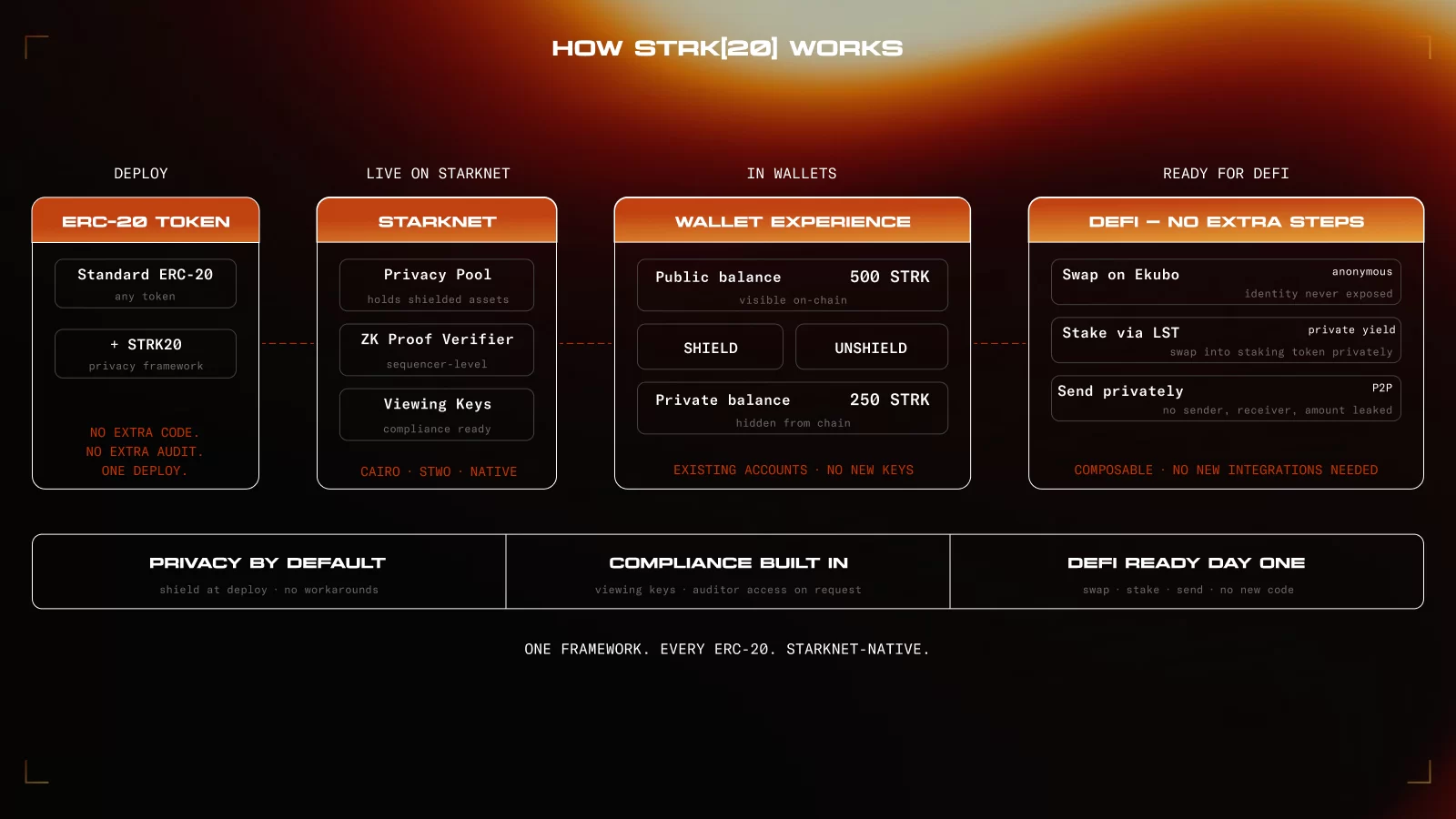
“Imagine deploying an ERC-20 token where balances are private by default. Transfers between two parties would reveal nothing to outside observers—not the sender, receiver, or transferred amount. Users could swap on DEXs, interact with lending protocols, or move funds within the ecosystem without exposing their identities or leaving a public on-chain trace.
STRK20 makes this possible. All ERC-20s on Starknet can now be private—not as a workaround or through external wrappers, but by design, embedded directly at the token level,” the Starknet team explained.
Building on Starknet’s Native ZK Architecture
Developed atop Starknet’s native zero-knowledge (ZK) architecture, the STRK20 standard delivers privacy, security, speed, and affordability as a complete package. This technological leap holds clear appeal for corporations seeking to tokenize real-world assets (RWAs) or to deploy products requiring discretion. The move broadens Starknet’s use cases, potentially making it an attractive home for future privacy-driven enterprise applications.
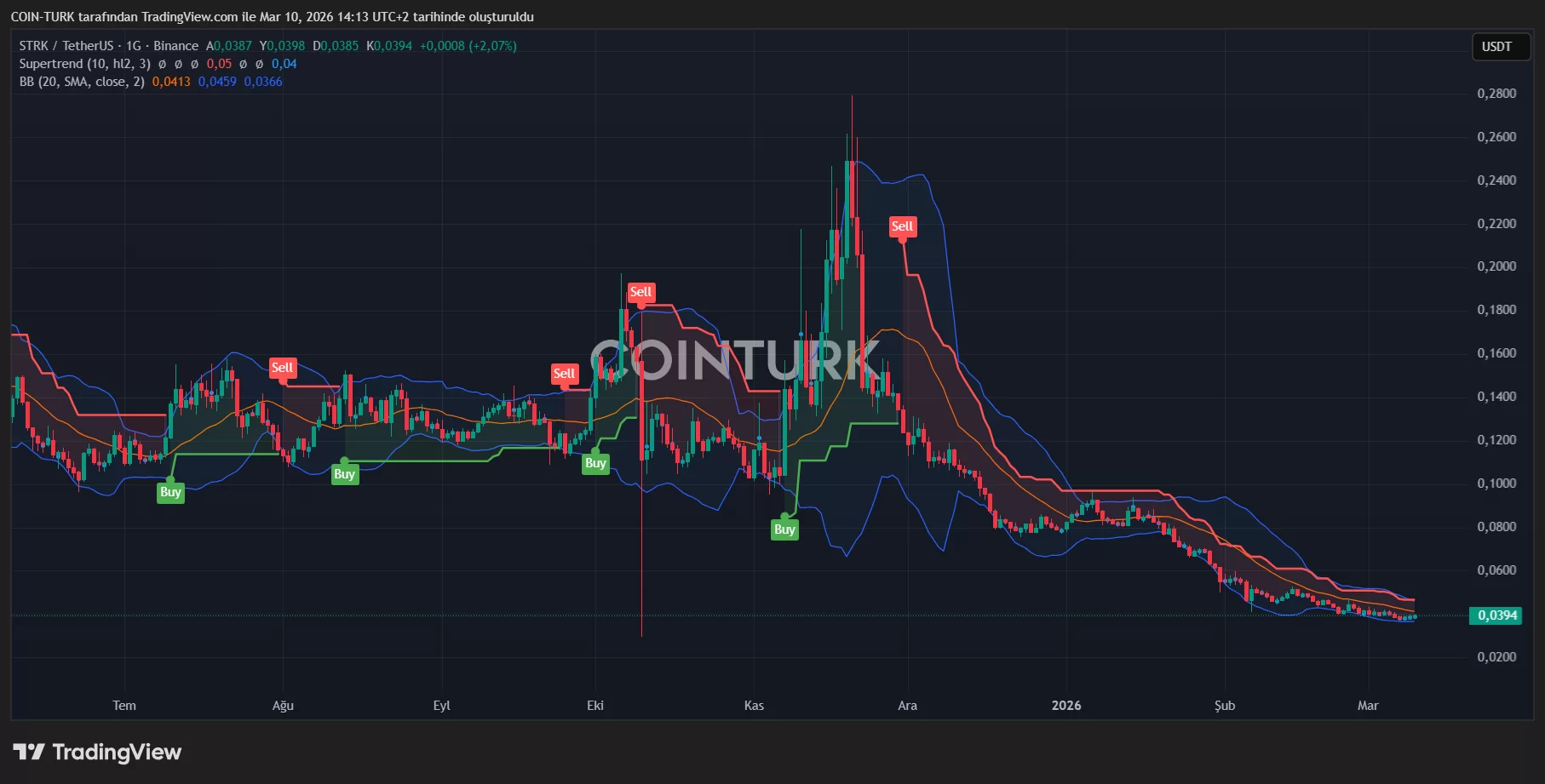
However, even landmark developments like these don’t always spark immediate price movement in the charts. After a prolonged period of decline, STRK’s price is still lingering near its lowest levels, showing little reaction to the news so far.
Industry observers suggest that while technological infrastructure lays foundation for broader adoption, market sentiment may take time to catch up. It remains to be seen how quickly projects will embrace STRK20 and whether this innovation will eventually reflect in Starknet’s valuation.
For now, Starknet is betting that privacy will become an even more crucial differentiator, especially as global regulations force networks to balance transparency with user confidentiality.
The coming months will reveal whether STRK20 can lead to a broader shift, both in how privacy is engineered on-chain and in Starknet’s standing within the competitive blockchain landscape. With users and institutions alike demanding both compliance and confidentiality, the new standard could pave the way for more nuanced financial interactions on public ledgers.