As summer arrives for cryptocurrencies, the term “season” is more symbolic than literal. Veteran crypto investors know well that when the weather gets hot, traders tend to cash out and head off for vacation. This year, similar circumstances are setting the stage for a repeat, as ongoing US-Iran negotiation turmoil and the transition to a new Fed chair make staying on the sidelines an attractive choice for many.
Traditional summer selling returns
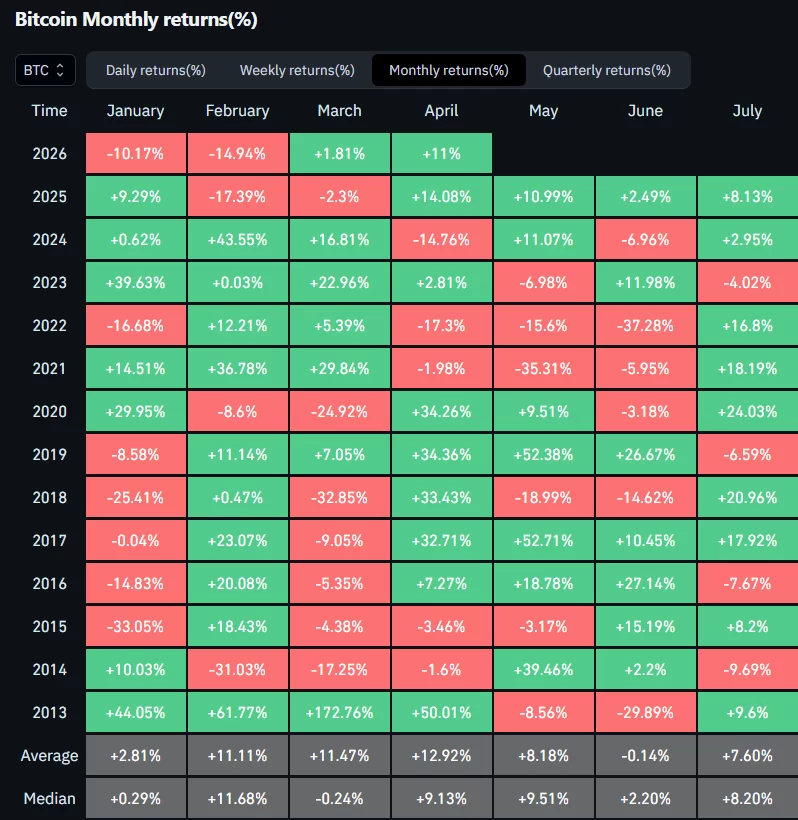
For years, the crypto market has followed this familiar pattern. An analyst known as DaanCrypto, who studies Bitcoin’s monthly price performance, notes that consistent selling pressure typically kicks in starting from May. He points out that, on average, May ranks as the sixth best month for returns, but volatility narrows significantly during this period. With lower volumes accompanying reduced price swings, BTC often enters a comparatively uneventful phase.
Geopolitical headwinds and US politics
Additional global factors could accelerate the summer slowdown. Unpredictable Iran negotiations and the adjustment period for the new Federal Reserve chair suggest a quick-moving summer ahead. Looking towards November, expectations of increased selling pressure on cryptocurrencies due to the upcoming US midterms make it reasonable to predict that May to July will be a tough stretch for crypto bulls.
Iranian sources, at the time of reporting, have just announced the activation of air defense systems once again. There is speculation that Donald Trump might resort to a “limited” military strike to break the deadlock in negotiations. With the stock market at its peak, observers see the coming hours as an opportune moment for Trump to act.
Meanwhile, cryptocurrency BAT Coin has drawn special attention from analysts due to recent network activity. The analytics platform Santiment has issued a warning about BAT, suggesting caution and encouraging investors not to be misled by potentially deceptive data points.
BAT Coin: Users beware of misleading data
Santiment’s alert for BAT Coin emphasizes that on-chain data can sometimes be misleading, especially during events such as airdrops that trigger artificial spikes in blockchain activity. Buyers focusing on apparent upticks in network utilization may mistake these as signs of growing retail interest, only to find themselves at a loss after their purchases.
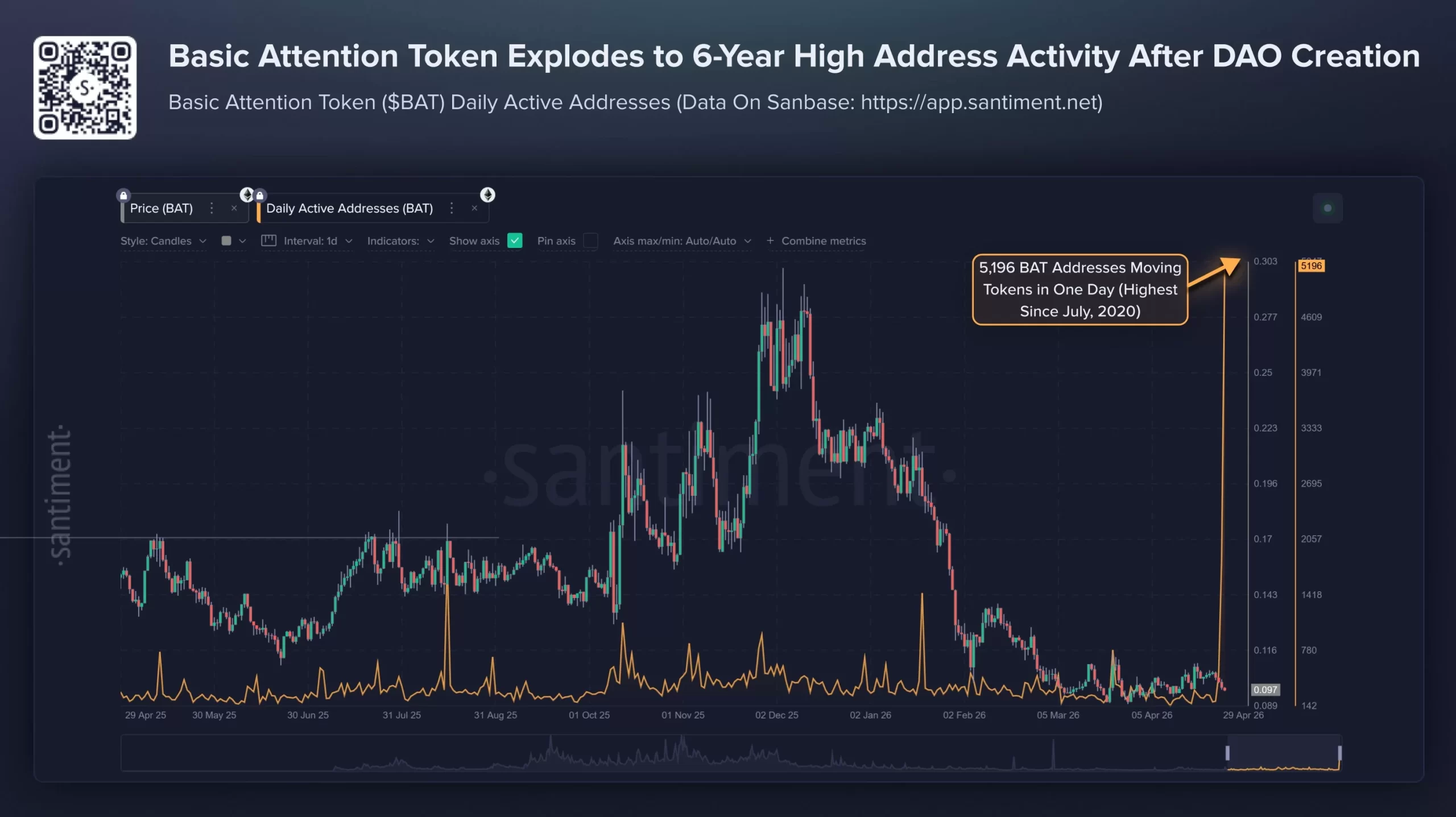
BAT Coin, in particular, is facing such circumstances. Since peaking at $0.30 five months ago, Basic Attention Token has lost 60 percent of its market value. Despite this decline, the network just saw its highest address activity in six years. After BAT Ambassadors formed a DAO and transferred 73 million GUANO tokens into it, 5,196 unique addresses interacted with the system within a short span.
Santiment explains the recent spike in active addresses, noting that “BAT community participants and ambassadors formalized this DAO initiative based on previous discussions and calls throughout March, focusing on governance, experimentation, and incentives within the ecosystem. The transfer of tens of millions of $GUANO tokens likely prompted thousands of wallets to claim, move, or interact with the new system, sparking the sudden surge in daily active addresses. In short, this was not purely organic retail participation. It was a structural event forcing dormant or inactive wallets to re-engage with the chain all at once.”
BAT’s long-term value still hinges on broader adoption and utility within the Brave ecosystem, a milestone it has not yet achieved. Investors are urged to consider this context, especially if positive commentary on BAT relies mainly on recent on-chain movements.