
Once again, as Asian markets prepare to open, anticipation is building around a major announcement event timed to coincide with those early trading hours. U.S. former President Donald Trump is poised to deliver what he has described as “significant” remarks. Earlier today, Trump made it clear in advance that he would unveil major developments at 04:00 Turkish time (9:00 pm Eastern time), prompting news organizations such as Politico to begin leaking details about the substance of his statements.
Trump to address NATO and Iran in late-night statement
Trump’s much-anticipated remarks are set for 2 April at 04:00 Turkish time (9:00 pm in Washington, D.C.). Leading up to the U.S. market open, speculation focused on whether Trump would signal a desire to withdraw from NATO. However, as details have trickled in, the expected content has become clearer: the former president plans to speak on both NATO and Iran. According to leaks, Trump will declare that the war is nearing its end and that the United States has accomplished its objectives. Notably, responsibility for reopening the Strait of Hormuz—a crucial conduit for global energy shipments—is expected to be delegated to international allies.
White House hints at completed objectives
In his remarks, Trump is widely expected to claim that “all military goals have been achieved.” Leaked details suggest that with the Strait of Hormuz still closed, Trump is likely to cast blame onto NATO partners for the continued disruption, in effect attempting to secure two outcomes at once: emphasizing America’s purported victory and shifting the problem to U.S. allies. Sources indicate that while Trump wants to distance the U.S. from NATO, he also aims to declare that the closure of the Strait does not pose an immediate American problem, as it primarily affects Europe’s access to oil. This narrative enables him to claim victory without requiring a formal ceasefire.
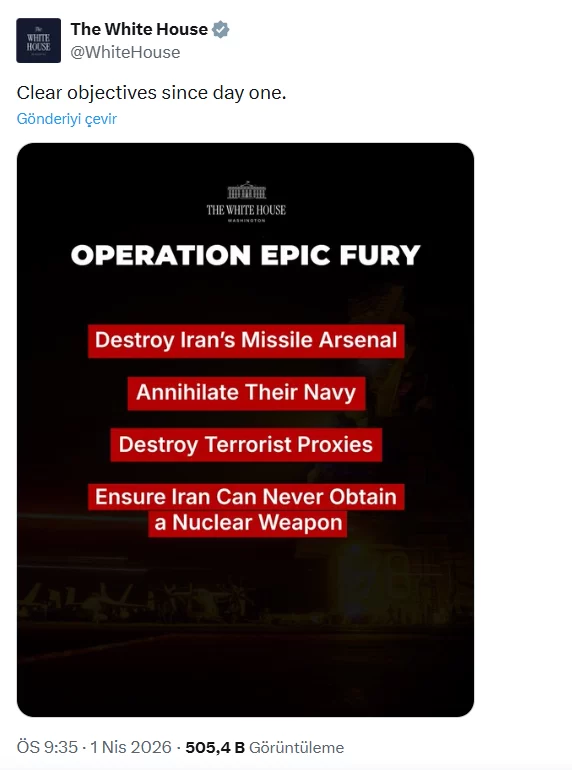
Trump has repeated in recent days that “the Strait of Hormuz is not our problem; if Europe has trouble accessing oil, let them handle it themselves.” It is likely his upcoming statement will reiterate this stance. So far, there is scant evidence that the U.S. and Iran are close to any agreement. Trump recently noted that “even without a deal, we’ll declare victory once our mission is finished and withdraw.” If current leaks prove accurate, Trump’s statement may take precisely this direction.
Can Trump actually pull out of NATO? Though in the past two months he has threatened to remind “NATO, which left the U.S. alone,” of American dissatisfaction, current laws prevent the president from unilaterally withdrawing. Legislation passed by Congress in 2023 stipulates that leaving NATO requires two-thirds Senate approval or an act of Congress, so while Trump cannot formally exit, he could seek to weaken the alliance. The Biden administration, anticipating the possibility of Trump’s re-election, has already taken precautions against such moves.
Market impact and implications for cryptocurrencies
An end to military operations and even the suggestion of peace is, in principle, positive for cryptocurrency markets. However, since the reopening of the Strait of Hormuz may lag behind any military withdrawal, oil prices are unlikely to drop significantly in the short term. With continued upward pressure on energy and food costs, the U.S. economy faces indirect impacts, which could prompt the Federal Reserve to consider rate hikes. Should tightening occur before the new round of quantitative easing (QE) gains traction, cryptocurrencies could be adversely affected for six to seven months, and markets may quickly price in this reality with further declines in coming days.
Despite shifting rhetoric, oil prices remain above $100 per barrel, even as agreement and withdrawal discussions persist.
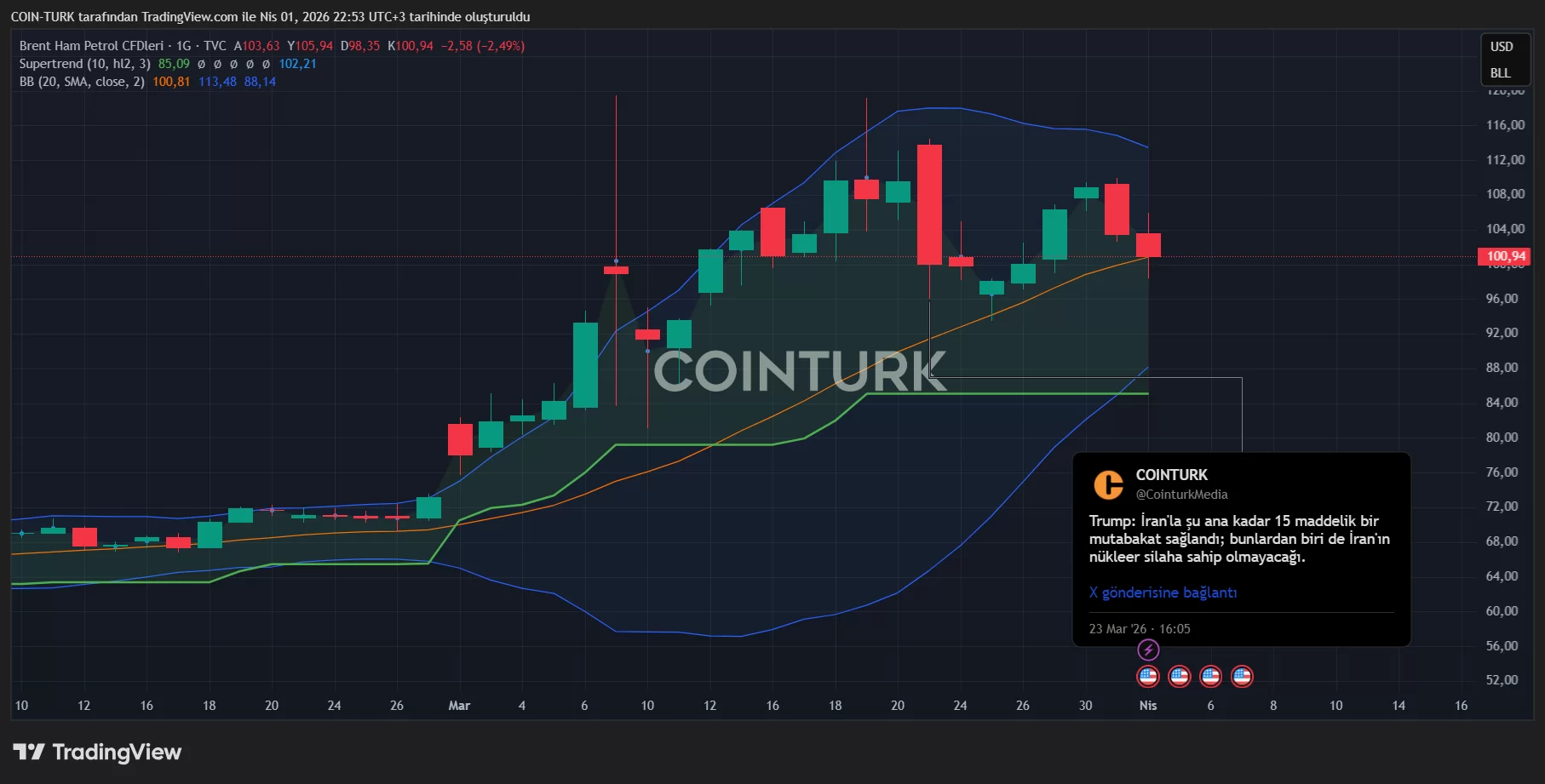
Considering the short-term effects of the 04:00 announcements, Asia is a particular point of concern. The Strait of Hormuz is a vital route supplying oil to Asian manufacturing hubs. Should the U.S. confirm its withdrawal and downplay the strategic importance of the Strait, the coinciding timing of Trump’s speech with Asian market openings could amplify negative sentiment and trigger sell-offs. Historically, risk-off sentiment in Asian markets has put pressure on cryptocurrencies, with further carry trade speculation and concerns over oil supply acting as additional headwinds, possibly deepening losses.
Meanwhile, the U.S. continues to deploy troops, ships, and aircraft to the region. The contradiction between a declared withdrawal and ongoing military buildup raises questions about Washington’s strategy, diminishing the positive market impact that de-escalation announcements might otherwise bring to cryptocurrencies.
With the U.S. midterm elections approaching, Trump may seek to calm tensions to boost his domestic standing. However, if oil prices remain at three-digit levels, he faces formidable challenges from rising inflation, unemployment, and high interest rates. While he may attempt to stabilize the situation for now, broader macroeconomic volatility—particularly in crypto markets—looks likely to persist, with projected price ranges for Bitcoin between $53,000 to $85,000 in the near term.