US President Donald Trump attended a cabinet meeting today, making significant remarks as tensions regarding Iran continue to capture international attention. Market watchers are closely monitoring the situation, as geopolitical developments surrounding Iran take precedence on the world agenda. Meanwhile, Turkish cryptocurrency enthusiasts are celebrating the withdrawal of a proposed crypto regulation law. But the spotlight remains on Trump’s statements about Iran, which have immediate implications for energy markets and global security.
Trump Keeps Pressure on Iran with Military and Diplomatic Tactics
Earlier this week, Trump said he would wait until Saturday for progress toward a deal with Iran. As of Thursday, Iran has only now admitted to receiving an offer via Pakistan, and no agreement has yet been reached. The negotiation process, though sluggish, is inching forward. Whether Trump will tolerate this slow pace remains uncertain, but so far, he shows no signs of backing off—deploying troops to the region and insisting the US has “many options” on the table to address the escalating standoff.
Highlights from Trump’s Latest Iran Statements
Trump’s address included several noteworthy points, reflecting both pressure and skepticism toward Tehran. He reaffirmed the US commitment to crippling Iran’s missile and drone capabilities, boasting that American forces are consistently taking down Iranian drones. Trump claimed Iran was desperate for a deal, though he questioned his own willingness to negotiate. He described Iranian officials as skilled negotiators and highlighted that previous leaders who failed to secure agreements ultimately faced deadly consequences.
“We are destroying Iran’s missile and drone stockpiles, shooting down most of their drones. It is Iran that’s begging for a deal, not me. Whether I am willing to negotiate with Iran, I don’t know. Everybody knows Iran is talking with us—they are great negotiators. Previous Iranian leaders, who refused deals, met their end. The US does not want to be dragged into Britain’s war. I am disappointed with NATO.”
“If Iran ever used nuclear weapons against Israel, other countries in the region, or the US, the consequences would be catastrophic.” (Trump went on to criticize the UK’s aircraft carriers, calling them ‘toys.’) “Allies must get involved before or during a war—not after it ends.” (He also reiterated a four- to six-week timeline for the Iran conflict.)
“Iran is talking to us because they’ve been defeated. They have a chance to make a deal. The US could move freely through Iran’s cities and towns. If Iran strikes the right deal, the Strait [of Hormuz] could be opened. Whether we achieve the right agreement and reopen Hormuz remains to be seen.”
“Iran must choose between striking a deal and facing continuous US attacks. We will keep doing what needs to be done.”
“The Iran conflict was a real test for NATO. (Speaking directly to NATO) Some months from now, remember this.”
“Oil prices and stock market drops have not been as severe as expected. I thought they’d fall further. The Iran issue should be resolved soon—it won’t drag on. Energy prices will decline, maybe even more than before.”
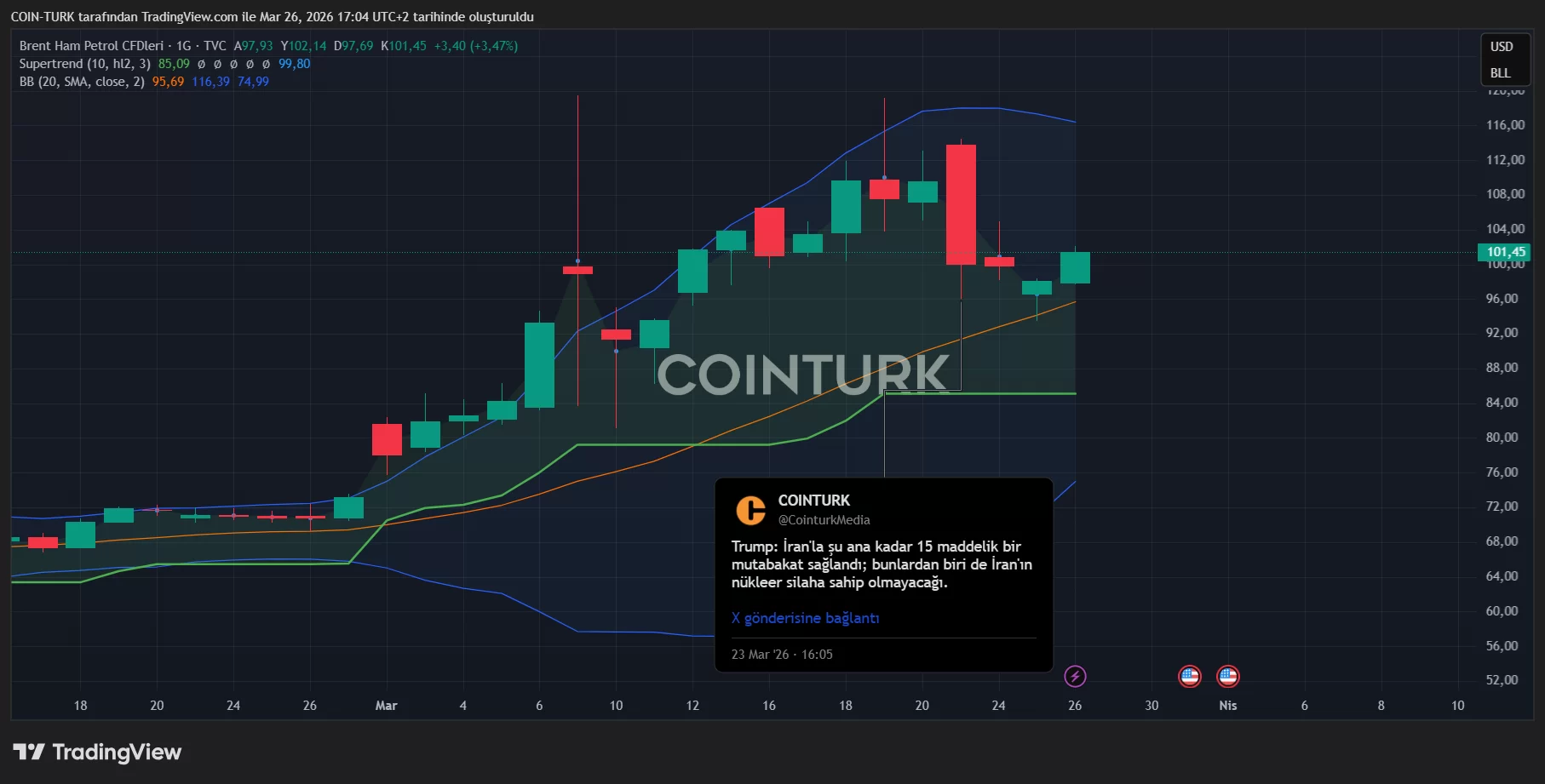
Oil prices climbed back above $100 after Iran’s recent statements regarding a possible agreement, and continue to climb, underscoring the market’s sensitivity to diplomatic shifts in the region.
At 18:06, US Secretary of State Rubio weighed in on the developments:
“We will obliterate the Iranian navy—and even if it hasn’t already happened, it is happening as we speak.”
Meanwhile, US Representative Witkoff outlined the current state of talks:
“The Iranians have repeatedly insisted they retain their right to enrich uranium, and have consistently rejected the US’s demands. We believe Tehran is trying to stall negotiations. We’ve provided a 15-point action list and a proposed framework for a peace deal. Our aim is to convince Iran that this is a turning point. It remains to be seen whether we can persuade them that there are no viable alternatives. Iran is searching for an exit, with Pakistan mediating the framework talks.”