
Throughout 2025, escalating remarks over tariffs suffocated risk markets, heightening volatility across sectors. Although the Supreme Court nullified the duties this year, Donald Trump has swiftly reignited the tariff debate. In a recent statement, he accused the European Union of breaking its trade commitments and announced the reinstatement of customs tariffs.
Tariffs make a forceful comeback
Just as this article was being prepared, Trump published a major announcement. Meanwhile, senators from both parties are progressing on a bill designed to protect US strategic interests, particularly against China. As if crypto markets were not already under enough pressure due to Iran-related headlines, Trump further unsettled the landscape by declaring a hike in EU automotive tariffs to 25 percent.
“Because the European Union has failed to honor the very Trade Agreement we reached, I am pleased to announce that I will be increasing tariffs on cars and trucks entering the United States next week.
The customs duty will be increased to 25 percent. It has been clearly understood and accepted that if these vehicles are manufactured in US factories, NO CUSTOMS DUTY will apply.
Currently, more than $100 billion is being invested in building numerous car and truck factories—a RECORD in the history of motor vehicle production. These factories, staffed by American workers, will soon open. Nothing like this has ever been experienced before in America! Thank you for your attention to this issue. President DONALD J. TRUMP”
Impact on the auto industry and markets
Trump’s decision is set to dramatically reshape the landscape for European automakers exporting vehicles to the US, pressuring companies to relocate production or face steep duties. The move could trigger a fresh round of trade disputes between Brussels and Washington, with potential ripple effects across global supply chains.
Analysts warn that these tariffs, if implemented, may raise vehicle prices in the US and reduce the competitiveness of European brands. Automakers may accelerate investments in US plants to bypass the new 25 percent levy, aligning with Trump’s stated goal of boosting domestic manufacturing and employment.
The statement also comes as US lawmakers pursue legislation aimed at safeguarding strategic economic interests against China—a backdrop that sharpens the focus on protectionist measures and their broader economic repercussions.
Within the context of high-stakes geopolitical maneuvering, market observers are now watching for retaliatory measures from the European Union. The EU’s potential response could extend beyond automotive products, affecting industries from agriculture to technology.
Crypto markets maintain composure
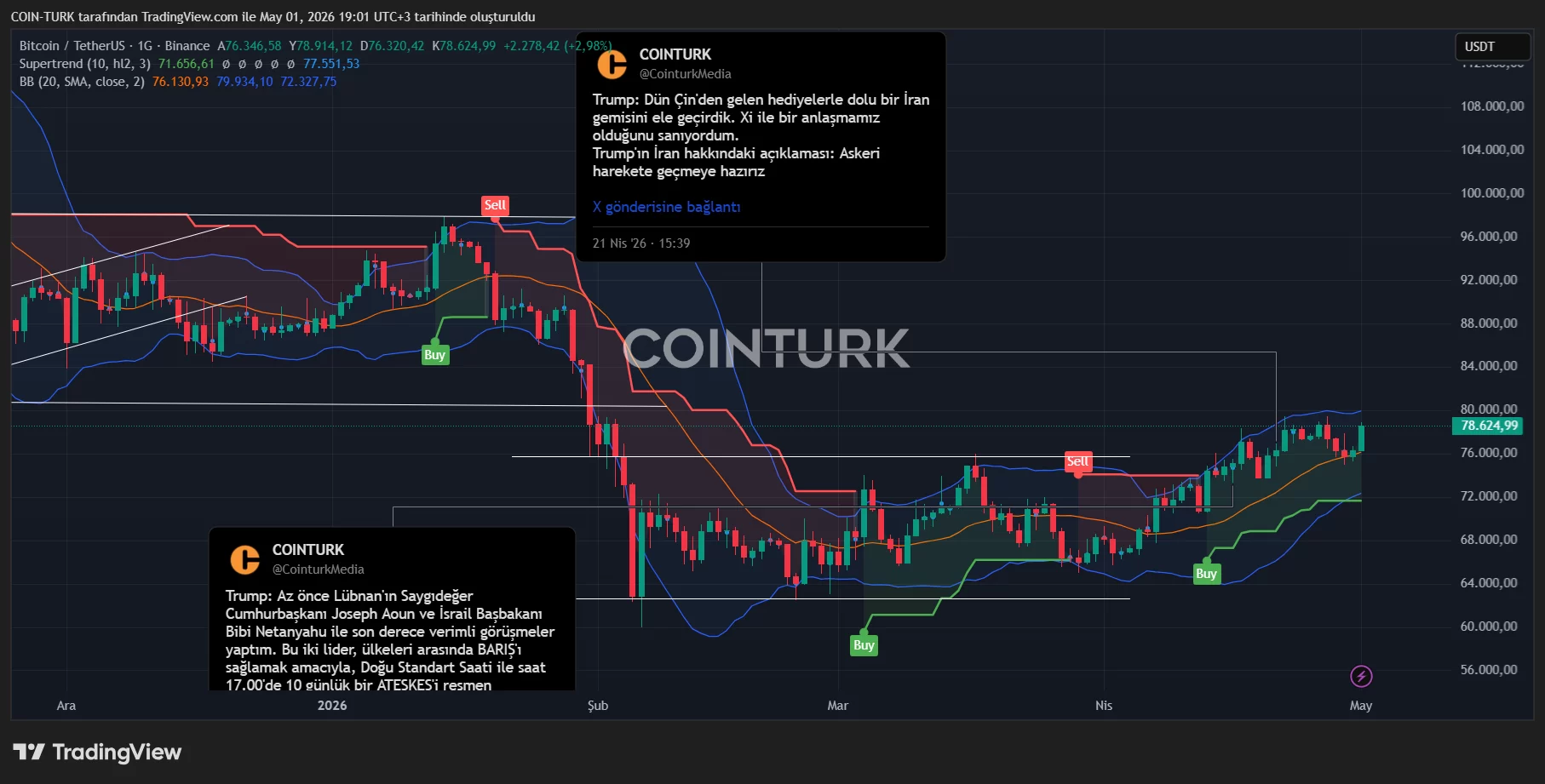
Despite the mounting trade tensions, BTC remains relatively stable, trading above the $78,500 mark as investors weigh the broader implications of global policy shifts.
Some financial analysts suggest that cryptocurrency markets, while currently steady, could face a wave of volatility if the broader risk appetite deteriorates due to prolonged trade conflicts. For now, major digital assets are showing resilience in the face of policy shocks and political uncertainty.
As markets brace for the possible economic fallout of renewed tariffs, policymakers and investors alike will be closely monitoring both transatlantic relations and ongoing developments in the crypto sector.