Before the opening of U.S. markets, White House Press Secretary Leavitt announced a press briefing scheduled for today. As the press conference began, Leavitt provided key updates on the ongoing conflict in the region and the status of global oil supply, delivering details closely watched by the world’s markets.
Biden Administration Addresses Gulf Tensions
Reports earlier claimed that U.S. forces had started escorting commercial vessels through the Strait of Hormuz. However, the official behind this statement later withdrew the claim, with Iran issuing a swift denial. Meanwhile, sources cited by Axios indicated that the U.S. has urged Israel to refrain from attacking Iranian energy infrastructure, signaling diplomatic maneuvers behind the scenes. Leavitt reiterated the 4-to-5-week timeframe previously outlined by former President Trump—a schedule that, if followed, could point to a de-escalation in coming days.
Leavitt explained, “The U.S. has neutralized more than 50 Iranian vessels, taking decisive action to dismantle Iran’s missile production capabilities. Our objectives remain unchanged, and Trump is confident the goals will be achieved swiftly.
The U.S. Navy has volunteered to escort tankers as needed. Trump is prepared to wield every available option regarding oil. After the Iranian operation, we expect prices to drop.
Trump and his energy team are monitoring markets closely. The original timeline for the conflict was set at four to six weeks, yet many objectives are being met ahead of schedule.”
Uncertainty on Long-Term Escalation
With many objectives reportedly nearing completion, expectations are rising that the U.S. will declare “mission accomplished” within the next 7 to 10 days. American officials, recognizing the challenges of rapidly achieving regime change in Iran, appear unwilling to commit to a prolonged military campaign. Even Israeli authorities have publicly stated today that they do not favor a long-term war. The most likely scenario, analysts suggest, is for both Iran and the U.S. to secure gains that can be portrayed as victories to their domestic audiences—potentially paving the way for a de-escalation that could bolster sentiment in the cryptocurrency sector.
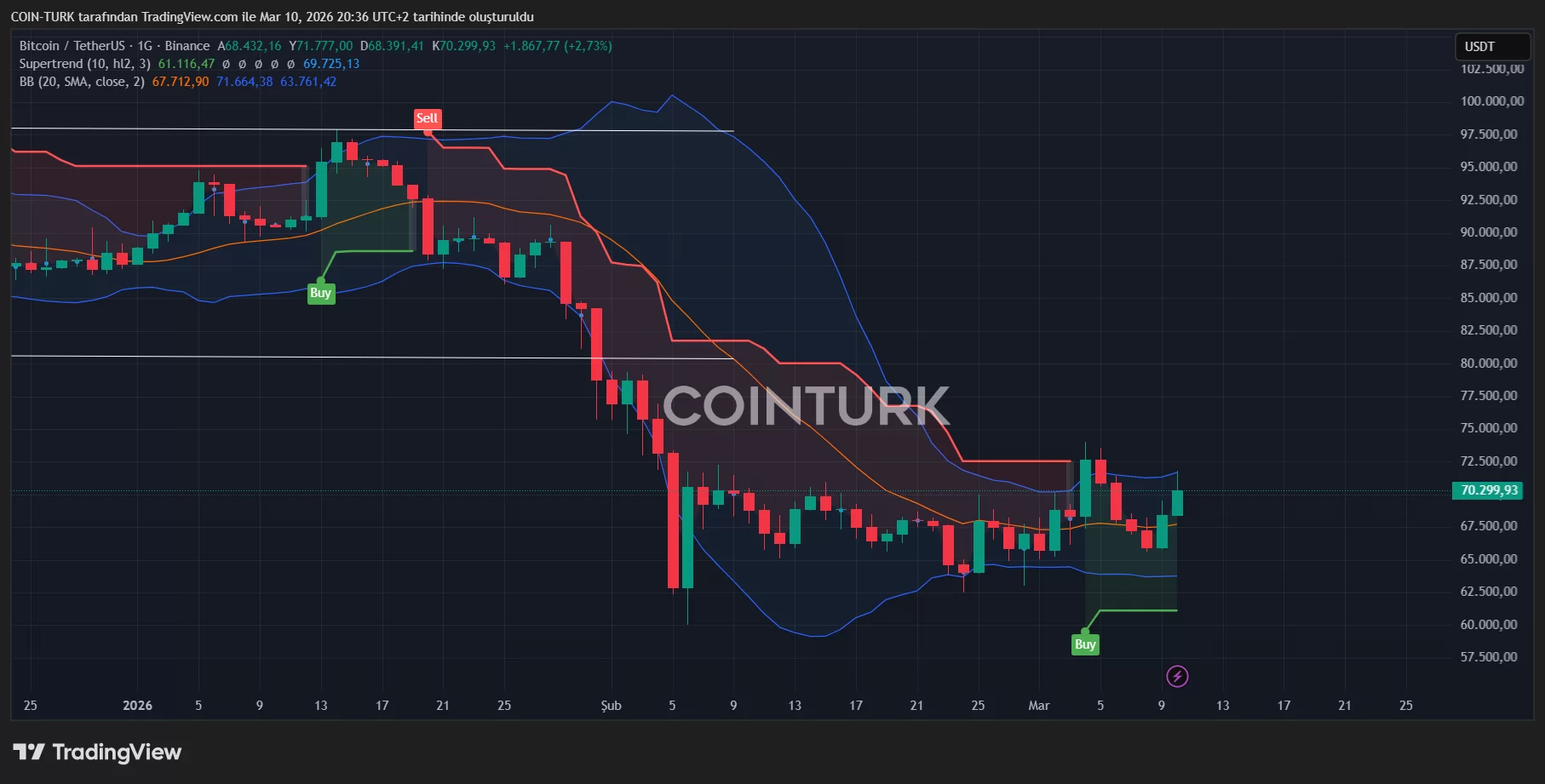
Leavitt also addressed recent reporting from CNN about troop casualties, confirming that “roughly” 150 U.S. service members have been injured in the recent hostilities. Meanwhile, Bitcoin remains robust, maintaining levels above $70,000 as investors gauge the evolving landscape.
The course of the conflict is being closely tracked in Washington and around the globe. With diplomatic efforts underway and an aversion to protracted warfare evident among U.S. and Israeli officials, observers are cautiously optimistic that the crisis could wind down soon. The implications for oil prices—and by extension, global markets—are significant, particularly with the White House signaling a readiness to manage energy supply disruptions.
For markets, both the prospect of easing tensions and the White House’s commitment to stable oil supplies have noticeable effects. Energy traders, as well as cryptocurrency markets, have responded swiftly to each piece of news emerging from the region. The expectation of a near-term resolution is fueling optimism across digital assets, with major cryptocurrencies demonstrating resilience even as geopolitical threats loom.
While the situation remains fluid, all eyes are on forthcoming statements from U.S. and Iranian leaders. Clear communication and diplomatic signaling are likely to steer both market sentiment and the direction of the standoff in the near future. Until an official declaration marks the end of hostilities, uncertainties about energy security and regional stability will persist.