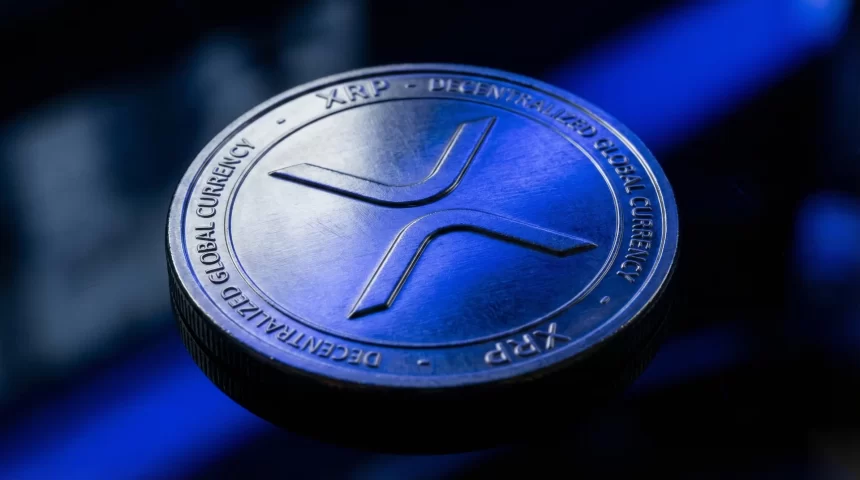
XRP is currently trading near $1.07 in late July 2026 as investors watch the legislative progress of the CLARITY Act, which could come up for a vote before the Senate recess ending August 8. The bill, if passed, has the potential to resolve regulatory uncertainty for XRP and influence its price trajectory in the months ahead.
Grok’s projections and analyst targets
Grok, an artificial intelligence assistant developed by Elon Musk’s company xAI, analyzed possible price scenarios for XRP based on the outcome of the CLARITY Act. According to Grok, if the bill is enacted by December 2026 under moderately positive market conditions, XRP could trade in a range between $2 and $4. This scenario assumes regulatory risks ease, allowing for renewed institutional investment and a supportive macroeconomic backdrop.
Standard Chartered, a leading global bank headquartered in London that provides comprehensive financial services, has also revised its 2026 XRP price target. The bank now projects XRP at $2.80 by year-end, a significant reduction from its previous $8 estimate. The target is in line with Grok’s baseline scenario, reflecting expectations of regulatory clarity without extraordinary bullish factors.
Regulatory clarity, according to Grok and Standard Chartered’s analysts, could restore institutional interest and drive capital inflows, but price outcomes ultimately depend on actual investor participation rather than regulatory changes alone.
Legal impact of the CLARITY Act
The CLARITY Act would formally designate XRP as a commodity and place its spot trading under the oversight of the Commodity Futures Trading Commission (CFTC). This shift would permanently resolve XRP’s non-security status, building on past court decisions and SEC-CFTC guidance that have treated the asset as a commodity.
Analysts state that this legal certainty would remove a major barrier for products such as ETFs, as well as for banking and payment integrations involving XRP. However, Grok advises that while clarity can act as a catalyst, significant price appreciation would still require visible increases in capital flows and adoption.
Mini dictionary: CLARITY Act, proposed US legislation seeking to classify certain digital assets, including XRP, as commodities and provide a clear regulatory framework by assigning oversight to the CFTC.
Optimistic versus cautious scenarios
In a more optimistic scenario, where regulatory clarity from the CLARITY Act leads to a surge in institutional inflows and broad adoption in payments and banking sectors, Grok places the possibility of XRP rising to higher single digits and potentially up to $9 by year-end. This would require strong exchange-traded fund (ETF) activity and favorable macroeconomic dynamics.
Despite this, Grok emphasizes that such high price levels are not its base case, as previous models have explored extreme valuations, but those are considered outliers, not central forecasts.
| Scenario | XRP Price Target (Dec 2026) |
|---|---|
| Base case (Bill passes, normal inflows) | $2 – $4 |
| Standard Chartered target | $2.80 |
| Bull case (Strong institutional demand) | Up to $9 |
| No passage (Stagnant market) | Near or below $1.07 |
If the CLARITY Act fails to advance or faces significant delays, analysts expect XRP to move with broader crypto market sentiment, making major rallies unlikely and leaving the token trading around current levels or lower. Regulatory clarity is a key catalyst, but not the sole driver for demand.
Status of the CLARITY Act in the Senate
A revised draft of the CLARITY Act, including ethics provisions, was published on July 22 and placed on the Senate legislative calendar. However, the Senate postponed debate as lawmakers prioritized a Russia sanctions proposal from Senator Lindsey Graham and pending federal nominations. This development decreased the likelihood of a vote before the August recess.
Senate Majority Leader John Thune has indicated interest in opening floor debate before the break, and the bill currently has 51 confirmed votes. Reports indicate that another 7 to 10 Democratic senators may support the measure, suggesting it remains the top regulatory priority for the XRP market.