Bitcoin entered the new week under pressure, slipping below $76,000 as is typical ahead of a Federal Reserve meeting. The recent slide follows warnings that deeper lows could lie ahead, particularly as tensions with Iran and concerns over prolonged oil supply shortages continue to fuel global inflation. Amid this uncertainty, all eyes are on what the leading crypto market forecasters are projecting for the coming weeks.
Bearish vision from a top crypto analyst
Since the last quarter of 2025, Roman Trading has consistently issued bearish forecasts for Bitcoin, and so far, these have held true. Yet curiosity remains whether he will join the ranks of once-revered seers like PlanB in 2021 and Capo in 2022, who each lost their credibility after high-profile mistakes. Despite previous skepticism, Roman Trading’s outlook remains firmly negative even after BTC tested the $80,000 mark.
In his latest market commentary shared just hours ago, Roman Trading maintained his downbeat stance on Bitcoin’s near-term direction, outlining the current technical setup that supports further declines.
“Everything is on track so far. The bearish trend and low trading volumes are reinforcing the downward movement.
The real concern right now is the appearance of bullish divergences in this pullback, combined with weak volume, so it’s best to wait for daily closes before taking action.
I still anticipate that Bitcoin will hover sideways for a while longer, followed by a sharp drop toward the end of May.”
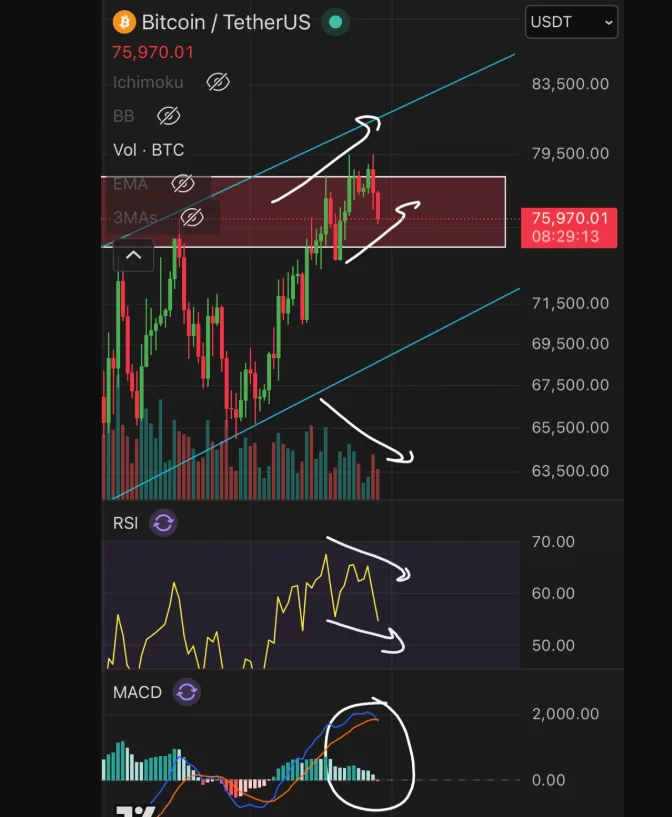

Previously, Roman Trading had expected trading volumes to rise with any decline, making him more cautious in the current environment. A breakthrough in negotiations with Iran remains a wildcard—any hint of a positive outcome could see BTC surge rapidly above the $80,000 threshold.
Stocks break records despite high oil prices
With hostilities involving Iran unresolved and crude oil prices holding above $100 per barrel, global stock markets continue to reach new highs. The ongoing surge in equities, even during earnings week, is less surprising when considering that the AI revolution has become so prominent, investors are largely dismissing other risks as mere background noise.

Financial analysis platform The Kobeissi Letter delved into the driving forces behind this market phenomenon, emphasizing the unprecedented scale of investment pouring into artificial intelligence.
“The seven biggest tech giants are on track to invest over $600 BILLION in artificial intelligence this year alone.
While broader markets weigh down tech names like Nvidia and Alphabet, these stocks have now reached their lowest forward P/E ratios since 2019. At the March 30 low, the S&P 500 Information Technology Index traded at just a 4% forward P/E premium versus the S&P 500, the smallest gap since January 2019. For the first time since 2017, major tech stocks are actually cheaper than the S&P 500 average.
Nvidia, for example, is near record highs but trades at around 26x forward P/E. By comparison, Walmart sits at 43x and Costco at 46x.
The reality is that as major tech names rise, their valuations are getting cheaper—and when they pull back, they become extraordinarily undervalued. We are living through the greatest technological revolution in modern history, and not even $100 oil, 4.40% yields on 10-year Treasuries, or interest-rate cuts projected out to 2027 seem to be enough to derail this trend. Asset holders continue to win.”
This confluence of factors suggests that while risks remain high, especially in energy and geopolitics, powerful investment flows into technology and artificial intelligence are keeping equity markets buoyant even as Bitcoin weathers uncertainty.