
Bitcoin, which has hovered around $66,000, has lately been swayed by developments related to Iran, prompting notable volatility in the cryptocurrency market. The growing global recognition of cryptocurrencies as a new asset class has upended traditional investment models, a transformation that appears unlikely to reverse. With the market still searching for direction, investors are left wondering what the next chapter holds for digital assets and how they should adapt to the evolving landscape.
Bitcoin forecasted to fall further
Roman Trading, a well-known voice among market analysts, has consistently predicted a bearish outlook over the past six months, and much of that pessimism has proven accurate. The analyst has now introduced a new target for Bitcoin, warning that if his projection once again materializes, the leading cryptocurrency could sink to even lower depths, with altcoins expected to sustain additional losses. The recent weakness in trading volume during upward movements has been interpreted as a precursor to further declines. Previously, Roman Trading cautioned investors when Bitcoin was trading above $70,000, suggesting that a prolonged conflict scenario—highlighted by former President Trump’s statements—might cause Bitcoin to fall towards the $55,000–$51,000 range.
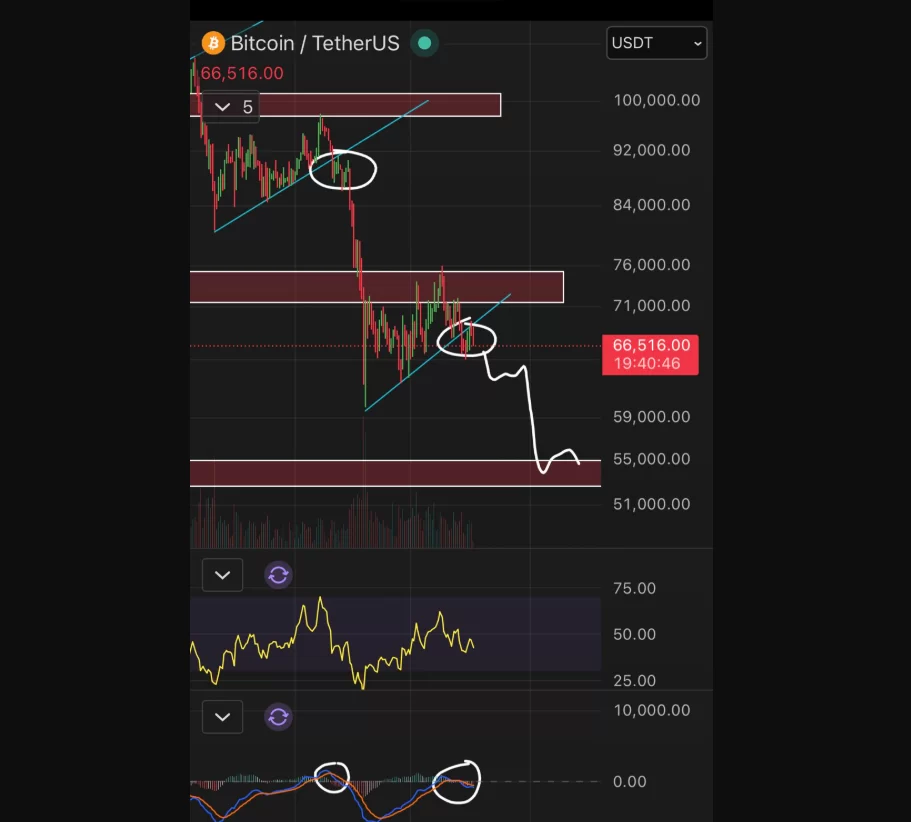
“The situation is developing as we expected—with a clear and orderly pullback. We anticipate a decline similar to the one witnessed in January. Everything in this chart points to a bearish trend,” Roman Trading commented.
The importance of technical signals in chart analysis
As Bitcoin’s slide stretches on, some observers argue that a break in the trend is overdue. In recent months, a wave of liquidations in long positions has handed repeated victories to short sellers. Analyst Jelle points out that if Bitcoin isn’t destined for an endless decline, the market’s Relative Strength Index (RSI) should eventually indicate a bottom. By monitoring weekly RSI levels, Jelle believes investors can better anticipate when the bear market has truly run its course and a reversal is in sight.
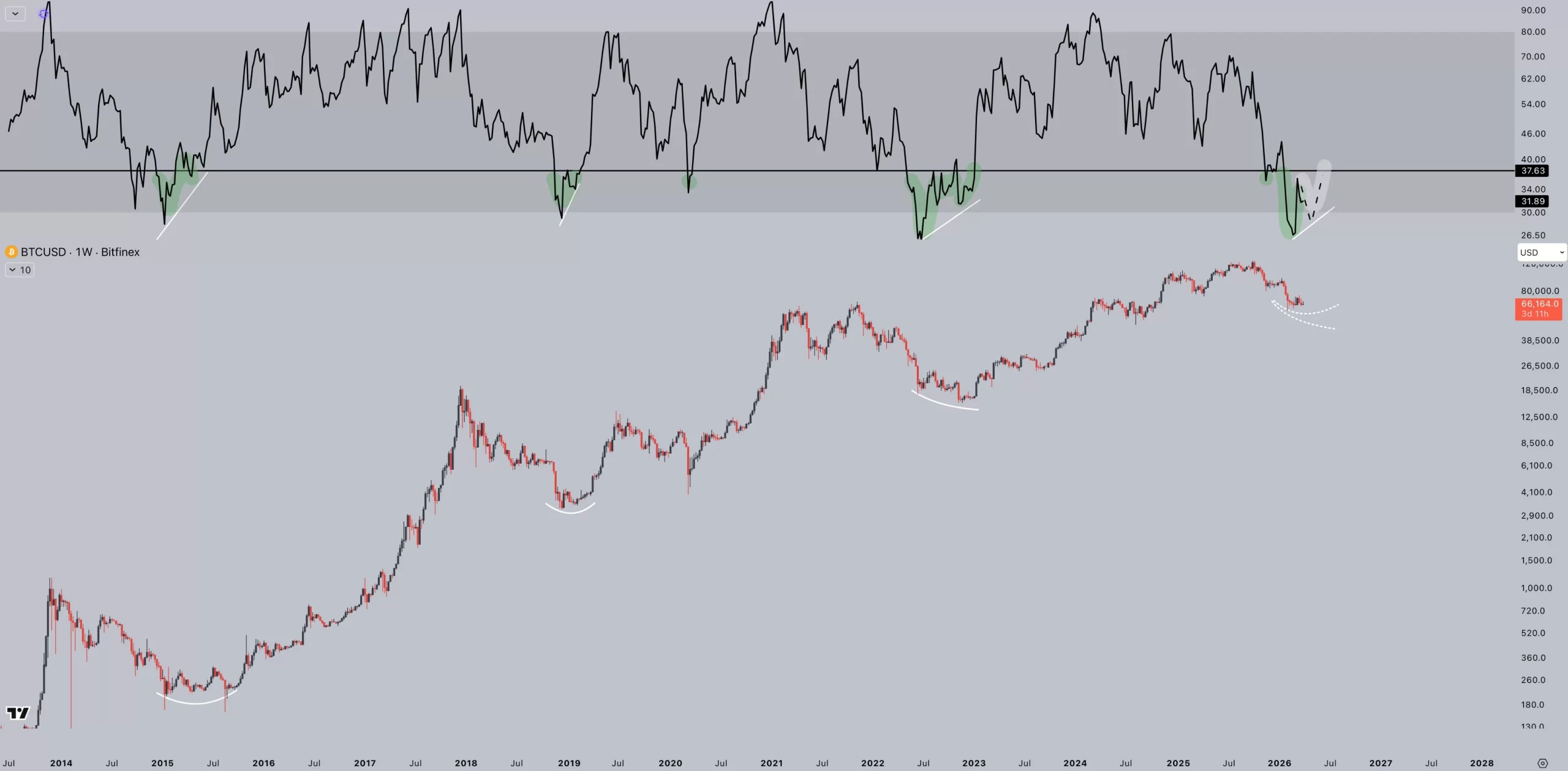
“Unless BTC plans to keep falling indefinitely, it will eventually establish a higher low on the weekly RSI. When that occurs, it signals the beginning—or potentially the completion—of a bear-market bottom. This is one of the main signals I track to know when to pay renewed attention,” Jelle explained.
Meanwhile, an analyst known by the pseudonym Moustache highlights a more optimistic perspective, noting that Bitcoin has been able to maintain support above its 2021 all-time high for several weeks. While those with a bullish outlook can find reasons for hope, the prevailing news flow still suggests that downside risk persists for Bitcoin. Despite this tension between optimism and caution, market sentiment appears to favor a downward direction at present.
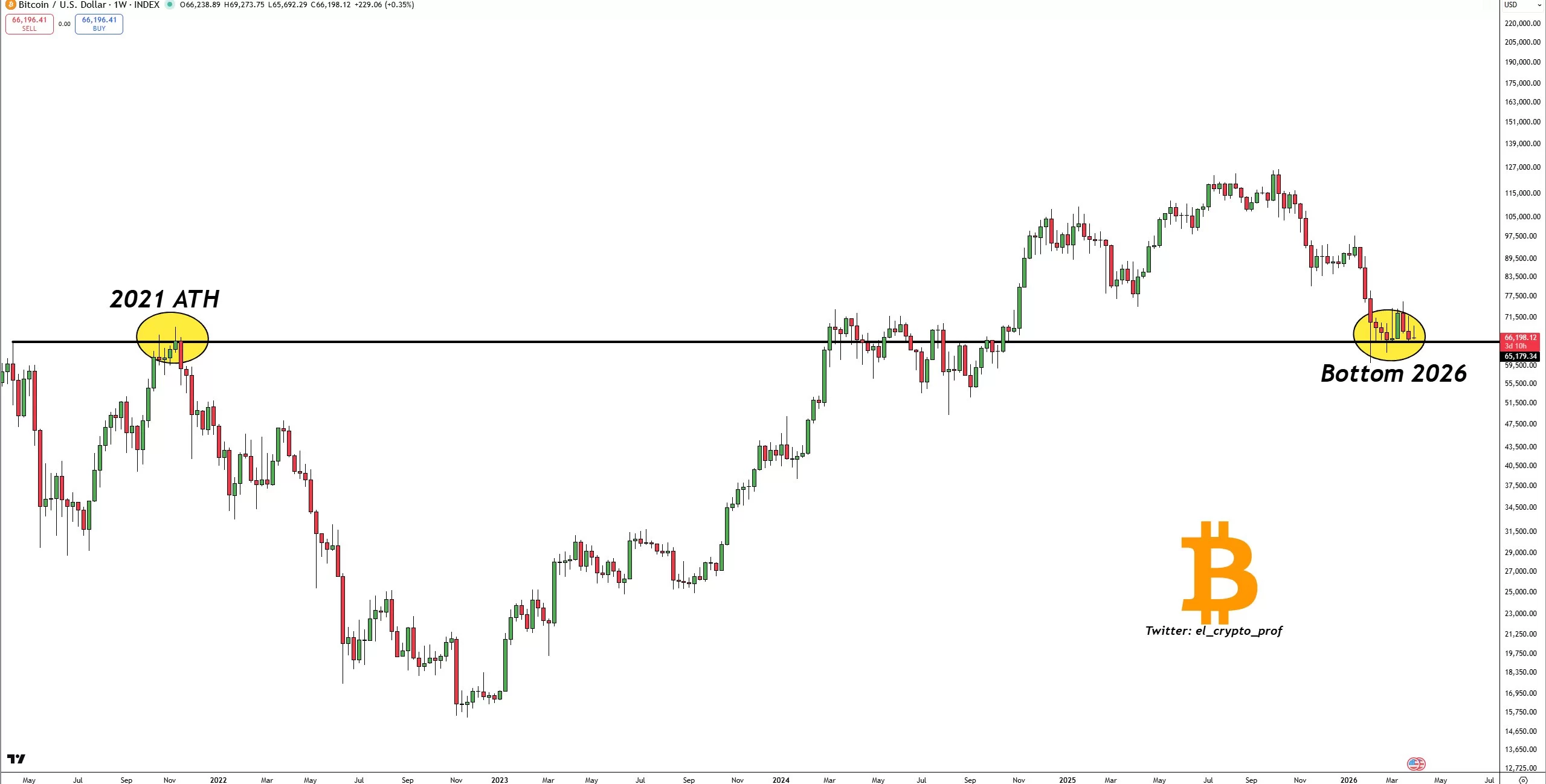
“Did you know that BTC has established a support level above its 2021 all-time high for several weeks now? Many are expecting prices to fall further, but the risk of missing a bullish move is even greater,” Moustache suggested.
As the debate between bearish and bullish analysts intensifies, investors are closely monitoring both on-chain data and macroeconomic factors that could shape the next move for cryptocurrencies. Ultimately, whether Bitcoin continues its slide or rebounds will depend on a convergence of technical signals, investor sentiment, and global events.