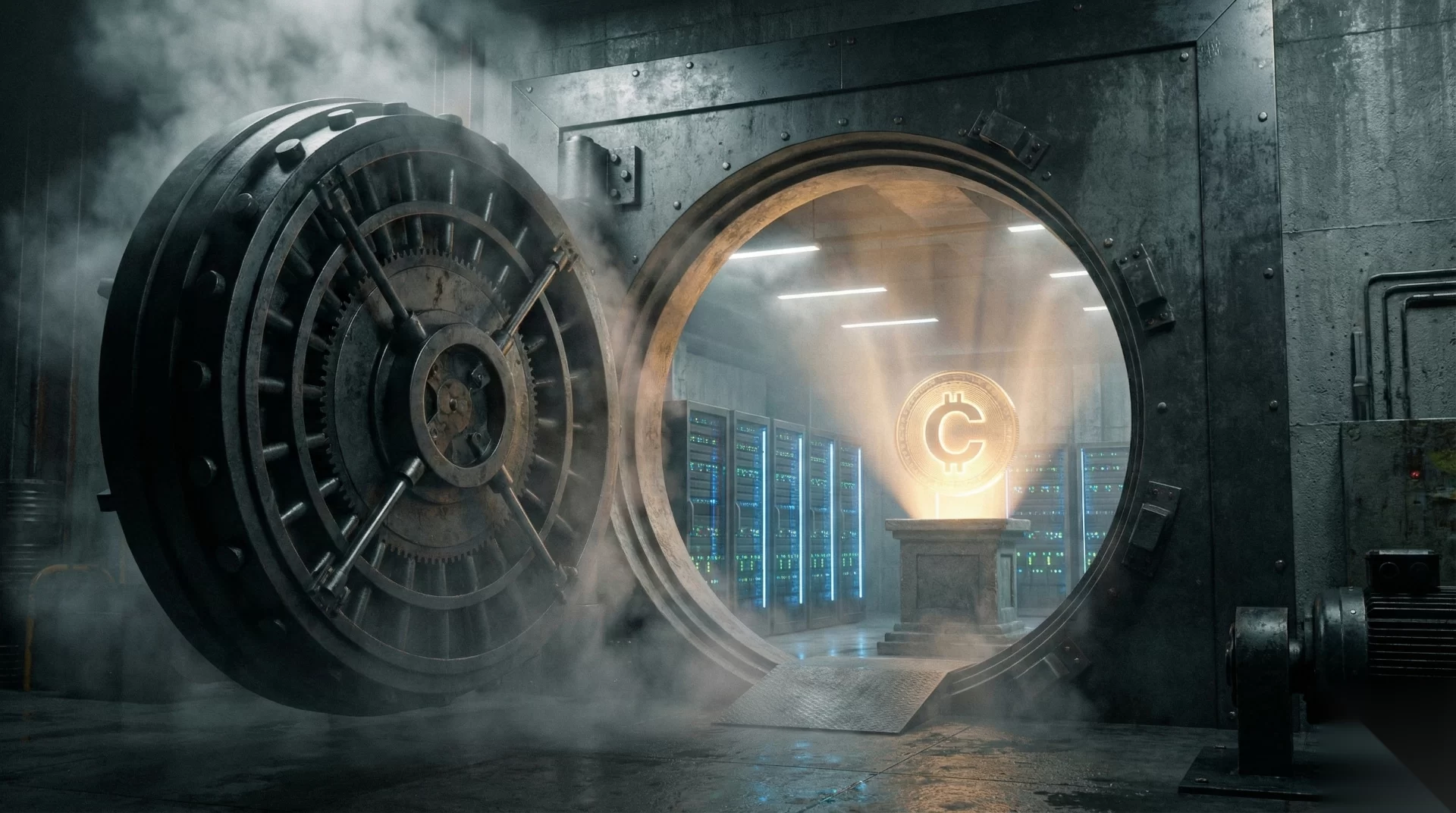
Bitcoin mining companies are emerging as key players in the artificial intelligence infrastructure market, capitalizing on their control over large-scale power resources as demand from AI operations intensifies. VanEck, a financial giant with $181 billion in assets under management and a leading provider of digital asset investment products, has drawn attention to how miners are leveraging established energy arrangements sought after by AI-focused companies.
AI Demands Highlight Mining’s Power Advantage
VanEck’s head of digital asset research, Matthew Sigel, explained that miners have secured land, utility relationships, and advanced cooling systems—elements required by traditional data center developers, but which often take years to establish. Sigel pointed out that mining operations have already navigated time-consuming grid connection processes that now stretch beyond 2028 for new entrants.
Sigel also remarked that financial markets have not yet priced in this advantage. Miners continue to be valued far below established data center operators when comparing market capitalization per megawatt, despite their readiness to serve the rapidly growing AI computing sector.
“Bitcoin miners have developed infrastructure over multiple years that’s now critically important for AI deployments. Yet, their valuations still trail far behind typical data centers,” Sigel noted during an interview.
Transitioning To Data Centers And AI Hosting
Recent developments show the shift from traditional Bitcoin mining toward broader infrastructure offerings is accelerating. MARA, a prominent publicly traded mining company, announced in February it will repurpose mining facilities as hyperscale data centers. Core Scientific, another major operator, secured up to $1 billion in financing from Morgan Stanley last week to expand AI infrastructure capabilities.

CleanSpark, a rapidly growing mining enterprise, stated in its first quarter 2026 update that deploying capital into mining projects is now less financially compelling than investing in data center services for AI, under current hash price conditions. This reflects a broader trend of mining firms exploring alternative revenue streams as computing demand surges.
The global hash rate generated by miners declined by 6% since peaks in November 2025, signaling a reallocation of hardware from Bitcoin validation toward AI computational tasks. While this adjustment has not impacted the network’s security so far, ongoing monitoring is expected as these trends develop.

Amid these changes, companies like Bitdeer are doubling down on mining expansion, installing 50,000 new ASIC units across 413 megawatts, which could add 33 exahashes per second to Bitcoin’s total computing power and potentially generate hundreds of millions in annual revenue at current price levels.
Load Management Provides New Revenue Streams
Beyond direct AI hosting services, mining operations are poised to profit from their ability to respond quickly to grid demands. By instantly shedding electric load during peak times, miners provide essential balancing for overstressed electricity systems—a benefit becoming increasingly valuable as AI and industrial demand surges.
Sigel described this flexibility as “load management as a service.” For power grids, instant capacity reductions can mean uninterrupted operation for core customers. For miners, participating in demand response programs opens up new, monetizable revenue streams, sometimes offsetting revenue losses from temporary mining curtailment.
Electricity demand driven by AI data centers is projected to increase 24% annually through 2030. Major mining companies say first quarter 2026 earnings will provide initial insight into the scale and profitability of their participation in these new markets.