After U.S. markets opened, Bitcoin pulled back below the $68,000 threshold, highlighting a surge in market volatility. While this break from months of stagnant price action was welcomed by traders, the downward movement has sparked concerns that extended losing streaks could return. On a brighter note, remarks regarding ongoing Iranian negotiations have proved more positive than many had anticipated, offering some reassurance to investors watching global developments.
Volatility Spreads Across Assets
Volatility has become the defining trend not just for cryptocurrencies, but across financial markets in general. Gold, silver, the U.S. dollar, and digital assets have all been subject to sharp price swings in recent sessions. Material Indicators described the recent Bitcoin price action as “breakouts and shocks.” Co-founder Keith Alan commented on his X account that historical patterns may provide some context for the current turbulence.
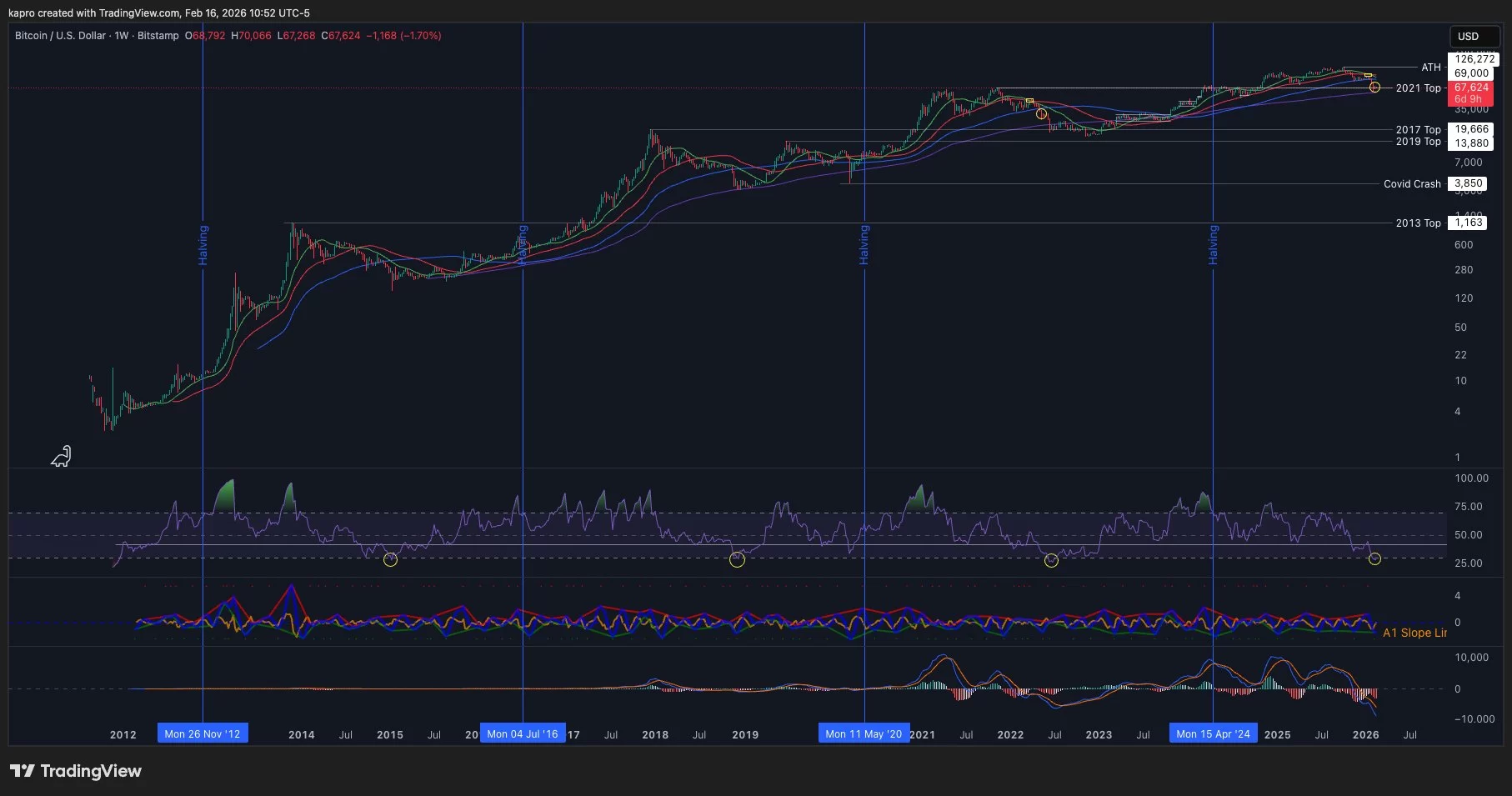
“The weekly RSI is now moving toward oversold levels rarely seen—typically just once per cycle—and currently, the Bitcoin chart is drawing increasing similarities to 2022. While the bottoms came quickly in 2015 and 2018, the 2022 cycle brought nearly five months of consolidation before a true macro low. It doesn’t guarantee a repeat this time around, but identifying these similarities and deviations is worthwhile when building models,” Keith Alan explained.
If these historical trends hold true and the market begins to mirror conditions from 2022, the first half of the year could see significant upward movement in Bitcoin’s value. However, the persistent volatility means investors remain cautious about predicting a clear direction just yet.
Uncertainty Looms for Crypto in 2026
What unfolds this week could set the stage for the rest of the year. Should the Supreme Court deliver a long-awaited tariff ruling on Friday, some of the uncertainty that has been dragging on for months may finally lift. And with Warsh poised to take the helm at the Federal Reserve in May, expectations are growing for even more clarity on the macroeconomic front. Until then, jittery investors have no shortage of developments to watch closely.
Mounting tensions with Iran, potential changes to tariffs, a shift in Federal Reserve leadership, and various other global factors are all at play. The year 2022 brought unique challenges for cryptocurrencies as the Federal Reserve embarked on aggressive interest rate hikes—conditions some hope will be avoided this time, even as discussions around tariffs and geopolitical risks are reignited. Meanwhile, a growing number of analysts are raising concerns that the rapid pace of AI advances could introduce new quantum-related risks to Bitcoin, adding another layer of complexity for the industry.
In summary, the prevailing conditions suggest that at least through the first half of the year, markets are more likely to consolidate than to surge decisively in one direction. Sharp dips could still emerge, followed by occasional rebounds. For now, investors must continue to wait patiently until the “fog of uncertainty” clears and a clearer trajectory for cryptocurrencies emerges.